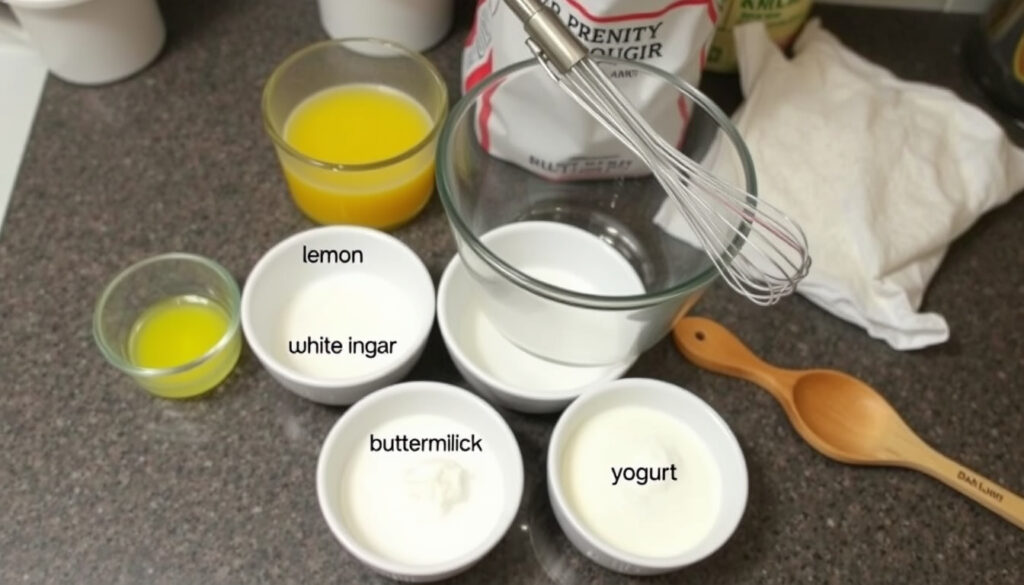
Cream of Tartar Substitute: 7 Easy Replacements for Baking
You’re halfway through a batch of snickerdoodles and realize you’re out of cream of tartar — that white powder you barely think about becomes the most important ingredient in the kitchen. This guide breaks down the chemistry behind every substitute, whether you’re stabilizing meringue, activating baking soda, or making homemade playdough, so you can swap with confidence.
Chemical name: Potassium bitartrate · Acidity (pH): 5.3 · Common substitute ratio (vinegar): 1:2 (1 tsp cream of tartar = 2 tsp vinegar) · Common substitute ratio (lemon juice): 1:2 · Made from: Winemaking byproduct (grape must)
Quick snapshot
- Cream of tartar is potassium bitartrate, an acidic byproduct of winemaking (Healthline (health publisher)).
- Lemon juice and vinegar effectively stabilize egg whites (Allrecipes (food site)).
- Baking powder contains both cream of tartar and baking soda (Simply Recipes (food media)).
- Exact shelf life of cream of tartar after opening (mostly indefinite but loses potency) (The Spice House (spice retailer)).
- Whether natural tartaric acid behaves differently from synthetic in all recipes (Tasting Table (food media)).
- Best substitute for recipes sensitive to flavor (lemon juice vs white wine vinegar) (Salon (culture magazine)).
- Ancient Rome: Tartaric acid deposits first noticed on wine barrels (Britannica (encyclopedia)).
- 1769: Potassium bitartrate scientifically isolated (Wikipedia (encyclopedia)).
- 19th Century: Commercially produced for home baking (Food Network (food media)).
- More baking science content covering substitution ratios and chemical reactions (3 Ingredient Peanut Butter Cookies).
- Home bakers will continue experimenting with acid-based substitutes (How Long to Bake Chicken).
Five key facts about cream of tartar, one pattern: its acidity is the key to every substitution.
| Label | Value |
|---|---|
| Chemical Name | Potassium bitartrate (KC4H5O6) |
| Derived From | Byproduct of winemaking (grape must) |
| pH Level | 5.3 (acidic) |
| Role in Baking | Acid stabilizes egg whites, activates baking soda |
| Common Sub | Lemon juice or white vinegar (2:1 ratio) |
What Can You Use Instead of Cream of Tartar?
Lemon juice substitute ratio
- Lemon juice provides acidity for meringues and cakes. Use 2 teaspoons of lemon juice for every 1 teaspoon of cream of tartar (Healthline).
- Tasting Table recommends 1 teaspoon lemon juice per 1/2 teaspoon cream of tartar (Tasting Table).
- Allrecipes confirms the same conversion: 1 teaspoon lemon juice for every 1/2 teaspoon cream of tartar (Allrecipes).
The Spice House notes that 2 teaspoons of lemon juice or vinegar create the acidic impact of 1 teaspoon of cream of tartar (The Spice House). This 2:1 ratio is the most common rule of thumb.
White vinegar substitute ratio
- White vinegar is a neutral-flavor substitute. Use the same 2:1 ratio as lemon juice (Healthline).
- Salon says distilled white vinegar can be substituted at four times the amount of cream of tartar by volume (Salon).
Baking powder as a substitute
- Healthline states a baking powder substitution ratio of 1.5 teaspoons of baking powder for 1 teaspoon of cream of tartar in recipes that also contain baking soda (Healthline).
- Tasting Table agrees: 1.5 teaspoons baking powder per 1 teaspoon cream of tartar (Tasting Table).
- Simply Recipes notes that store-bought baking powder is made from one part baking soda to two parts cream of tartar (Simply Recipes).
Buttermilk and yogurt substitution
- Healthline states that for buttermilk substitution, remove 1/2 cup of liquid from the recipe and add 1/2 cup of buttermilk to replace 1/4 teaspoon of cream of tartar (Healthline).
- Yogurt can replace cream of tartar if the recipe liquid is reduced and yogurt thinned with milk (Healthline).
- Allrecipes says buttermilk can replace cream of tartar if the recipe liquid is adjusted (Allrecipes).
The acidity of cream of tartar is what makes it work. Any substitute that provides acid (lemon juice, vinegar, buttermilk) can replace it, but you must adjust for flavor and liquid.
The implication: Each substitute brings its own acidity and liquid balance. The right choice depends on whether you can tolerate a flavor change or need to adjust the recipe’s moisture.
What Happens If You Skip Cream of Tartar?
Effect on meringues
- Skipping cream of tartar can cause egg whites to deflate, resulting in less volume and a denser texture (Healthline).
- According to Salon, even 1/8 teaspoon of cream of tartar per egg white makes a significant difference in stability (Salon).
Effect on snickerdoodles
- Snickerdoodles lose their characteristic tang and chewiness without cream of tartar (Allrecipes).
- The acid also affects the spread and texture of the cookie.
Effect on cakes and cookies
- Cakes and cookies may not rise properly because cream of tartar activates baking soda, creating carbon dioxide for leavening (The Spice House).
- Without it, baked goods can be denser and less tender.
Effect on playdough
- Playdough becomes sticky and less pliable without cream of tartar (Simply Recipes).
The trade-off: Skipping cream of tartar saves an ingredient but risks a failed recipe. For playdough, the texture change is immediate; for baking, the structure falters.
Is Cream of Tartar Just Baking Soda?
Chemical difference between baking soda and cream of tartar
- Cream of tartar is an acid (tartaric acid). Baking soda is a base (sodium bicarbonate) (Healthline).
- They react together to produce carbon dioxide gas, which leavens baked goods.
Why baking powder activates
- Baking powder contains both an acid (cream of tartar) and a base (baking soda), so it activates with moisture alone (Simply Recipes).
- Substituting one for the other changes the chemical reaction; you cannot swap cream of tartar and baking soda directly.
The catch: Confusing the two is a common mistake. Cream of tartar is never a substitute for baking soda—it’s the partner that makes baking soda work.
What Is the Best Substitute for Cream of Tartar in Meringue and Baked Goods?
Best substitute for meringue
- Lemon juice or vinegar is best for meringue because it stabilizes egg whites without affecting flavor much (Healthline).
- Salon states that for egg whites, 1/8 teaspoon cream of tartar corresponds to 1/2 teaspoon lemon juice per egg white (Salon).
Best substitute for snickerdoodles
- Cream of tartar gives snickerdoodles their distinct texture and tang; using baking powder changes the cookie’s spread and flavor (Allrecipes).
- For a closer match, use lemon juice or vinegar at the 2:1 ratio.
Best substitute for angel food cake
- Angel food cake requires strong stabilization; lemon juice works well (Tasting Table).
- Use 1 teaspoon lemon juice per 1/2 teaspoon cream of tartar.
Best substitute for playdough
- Playdough without cream of tartar can substitute lemon juice but impacts shelf life and texture (Simply Recipes).
The pattern: For any recipe that depends on cream of tartar for structure and stability, an acid-based substitute is the most reliable. For flavor-neutral applications, white vinegar wins.
Do You Really Need Cream of Tartar? How to Decide
When you can safely skip it
- Cream of tartar is optional in some cookie recipes that don’t rely on meringue or leavening (Healthline).
- If the recipe already includes baking powder, you may not need additional acid.
When a substitute is required
- It is critical for stable meringue and royal icing (Tasting Table).
- For recipes that call for cream of tartar specifically to activate baking soda, a substitute like lemon juice or vinegar is necessary.
When you must buy it
- Playdough recipes heavily depend on it for texture and preservation (Simply Recipes).
- For candy making and sugar syrups, cream of tartar prevents crystallization better than substitutes.
Why this matters: Knowing when to substitute versus when to buy saves time and ensures your recipe turns out right. The decision matrix is simple: if acid is the only role, swap; if the recipe needs both acid and a specific flavor/texture, buy cream of tartar.
Five substitutes, one pattern: each swaps acid for acid, but with different trade-offs.
| Substitute | Acidity Level | Flavor Impact | Best For | Ratio (per 1 tsp cream of tartar) |
|---|---|---|---|---|
| Lemon juice | High (pH ~2.2) | Distinct lemon flavor | Meringues, cakes, frostings | 2 tsp |
| White vinegar | High (pH ~2.4) | Neutral | Snickerdoodles, cookies, egg whites | 2 tsp |
| Baking powder | Contains acid | Negligible | Recipes with baking soda | 1.5 tsp |
| Buttermilk | Moderate (pH ~4.5) | Tangy | Pancakes, cakes, scones | 1/4 tsp = 1/2 cup buttermilk (adjust liquid) |
| Skip it | N/A | N/A | Robust cookies with other leaveners | N/A |
Convenience vs. authenticity. Baking powder is easy but changes the chemistry; lemon juice is closer but adds flavor.
Upsides
- Most substitutes are common pantry items.
- Lemon juice and vinegar are vegan-friendly.
- Baking powder is a convenient all-in-one leavener.
- Buttermilk adds moisture and richness.
Downsides
- Lemon juice and vinegar can alter flavor.
- Baking powder may affect browning and rise.
- Liquid substitutes require adjusting other liquids in the recipe.
- Some substitutes are not suitable for playdough or candy making.
The verdict: Choose your substitute based on the recipe’s need for acid, flavor, and moisture.
How to Substitute Cream of Tartar Step by Step
- Identify the recipe’s need. Is cream of tartar used for stabilizing egg whites, activating baking soda, or preventing crystallization? This determines the best substitute.
- Choose your substitute. For meringues and frosting, use lemon juice or vinegar. For baked goods with baking soda, use baking powder. For cakes and pancakes, buttermilk works well.
- Adjust the ratio. Use the 2:1 ratio for lemon juice/vinegar (2 tsp per 1 tsp cream of tartar), or 1.5 tsp baking powder per 1 tsp cream of tartar. For buttermilk, replace 1/4 cup liquid with 1/4 cup buttermilk per 1/4 tsp cream of tartar.
- Balance liquids. If using a liquid substitute, reduce the recipe’s liquid by the same amount. For example, if adding 2 tsp lemon juice, remove 2 tsp of other liquid.
- Test and adjust. In sensitive recipes like meringue, beat the egg whites gradually and check for stability. In cookies, bake a test batch.
Confirmed facts
- Cream of tartar is potassium bitartrate (Healthline (health publisher)).
- Lemon juice and vinegar are effective substitutes for stabilizing egg whites (Allrecipes (food site)).
- Skipping cream of tartar in meringue reduces stability (Simply Recipes (food media)).
- Baking powder contains cream of tartar (tartaric acid) and baking soda (The Spice House (spice retailer)).
What’s unclear
- Exact shelf life of cream of tartar once opened (mostly indefinite but loses potency).
- Whether natural tartaric acid from grapes behaves differently in all recipes than synthetic.
- The best substitute for recipes sensitive to flavor (e.g., lemon juice vs white wine vinegar).
- Whether cream of tartar loses potency over time in sealed containers.
Lemon juice is widely recommended as a substitute for cream of tartar, especially for stabilizing egg whites and preventing crystallization.
— Healthline (health publisher)
For egg whites, 1/8 teaspoon cream of tartar corresponds to 1/2 teaspoon lemon juice per egg white.
— Salon (culture magazine)
Baking powder can replace cream of tartar at 1.5 teaspoons baking powder per 1 teaspoon cream of tartar.
— Tasting Table (food media)
For the home baker, the choice boils down to chemistry. If you’re making meringue, reach for lemon juice or vinegar. If you’re baking cookies, baking powder is a convenient swap. But for playdough and candy making, nothing replaces the real thing. The consequence: understanding the acid role lets you substitute with confidence, but ignoring it can lead to flat cakes and sticky dough.
kidfriendlythingstodo.com, cookingconverter.com, facebook.com, bakewhatyoulove.com, yahoo.com, bakersauthority.com
For a comprehensive guide on the best cream of tartar substitutes, check out best cream of tartar substitutes for detailed ratios and expert tips.
Frequently asked questions
Is cream of tartar the same as citric acid?
No. Cream of tartar is potassium bitartrate, while citric acid is a different acid found in citrus fruits. They are not interchangeable.
Can I use apple cider vinegar instead of white vinegar to replace cream of tartar?
Yes, apple cider vinegar can be used in the same 2:1 ratio, but it adds a slight apple flavor. White vinegar is more neutral.
What is the best cream of tartar substitute for stabilizing eggs for poaching or omelettes?
A few drops of lemon juice or vinegar can help stabilize egg whites for poaching. Use 1/2 teaspoon per egg white.
How should I store cream of tartar for maximum shelf life?
Store in an airtight container in a cool, dark place. It does not expire but may lose potency over time. Use within 2-3 years for best results.
Is cream of tartar a leavening agent?
No, it is an acid. When combined with baking soda (a base), it produces carbon dioxide for leavening. On its own, it does not leaven.
Can I use cornstarch as a substitute for cream of tartar?
No. Cornstarch is a thickener, not an acid. It will not stabilize egg whites or activate baking soda.
Is cream of tartar gluten-free?
Yes, pure cream of tartar is gluten-free. Check labels for any additives.
More related posts
 Dancing with the Stars Voting: How to Text Vote Now
 Big Lots Near Me: Store Locator & Reopening Status
 Why Alysa Liu Had to Return Her Damaged Olympic Gold Medal
 Ohio State Buckeyes Football 2026: Playoffs, Schedule & Origin
 Wind Creek Event Center – Seating Chart, Tickets & Parking Guide
 Mixed Connective Tissue Disease: Symptoms, Diagnosis, and Treatment
 Neutrogena Hydro Boost Water Gel vs Moisturizers
 Best Water Filtration System for Home: Costs, Types & Benefits