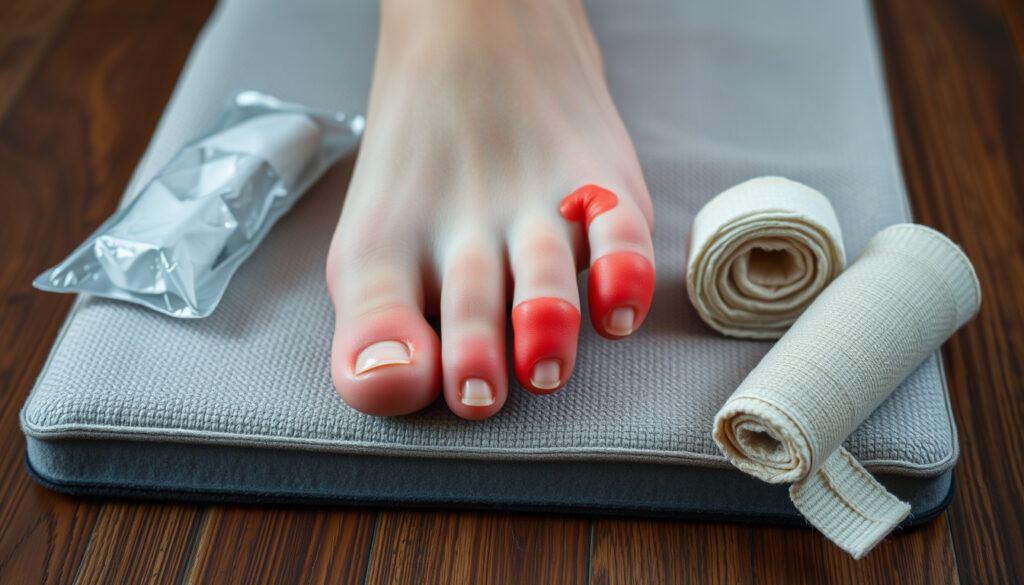
Pain on Top of Foot: Causes, Symptoms, and Relief Options
That sharp, aching sensation on the top of your foot can stop you mid-stride and make you wonder if a simple walk is worth the discomfort. It’s a common problem, often traced to two very different culprits—extensor tendonitis or a stress fracture—and this guide cuts through the guesswork, showing you how to tell them apart, when to worry, and what actually helps you recover faster.
Most common cause: Extensor tendonitis ·
Typical symptom: Sharp pain when walking ·
Common sensation: Feels like a bruise
Quick snapshot
- Extensor tendonitis often causes pain along the top of the foot (Healthline)
- Stress fractures worsen with weight-bearing activity (AAOS OrthoInfo)
- Sharp pain can come and go, which can make the cause less obvious (Baptist Health)
- Whether the pain is from tendonitis or a stress fracture may not be certain without imaging (Michigan Foot Doctors)
- Rest and elevation for 2–3 days are commonly recommended (WebMD)
- Stress fractures may show normal X-rays initially (PMC research review)
- Begin with rest and ice in the first few days (NHS Lanarkshire)
- Consult a doctor if pain is severe or persistent (HSE Ireland)
Here are the key numbers at a glance.
| Label | Value |
|---|---|
| Most common cause | Extensor tendonitis |
| Typical recovery time | 2-6 weeks with rest |
| First line of treatment | Rest, ice, compression, elevation |
| When to see a doctor | If pain persists beyond 3 days or is severe |
What could be the reason for pain on the top of my foot?
Several conditions can produce dorsal foot pain, but two stand out: extensor tendonitis and stress fractures. Extensor tendonitis involves inflammation of the tendons that run along the top of your foot, often from overuse or tight footwear (Cleveland Clinic). Stress fractures are tiny cracks in the metatarsal bones, typically from repetitive impact (AAOS OrthoInfo).
Extensor tendonitis
- Inflammation along the dorsal foot, often around the midpoint (Healthline)
- Pain may worsen with activity and improve with rest (Baptist Health)
- Lace pressure can provoke symptoms (Baptist Health)
Stress fractures
- Pain develops gradually, worsening during weight-bearing activity (AAOS OrthoInfo)
- Swelling and tenderness at the fracture site are common (AAOS OrthoInfo)
- Pain can become severe enough to persist even at rest (MSD Manuals)
Gout
- Sudden severe pain, often at night, with swelling and redness
- Controlled with medication and diet
Arthritis
- Chronic pain and stiffness in the foot joints
- May be aggravated by movement
The pattern: tendonitis follows a tendon line, while stress fractures target a single bone point. If you can pinpoint the exact spot with one finger, a stress fracture is more likely (Michigan Foot Doctors).
That distinction matters because treatment paths diverge sharply: rest for tendonitis, medical evaluation for a suspected fracture.
What does tendonitis on top of the foot feel like?
Extensor tendonitis produces a distinct set of sensations. The primary symptom is pain on the top of the foot, often around the midpoint of the dorsal area (Healthline). This pain typically sharpens when you bend your foot upward or during activity.
Sharp pain when bending foot
- Pain intensifies when you flex your toes upward
- Movement of the foot triggers the sharp sensation
Pain during activity
- Worsens with exercise, especially running or jumping (Baptist Health)
- May ease with rest in some cases
Tenderness along the top of foot
- Localized tenderness along the tendon line on the dorsum (Michigan Foot Doctors)
- Swelling may be present
What this means: if your pain follows a clear line along the top of your foot and gets worse when you move, tendonitis is the likely culprit. But if the pain is a single, pinpoint spot that hurts when you press it, think stress fracture.
When to worry about top of foot pain?
Most top-of-foot pain resolves with rest, but certain signs demand medical attention. If pain persists for more than a few days despite home care, it’s time to see a doctor. Immediate care is needed for severe pain, redness, or warmth, which could signal infection or a more serious injury.
Red flags: persistent pain, severe swelling, redness
- Pain lasting beyond 3 days warrants evaluation
- Severe swelling or redness could indicate infection
- Warmth in the area is a warning sign
Signs of infection or fracture
- Fever with foot pain requires urgent care
- Inability to bear weight is a red flag
When to see a doctor
- Persistent pain that doesn’t improve with rest
- Suspected stress fracture needs professional diagnosis
- Initial X-rays can be normal, so MRI may be needed (PMC)
The catch: waiting too long with a stress fracture can turn a minor crack into a full break. If you’re unsure, a medical evaluation is the safer call.
Stress fractures often hide on initial X-rays. Persistent pain that feels like a deep bruise deserves an MRI, not just more rest.
The safest path when red flags appear is to get imaging before symptoms escalate.
How long does it take for top of foot pain to go away?
Recovery time depends entirely on the underlying cause. Extensor tendonitis typically improves within 2-6 weeks with proper rest. Stress fractures take longer, often 6-8 weeks, and may require immobilization.
Recovery time for tendonitis: 2-6 weeks
- Rest and elevation for 2-3 days are commonly recommended (WebMD)
- Ice for 20 minutes every 2-3 hours reduces inflammation (WebMD)
Recovery time for stress fracture: 6-8 weeks
- Requires longer rest and possibly a walking boot
- Immobilization is often necessary
Factors affecting healing
- Proper treatment speeds recovery
- Ignoring pain prolongs healing and risks worsening
The trade-off: faster recovery comes from early, consistent care. Pushing through pain delays healing and can convert tendonitis into a chronic issue or a stress fracture into a complete break.
How do you get rid of pain on the top of your foot?
Effective relief starts with reducing inflammation and removing the source of irritation. The RICE protocol — rest, ice, compression, elevation — is your first line of defense.
- Rest and elevate. Scale back walking and standing for at least 2–3 days and keep the foot raised when possible.
- Ice the area. Apply crushed ice or frozen peas wrapped in a damp towel for 10–20 minutes, 2–3 times daily for the first 5–7 days.
- Add light compression. Use an elastic bandage to limit swelling, but keep it snug enough to avoid numbness.
- Adjust footwear and lacing. Loosen laces or use padding to reduce pressure on the dorsal foot; choose shoes with a roomier toe box.
Rest and ice therapy
- Rest and elevation for 2-3 days are commonly recommended (WebMD)
- Crushed ice or frozen peas wrapped in a damp towel for 10-20 minutes, 2-3 times daily for the first 5-7 days (NHS Lanarkshire)
Compression and elevation
- Compression helps reduce swelling
- Elevation reduces fluid accumulation
Stretching exercises
- Gentle stretching prevents recurrence
- Stretch the calf and foot muscles regularly
When to use over-the-counter pain relief
- NSAIDs like ibuprofen may help if safe for you (WebMD)
- Always follow dosage instructions
Why this matters: the right footwear and lacing technique can prevent the problem from returning. Loose shoelaces, padding, and braces reduce dorsal foot irritation (WebMD).
For most people, top-of-foot pain from tendonitis resolves with a few days of RICE and smarter lacing. For stress fractures, the strategy is different: more rest, less walking, and a doctor’s input.
Either way, the cost of ignoring the pain is higher than the cost of treating it early.
Confirmed facts vs. What’s unclear
Here’s where the evidence stands, and where it doesn’t.
Confirmed facts
- Extensor tendonitis is a common cause of top-of-foot pain (Cleveland Clinic)
- Stress fractures result from repetitive force and worsen during weight-bearing activity (MSD Manuals)
What’s unclear
- Exact cause of sharp pain that comes and goes may require imaging
- Whether pain is from tendonitis or stress fracture without X-ray
The pattern: the more specific your pain location and the more it worsens with weight-bearing, the more likely a stress fracture. Diffuse tenderness that reacts to lacing points to tendonitis. When in doubt, imaging settles it.
What experts say about top-of-foot pain
“Pain in the top of the foot is often caused by exercising, especially if it involves running, kicking or jumping.”
— NHS Lanarkshire
“Common causes of pain in the top of your foot are exercising too much or wearing shoes that are too tight.”
— HSE Ireland
Two health services, one consistent message: overuse and footwear are the usual offenders. That’s good news — both are fixable with the right approach.
Summary
The difference between a nuisance and a serious injury comes down to listening to your foot. If the pain is diffuse, reacts to lacing, and eases with rest, tendonitis is probable — treat it with RICE and better shoes. If it’s a sharp, pinpoint spot that hurts when you bear weight and lingers, get imaging. For anyone who walks, runs, or stands all day, the choice is clear: address the pain now with rest and proper footwear, or face a longer recovery and a more serious injury later.
Frequently asked questions
What is the difference between tendonitis and arthritis in the foot?
Tendonitis is inflammation of the tendons, causing sharp pain with movement. Arthritis is joint inflammation, causing stiffness and chronic pain. They affect different structures and respond to different treatments.
Can top-of-foot pain be a sign of a blood clot?
Rarely, but deep vein thrombosis can cause foot pain and swelling. If you have risk factors like recent surgery or prolonged immobility, seek urgent medical care.
Is it safe to walk with top-of-foot pain?
If the pain is mild and improves with rest, walking is okay. If it worsens with weight-bearing or persists, stop and see a doctor — especially if a stress fracture is possible.
What exercises can help top-of-foot pain?
Gentle calf stretches and towel curls for the toes can help. Avoid high-impact activities until the pain resolves.
Should I wrap my foot for top-of-foot pain?
Yes, light compression can reduce swelling. Use an elastic bandage, but don’t wrap so tightly that it restricts circulation.
If you’re still unsure after reading this, an in-person exam is the next step.
Related reading
- Mixed Connective Tissue Disease: Symptoms, Diagnosis, and Treatment
- Amoxicillin and Clavulanate Potassium: Uses, Side Effects, Dosage
These guides cover conditions that can overlap with foot pain, but diagnosis still starts with a medical exam.
More related posts
 Houston Rockets vs Dallas Mavericks Player Stats & Box Scores
 Avatar The Last Airbender – Guide to Elements and Nations
 Jean Paul Gaultier Le Male Elixir – Scent Notes, Longevity and Performance
 How to Deal with a Narcissist: Expert Strategies and Tips
 USCIS Case Status Online: How to Check Your Application Status
 Two Broke Girls Cast – Main Stars, Supports and Careers Today
 150 Lbs to Kg – Exact NIST Conversion Guide
 Better Than the Movies: Age Rating, Spice & Parent Guide