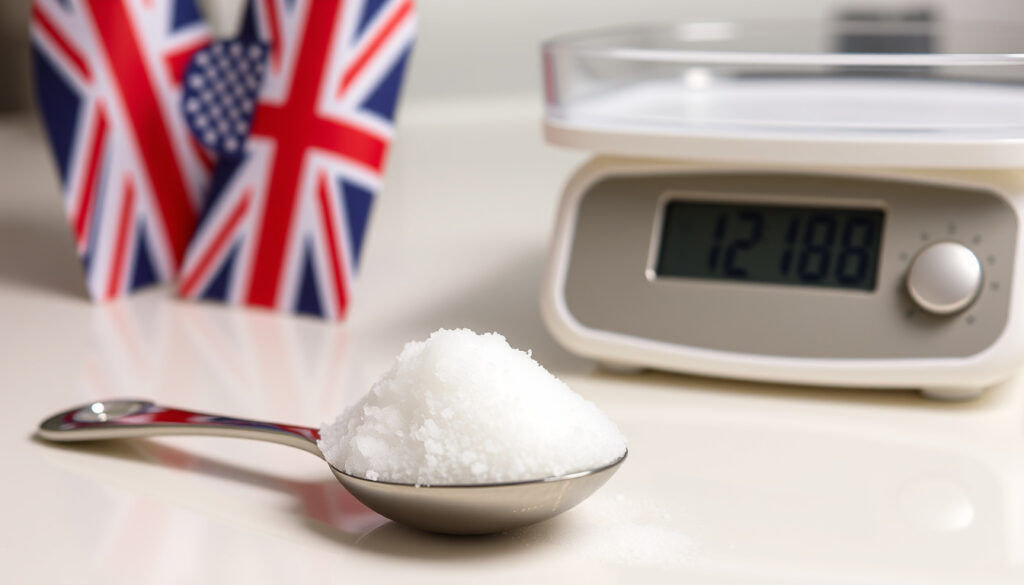
How Many Grams in a Tablespoon – Complete US UK Guide
How Many Grams in a Tablespoon? Complete Guide
Converting tablespoons to grams depends entirely on what you’re measuring. A tablespoon of water weighs about 14.8 grams in the United States, but the same measure of honey or butter yields a different result. This discrepancy exists because grams measure mass while tablespoons measure volume—and the density of each ingredient determines how heavy it becomes.
The confusion deepens when comparing British and American measurements, as the two systems define tablespoon volumes differently. Add in the variables of packing, temperature, and ingredient moisture content, and even experienced bakers second-guess their conversions. This guide cuts through the complexity with authoritative tables, regional comparisons, and practical insights drawn from standard references.
Whether you’re scaling a recipe, calculating nutrition, or simply trying to understand what a cookbook really means when it calls for a tablespoon of butter, the information below provides the clarity you need.
How Many Grams Are in a Tablespoon?
The most straightforward answer applies only to water: one US tablespoon equals approximately 14.8 grams. This figure comes directly from water’s density of 1 gram per milliliter, with a US tablespoon measuring 14.8 ml. For water, the calculation is exact and universal. Every other ingredient introduces density variables that change the equation.
Water serves as the universal baseline for density comparisons. At room temperature, water weighs 1g per ml, making it the starting point for understanding how other ingredients behave in measurement conversions.
14.8g
14g
12.6g
17.7g
Key Facts to Remember
- Grams measure mass; tablespoons measure volume—a fundamental distinction that explains all variations
- One US tablespoon equals 15 ml; one UK tablespoon equals 17.7 ml
- Density determines weight: honey weighs 42% more than water per tablespoon
- Packing affects powders: sifted flour weighs less than scooped flour
- Temperature influences liquids: warmer ingredients may measure differently
- Always use a scale for precise baking; volume measurements introduce compounding errors
- Regional definitions differ by approximately 18% between US and UK systems
| Ingredient | US 1 tbsp (grams) | UK 1 tbsp (grams) | Density Notes |
|---|---|---|---|
| Water | 14.8g | 17.7g | Density 1g/ml; volume-based standard |
| Granulated Sugar | 12.6g | 14.9g | Caster/superfine varieties; lighter than water |
| Butter | 14g | 16.5g | Near water density; slightly lower |
| Milk (liquid) | 15g | 17.7g | Similar to water; 1 cup = 240g |
| Honey | 21.25g | ~25g | Denser than water (~1.42g/ml) |
| Powdered Sugar | 7.5–10g | 9–12g | Light density; varies with sifting |
| Cocoa Powder | 5–7g | ~6–8g | Light; ½ cup = 42g |
| Skim Milk Powder | 7g | N/A | Dry measure; consistent density |
Tablespoon to Grams for Common Ingredients Like Butter and Sugar
Butter presents a particularly common conversion challenge because recipes frequently specify tablespoons of butter, and butter density varies only slightly from water. Most sources cite 14 grams per US tablespoon of butter, though the precise figure is 14.175 grams. This small margin rarely affects cooking results, but precision matters in baking.
Granulated sugar weighs less than butter despite occupying similar volume. The reason lies in crystal structure—sugar crystals pack with more air gaps than fat molecules, reducing mass per tablespoon. At 12.6 grams per US tablespoon, sugar demonstrates how volume-based measurements create unpredictability across ingredients.
Butter Conversions
Butter adheres to consistent density patterns across most temperatures relevant to kitchen use. One US tablespoon of butter measures 14 grams, while the same amount of butter in the UK system weighs approximately 16.5 grams due to the larger volume definition. Teaspoon measurements scale proportionally: one US teaspoon of butter equals roughly 4.7 grams.
When a recipe calls for “1 tablespoon of butter” without specifying volume or weight, most butter sticks in the US are marked to indicate 1 tablespoon per tablespoon-marked section. This assumes standard butter with approximately 80% fat content.
Sugar Conversions
Sugar conversions require attention to crystal type. Granulated and caster sugars occupy similar weights per tablespoon, around 12.6 grams in US measurements. Powdered sugar, however, presents complications: sifted powdered sugar weighs significantly less than unsifted, with values ranging from 7.5 to 10 grams per tablespoon depending on preparation method.
Brown sugar presents additional variables. Light and dark brown sugars differ in molasses content, affecting density. Generally, brown sugar measures around 13.5 grams per US tablespoon, though packing variations create uncertainty. For accurate results, weighing brown sugar rather than spooning it ensures consistent recipe outcomes.
Liquids: Milk and Honey
Milk tracks water closely due to similar water content. One US tablespoon of milk weighs approximately 15 grams, matching water’s density of roughly 1g/ml. Buttermilk follows nearly identical patterns, measuring about 30 grams per 2 US tablespoons.
Honey diverges significantly from the water baseline. Its density of approximately 1.42g/ml produces 21.25 grams per US tablespoon—substantially heavier than water or milk. This difference matters when scaling honey-heavy recipes, as volume measurements can lead to overly sweet or heavy results if not compensated by weight.
Powder Conversions
Powders present the widest conversion ranges of any ingredient category. Cocoa powder, flour, milk powder, and starches all exhibit low densities that fluctuate based on moisture content, compaction, and particle size. Cocoa powder averages 5–7 grams per US tablespoon, while skim milk powder measures around 7 grams per tablespoon.
The challenge with powders lies in their compressibility. Scooping flour directly from a bag compacts it, while sifting loosens it. This single variable can alter flour weight per tablespoon by 50% or more. Professional bakers universally recommend weighing flour rather than measuring by volume for this reason.
How Many Grams in a Tablespoon UK vs US?
The discrepancy between British and American tablespoon measurements extends beyond mere preference—it reflects fundamentally different volume definitions. The UK tablespoon, inherited from the imperial system, measures 17.7 milliliters, while the US tablespoon standardizes at 14.8 milliliters. This 18% difference translates directly into weight variations for all ingredients.
The imperial tablespoon definition traces to the British Weights and Measures Act of 1824, which established the imperial system. American measurement standards evolved separately, adopting slightly smaller volume definitions that persist today. When following international recipes, identifying which system the recipe author used becomes essential.
Many international cookbooks assume local measurement standards. A British recipe calling for 1 tablespoon of flour differs from an American recipe requesting the same amount. Converting between systems requires recognizing which definition applies.
Canada and Australia further complicate the picture. Canadian measurements typically follow US standards, while Australian tablespoons were standardized at 20ml in 1970—but older Australian recipes may still reference the previous 17.7ml definition. Always verify the source’s origin and era when precision matters.
The practical impact compounds with recipe scaling. A recipe using 4 tablespoons of butter requires approximately 56 grams in US measurements versus 66 grams in UK measurements—an 18-gram difference that may noticeably affect texture and moisture in baked goods. Understanding these regional variations prevents costly kitchen mistakes when adapting recipes from different countries.
Tablespoon vs Teaspoon: Grams Comparison
The relationship between tablespoons and teaspoons follows consistent ratios, but weight-per-unit remains ingredient-dependent. One US tablespoon equals exactly 3 US teaspoons, creating a 3:1 ratio. However, the same ingredient at different volumes does not scale linearly in terms of density due to packing effects in powders.
For water and water-based liquids, the 3:1 ratio translates cleanly to weight. One US teaspoon of water weighs 5 grams, making one US tablespoon (3 teaspoons) equal 15 grams. Honey, with its higher density, produces approximately 7 grams per teaspoon and 21 grams per tablespoon, maintaining the 3:1 ratio while yielding different absolute values.
Teaspoon Measurements by Ingredient
| Ingredient | US 1 tsp (grams) | UK 1 tsp (grams) | Notes |
|---|---|---|---|
| Water | 5g | ~5.9g | Density 1g/ml |
| Granulated Sugar | 4.2g | ~5g | Scaled from tbsp |
| Butter | ~4.7g | ~5.5g | Scaled from tbsp |
| Milk | 5g | ~5.9g | Similar to water |
| Honey | ~7g | ~8.3g | Denser than water |
| Fine Salt | 5.69g | N/A | Varies by grain size |
| Instant Yeast | 3.1g | N/A | Precise measure |
Salt presents unique challenges because granule size dramatically affects weight per teaspoon. Fine table salt measures approximately 5.69 grams per US teaspoon, while kosher salt—commonly preferred for seasoning due to its flaky texture—weighs significantly less per teaspoon. Diamond Crystal kosher salt, for example, measures about 2.8 grams per teaspoon, while Morton’s kosher salt falls around 4 grams.
This salt variation explains why professional cooks often specify salt by weight rather than volume. Recipe developers understand that the same teaspoon measure of different salt types delivers vastly different sodium quantities, affecting final dish flavor. Precision in measurement conversions matters most when salt, spices, or chemical leaveners are involved.
A Brief History of Tablespoon Measurements
Tablespoon measurements evolved through centuries of practical kitchen use rather than scientific standardization. The term “tablespoon” originally referred to actual silverware—the large spoons used for serving from common dishes. Kitchen measurement spoons emerged later as cooking became more precise.
- Medieval Era: Spoons served individual portions; measurement standards were nonexistent
- 17th–18th Century: Recipes began specifying spoon measures, but sizes varied dramatically by household
- 1824 (UK): British Weights and Measures Act established imperial tablespoon at approximately 17.7ml
- Late 1800s (US): US customary units codified; tablespoon standardized at approximately 14.8ml
- 1970 (Australia): Australia adopted 20ml tablespoon standard, diverging from both US and UK
- Modern Era: Digital scales and standardized recipes have reduced reliance on volume measurements
What We Know for Certain and What Remains Unclear
| Established Information | Variables and Uncertainties |
|---|---|
| US tablespoon = 15ml (standardized); UK tablespoon = 17.7ml | Packing method: varies by individual technique |
| Water density = 1g/ml at 4°C; 14.8g per US tbsp | Temperature effects: warmer liquids expand slightly |
| Honey density ≈ 1.42g/ml; heavier than water | Honey variations: floral source affects density |
| Butter density near water; ~14g per US tbsp | Butter fat content: varies by brand (80–84%) |
| Powders are lighter than liquids per volume | Moisture content: affects all dry ingredients |
| UK tablespoon is ~18% larger than US | Other countries: definitions may vary further |
Why Density Matters in Kitchen Conversions
Density—the ratio of mass to volume—explains why identical tablespoon measures produce different weights. A tablespoon of water and a tablespoon of honey occupy the same space but differ in mass because honey contains more sugar molecules per unit volume. Understanding this principle transforms arbitrary conversion tables into logical, memorable relationships.
The practical implications extend beyond curiosity. Recipes function as chemical formulas; baking particularly relies on precise ratios of ingredients. Substituting volume for weight in baking introduces compounding errors—the more ingredients you convert, the further your final product strays from intended results. A cake that calls for 200 grams of flour may fail if you substitute 1½ cups (approximately 190g depending on how you measure) without adjustment.
Temperature adds another variable. Most cooking measurements assume room-temperature ingredients, but flour from the refrigerator or butter right from the fridge behaves differently. Butter at 40°F measures differently than butter at 70°F due to solid fat content. For precision baking, bringing ingredients to room temperature before measuring produces more consistent results.
Sources and Expert Perspectives
“The difference between a tablespoon of flour and a tablespoon of water is about 9 grams—enough to significantly alter a recipe when scaled up.”
— Standard baking conversion references, multiple culinary education sources
Conversion data in this guide draws from multiple authoritative sources including culinary education institutions, baking conversion specialists, and measurement standardization references. Where sources conflict, the guide presents ranges reflecting real-world variation rather than forcing false precision.
Kitchen measurement organizations consistently recommend weight-based measuring for precision cooking. The American Culinary Federation and comparable international bodies advise professional and home cooks alike to calibrate their methods against verified weight standards rather than relying on volume measures alone.
Summary and Practical Takeaways
Converting tablespoons to grams requires knowing two things: the volume definition your tablespoon follows (US at 15ml or UK at 17.7ml) and the density of your ingredient. Water provides the baseline—15 grams per US tablespoon—but honey, butter, sugar, and powders each transform this baseline differently based on their physical properties.
For everyday cooking, approximate conversions suffice. For baking, baking specifically, and any recipe where precision affects outcomes, weighing ingredients eliminates the guesswork. Digital kitchen scales cost less than a bag of flour and provide the accuracy that volume measurements cannot guarantee. Keep in mind that US and UK tablespoon definitions differ by approximately 18%, and account for this discrepancy when following international recipes.
Frequently Asked Questions
How many milliliters are in a tablespoon?
A US tablespoon equals 15ml; a UK tablespoon equals approximately 17.7ml. This difference affects all weight conversions proportionally.
Why does a tablespoon of flour weigh less than a tablespoon of water?
Flour has lower density than water due to its particle structure and air pockets. One US tablespoon of flour weighs approximately 7.5–10g compared to water’s 15g.
How many tablespoons are in a quarter cup?
One US cup contains 16 tablespoons, so one-quarter cup equals 4 tablespoons. The UK cup measurement differs, but most international recipes follow the US standard.
Does temperature affect tablespoon-to-gram conversions?
Temperature changes liquid density slightly, though for practical kitchen purposes, room-temperature measurements remain reliable. Butter and fats show more temperature sensitivity than liquids.
How do I measure a tablespoon of powder accurately?
Sift powders before measuring, then spoon into the tablespoon measure and level with a straight edge. Avoid tapping or compacting, as this increases weight without adding useful accuracy.
What’s the difference between a tablespoon and a teaspoon?
One tablespoon equals three teaspoons. In US measurements, a teaspoon is 5ml; in UK measurements, a teaspoon is approximately 5.9ml.
Can I substitute volume measurements for weight in baking?
Volume-to-weight substitutions introduce error. Professional batters recommend weighing ingredients when precision matters. For casual cooking, volume approximations work acceptably.
Why do honey and maple syrup weigh more per tablespoon?
Honey and syrup contain dissolved sugars that increase density above water. Honey’s density of approximately 1.42g/ml produces significantly higher weight per tablespoon than water or milk.
More related posts
 Ford Build and Price Ireland: Configurator & Price Lists
 Water Table for Kids: Best Indoor & Outdoor Picks
 USPS Drop Box Near Me: Find Locations, Usage Guide & FAQs
 Merrily We Roll Along Broadway: Revival Cast & Flop Story
 3 Ingredient Peanut Butter Cookies: Easy Recipe & Troubleshooting
 Houston Rockets vs Golden State Warriors – Rockets Edge Warriors 117-116
 Chicken and Rice Casserole: Easy, 4-Ingredient Guide
 Cast of Hysteria TV Show: Who’s Who in Peacock Horror Comedy