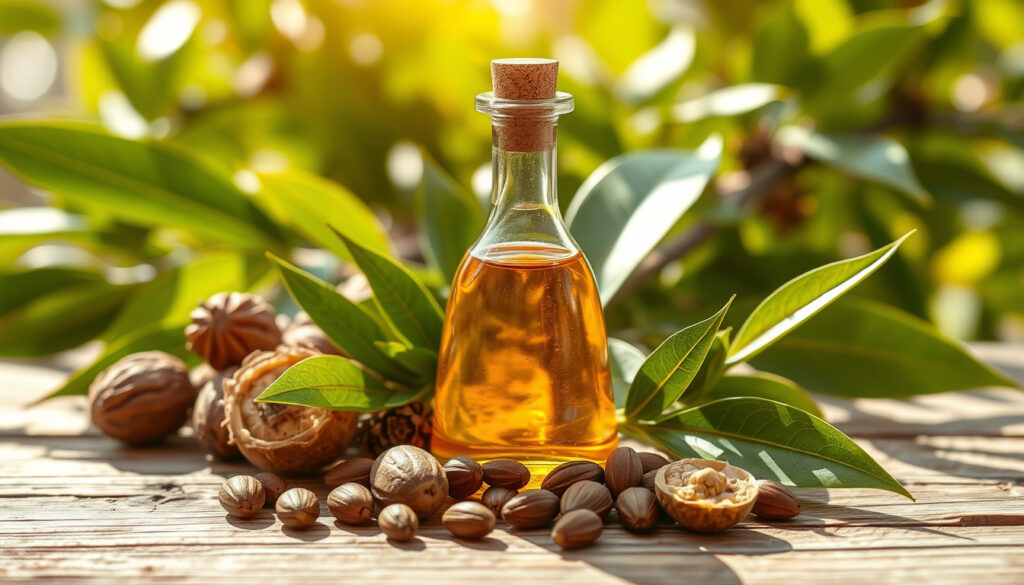
Argan Oil for Hair: Benefits, Usage & Side Effects Guide
If you’ve spent any time scrolling through hair care content, you’ve probably noticed argan oil popping up everywhere—from serums to leave-in conditioners. Does it actually deliver, and if so, how do you use it without turning your hair into a grease trap? This guide cuts through the marketing noise and breaks down what the science says, how to apply it on wet versus dry hair, and exactly how often you should be using it.
Key Nutrients: Essential fatty acids, antioxidants, vitamin E ·
Primary Benefits: Moisturizes, nourishes, strengthens follicles ·
Best For: Dry, damaged, chemically treated hair ·
Origin Highlight: Moroccan argan tree ·
Usage Frequency: 2-3 times per week
Quick snapshot
- Rich in vitamin E, oleic acid, and linoleic acid (Davroe)
- Seals cuticles and locks in moisture (Garnier)
- Acts as a protective barrier before heat styling (John Frieda)
- Noticeable shine improvement after first use
- Reduced frizz visible within 1-2 weeks of consistent use
- Overall hair health improvement over 4-8 weeks
- Patch test before first full application
- Start with 1-2 drops for leave-in use
- Adjust frequency based on hair type response
A product extracted from the Moroccan argan tree has become a staple in hair care routines worldwide. Five key facts about its composition and effects.
| Attribute | Detail |
|---|---|
| Main Components | Fatty acids, vitamin E, antioxidants |
| Hair Impact | Moisturizes, conditions, strengthens |
| Source Brands | Boots, Holland & Barrett, John Frieda |
| Protection Claim | Against dehydration and damage |
What does argan oil do for your hair?
Argan oil works at the structural level of your hair strand. Its primary active compounds include vitamin E (tocopherols), oleic acid, linoleic acid, and a range of antioxidants that collectively address multiple hair health concerns (Davroe). This nutrient profile is what makes it versatile enough to appear in everything from drugstore serums to salon-grade treatments.
Moisturizing effects
Argan oil’s most evidence-backed benefit is its ability to seal the hair cuticle and lock in hydration. When applied, it creates a thin lipid layer that prevents moisture from escaping the hair shaft—a mechanism that works whether your hair is wet or dry when you apply it (Garnier). For people with dry, brittle, or chemically treated hair, this sealing action can transform dull, lifeless strands into softer, more manageable hair.
Strengthening follicles
The fatty acids in argan oil—particularly oleic and linoleic acid—provide structural support that may reduce breakage during washing, combing, and heat styling (Hims). Research has found that oils rich in these fatty acids create a protective layer that helps prevent protein loss from the hair shaft. This doesn’t mean argan oil will regrow hair you’ve already lost, but it can help protect the hair you have.
Adding shine
One of the most immediately visible effects of argan oil is the shine boost it provides. By smoothing the outer cuticle layer, it reflects light more evenly across the hair surface, giving hair a healthier, glossier appearance (John Frieda). This effect is temporary—washing removes the oil layer—but it provides an instant gratification factor that makes argan oil popular for styling purposes.
Do I put argan oil on wet or dry hair?
This is where many people get confused, and the answer depends on what you’re trying to achieve. Both wet and dry application methods are valid—they simply serve different purposes (Pump Haircare).
Wet hair application
Applying argan oil to wet or damp hair is the method most experts recommend for general moisturizing and heat protection. When hair is wet, the cuticle layer is slightly raised, allowing the oil to penetrate more evenly and create a protective barrier as the hair dries (Garnier). This approach locks in the water your hair has absorbed during washing and prevents heat-induced damage from blow drying.
A few drops of oil also makes combing through damp hair easier, reducing mechanical breakage from tugging at tangles (Coco Care). The key is to use very small amounts on wet hair—a little goes a long way, and too much will leave hair looking greasy once it dries.
Dry hair tips
Dry hair application works better as a targeted treatment or finishing touch rather than an all-over application. Use argan oil on dry hair to spot-treat frizz, flyaways, or dry ends that need smoothing (Pump Haircare). A couple of drops rubbed between your palms and lightly smoothed over problem areas can tame frizz and add shine without the full saturation that wet application produces.
For fine or thin hair, dry application is often preferable because you can control exactly where the oil goes rather than risking an all-over greasy appearance.
Pre-wash treatment
Applying argan oil before shampooing—particularly to the mid-lengths and ends—can protect those vulnerable sections during the cleansing process. Massage the oil into your hair, comb through gently, and leave it in for 20-30 minutes or overnight before shampooing as a deep conditioning treatment (Davroe). This pre-wash method works especially well for very dry, damaged, or color-treated hair that needs intensive moisturizing.
Wet hair gets the deep conditioning benefits; dry hair gets targeted frizz control. Your best approach may combine both—apply to damp hair after washing, then touch up flyaways with a small amount on dry hair after styling.
How often should you use argan oil on hair?
Usage frequency depends heavily on your hair type, texture, and current condition. There’s no universal answer, but most brand guidelines and health sources converge on a general recommendation (Hims).
Daily vs occasional
For most people, applying argan oil 2-3 times per week strikes the right balance between benefit and avoidance of product buildup. Daily application is generally unnecessary and can backfire—too much oil weighs hair down and may irritate the scalp. However, people with very thick, coarse, or curly hair that tends toward extreme dryness may find that daily application works well for them (Hims).
Hair type considerations
Your hair type dramatically affects how much argan oil your hair can absorb and whether daily use makes sense. People with thick, coarse, or curly hair can typically use argan oil more frequently and may even apply a small amount to their roots and scalp without issues. Those with fine hair should be more cautious—starting with just a couple of drops and using it less often to avoid a limp, greasy appearance (John Frieda).
Overuse risks
More is not better when it comes to argan oil. Using too much can result in product buildup that weighs hair down, makes it appear greasy, and may even irritate the scalp (Garnier). If you notice your hair looking heavy or feeling coated after application, you’re using too much or applying too frequently. The solution is to wash your hair with a clarifying shampoo to remove buildup, then reduce your oil usage going forward.
Consistency matters more than quantity. Regular, moderate use over weeks produces better results than occasional heavy applications. Start conservatively, assess how your hair responds, then adjust.
What are the disadvantages of argan oil for hair?
No hair product works for everyone, and argan oil does come with some drawbacks worth knowing before you commit to a new routine.
Potential greasiness
The most common complaint about argan oil is that it makes hair look greasy—especially for people with fine, thin, or naturally oily hair. Even “pure” argan oil is a heavy oil that doesn’t absorb quickly into the skin and hair shaft (Hims). The fix is almost always about quantity: using 1-2 drops rather than a full pump, and applying primarily to the mid-lengths and ends rather than the roots.
Allergic reactions
While rare, some people may have allergic reactions to argan oil or to products containing it. This risk increases if you have recently colored your hair, as the chemical processing can make your scalp more reactive. A patch test—applying a small amount behind your ear or on the inner forearm and waiting 24 hours—is a simple precaution before full application (Garnier).
Quality issues
The market for argan oil is not well-regulated, and product quality varies significantly. Some “argan oil” products are diluted with cheaper carrier oils or contain additives that reduce effectiveness and may even cause irritation. Look for pure, cold-pressed argan oil from reputable sources, and be wary of products priced significantly below market average (WebMD).
Who should avoid argan oil
If your hair is fine, thin, or naturally oily, argan oil may be too heavy for your needs. Those with sensitive scalps should patch-test before full use. People with very light hair should note that some argan oil products can slightly darken lighter tones with repeated use.
Argan oil’s richness is both its strength and its weakness. Dry, damaged hair benefits enormously; fine or oily hair may find it too heavy. Assess your hair type honestly before committing to regular use.
Is applying argan oil good for hair?
For most people with dry, damaged, or frizz-prone hair, the answer is yes—but with important qualifications about what argan oil can and cannot do.
Who benefits most
Argan oil is particularly well-suited for people with dry, brittle, or chemically treated hair (colored, bleached, permed, or relaxed). Thick, coarse, and curly hair types also tend to respond well because they can absorb and benefit from the heavy moisture content. People with these hair types often report reduced frizz, improved manageability, and enhanced shine (OGX Beauty).
Evidence from reviews
Brand guides and health reviews consistently cite argan oil’s moisturizing, conditioning, and protectant properties as its core benefits (John Frieda). However, it’s worth noting that research on argan oil’s hair benefits specifically is limited. Most of what we know comes from brand marketing materials, consumer testimonials, and extrapolation from the known properties of its component fatty acids and vitamin E—strong anecdotal evidence, but not robust clinical data (Hims).
Alternatives
If argan oil doesn’t work for your hair type, alternatives exist. Jojoba oil has a lighter texture that’s better for fine hair. Coconut oil penetrates the hair shaft more deeply but can be too heavy for some. Grapeseed oil is lightweight and good for oily scalps. Each oil has its own fatty acid profile and absorption characteristics, so if one doesn’t work, another might.
Upsides
- Deep moisturization for dry, brittle hair
- Heat protection before styling
- Reduces frizz and flyaways
- Adds visible shine
- May reduce hair breakage over time
- Contains scalp-soothing anti-inflammatory properties
Downsides
- Can weigh down fine or thin hair
- Risk of greasiness with overuse
- Limited clinical research on hair growth claims
- Quality inconsistent across brands
- May cause allergic reactions in sensitive individuals
- Product buildup if used too frequently
How to use argan oil for hair: step-by-step guide
Whether you’re using argan oil as a leave-in conditioner or a deep treatment, following a consistent process helps you get the best results without overuse.
Leave-in conditioner method
- Step 1: After washing, gently towel-dry your hair until it’s damp but not dripping wet.
- Step 2: Warm 1-2 drops of argan oil between your palms by rubbing them together briskly for 5-10 seconds. This helps the oil spread more evenly.
- Step 3: Starting at the mid-lengths of your hair (not the roots), smooth the oil through to the ends using your palms in a downward-smoothing motion.
- Step 4: If needed, apply a tiny additional amount to particularly dry or frizzy areas.
- Step 5: Style as usual. The oil will absorb over the next few minutes, leaving hair soft without feeling heavy (Women’s Health Magazine UK).
Deep conditioning treatment method
- Step 1: Apply 8-10 drops of argan oil generously to dry or slightly damp hair, focusing on the mid-lengths and ends.
- Step 2: Massage the oil into your scalp for approximately 10 minutes to stimulate circulation and ensure even distribution (Healthline).
- Step 3: Comb through your hair with a wide-tooth comb to distribute the oil evenly.
- Step 4: Wrap your hair in a towel or use a shower cap to retain warmth.
- Step 5: Leave the treatment in for 20-30 minutes minimum, or overnight for intensive treatment.
- Step 6: Wash out thoroughly with shampoo, following with conditioner if your hair feels stripped.
Pre-styling heat protection method
- Step 1: Towel-dry your hair to a damp state.
- Step 2: Apply 2-3 drops of argan oil, warming between palms first.
- Step 3: Distribute evenly through mid-lengths and ends, avoiding the roots.
- Step 4: Allow hair to air-dry slightly before applying heat styling tools.
- Step 5: Style as usual. The oil creates a protective barrier that reduces heat damage (John Frieda).
Argan oil deeply nourishes and moisturises hair, strengthens hair follicles, and helps tame frizz and flyaways, leaving hair smoother and more manageable. — John Frieda (hair care brand)
Argan oil is rich in fatty acids and antioxidants like vitamin E, which are beneficial for moisturizing hair and may help with inflammatory scalp conditions such as dandruff. — Healthline (health information platform)
Related reading: dark spots on face · Jean Paul Gaultier Le Male Elixir review
Our overview of side effects pairs well with the complete usage guide that dives into proven application techniques for wet or dry strands.
Frequently asked questions
How much argan oil should I use for hair?
Start with 1-2 drops for leave-in application, warming the oil between your palms before distributing through mid-lengths and ends. You can always add more if needed, but starting small prevents the greasiness that comes from over-application (Women’s Health Magazine UK).
Can argan oil cause hair loss?
There is no evidence that argan oil directly causes hair loss. In fact, by reducing breakage and strengthening the hair shaft, it may help prevent the hair loss that results from damage and breakage. However, using too much argan oil can cause buildup that weighs hair down and potentially irritate the scalp, which is a different problem entirely (Healthline).
Is argan oil safe for colored hair?
Yes, argan oil is generally safe for color-treated hair and can actually help protect color-treated hair from drying out. However, if your hair has been recently colored, perform a patch test first since the chemical processing can increase scalp sensitivity (Garnier).
What hair types suit argan oil best?
Argan oil works best for dry, damaged, brittle, chemically treated, thick, coarse, and curly hair types that need deep moisturization. Fine, thin, or naturally oily hair types may find it too heavy and should use smaller amounts or consider lighter alternatives like jojoba oil (Hims).
Does argan oil work for curly hair?
Yes, curly hair often responds very well to argan oil. Curly hair tends to be drier because the natural oils from the scalp have difficulty traveling down the spiral-shaped strand. Argan oil can help lock in moisture, reduce frizz, and help curls look more defined and manageable (OGX Beauty).
Can I leave argan oil in hair overnight?
Yes, leaving argan oil in overnight as a deep conditioning treatment is one of the most intensive ways to use it. Apply 8-10 drops to your hair, wrap in a towel or sleep in a shower cap, and wash it out the next morning. This method is particularly beneficial for very dry or damaged hair but should not be done more than once a week to avoid buildup (Healthline).
More related posts
 Why You Should Never Eat Tilapia: Top Reasons Explained
 CFB 26 Release Date: July 10, Early Access & Pricing
 Grow a Garden Wiki: Roblox Codes, Pets & Grow a Garden 2
 Chance Perdomo movies and TV shows: what happened
 Urgent Care Kit USA: Cost, Contents & Where to Buy
 Harry Potter and the Chamber of Secrets: Parents Guide
 March Madness 2025 Dates: Full Schedule, Results & Champion
 What Is Strep Throat? Causes, Symptoms, Treatment & More