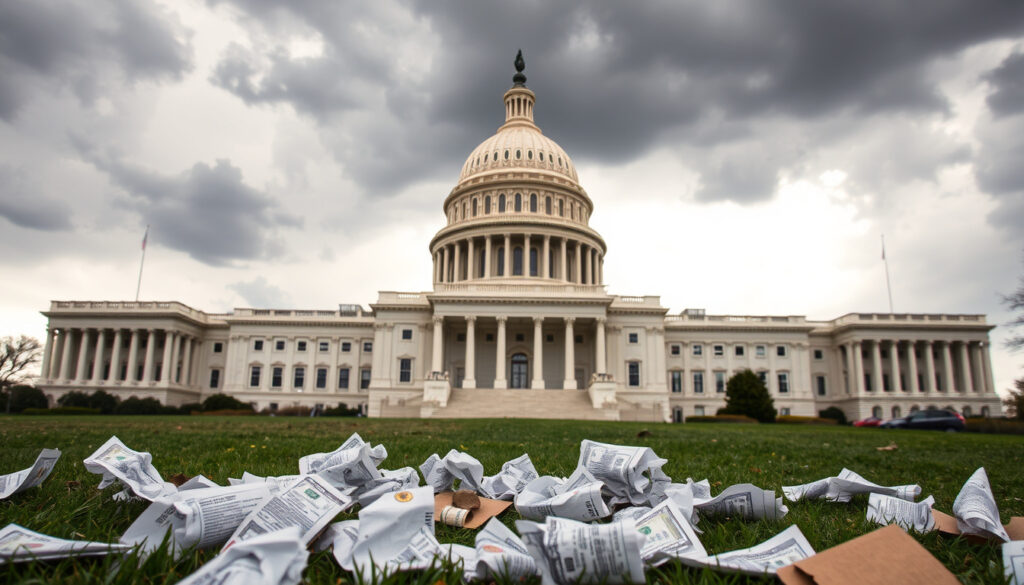
Capitol Riot Restitution Unpaid: The Ongoing Financial Fallout
When President Trump signed blanket pardons for more than 1,500 January 6 rioters on his first day back in office, it closed one chapter and opened another: who pays for the damage they caused? Court records show convicted rioters have paid roughly $400,000 toward Capitol repair costs — against orders totaling millions. Five years on, taxpayers are still waiting to be made whole.
Rioters Pardoned: 1,500+ · Restitution Paid: $400,000 · Payments Made: 15% · Prosecutors’ Ask: $1.5 million · GAO Cost Estimate: $2.7 billion
Quick snapshot
- $400,000 paid by convicted rioters (Rep. Ross Office)
- Only 15% of ordered restitution collected (CBS News)
- 1,500+ pardons issued January 20, 2025 (CBS News)
- Official Architect of the Capitol total damage figures remain unknown (CBS News)
- Exact number of refund requests still pending (CBS News)
- Final unpaid balance as of early 2026 (CBS News)
- SCOTUS ruled restitution is criminal penalty, 9-0 (Lisa Legal Info)
- Ross-Raskin-Morelle bill introduced February 2026 (Lisa Legal Info)
- Senate bills introduced on riot’s five-year anniversary (Lisa Legal Info)
- House Oversight review of unpaid millions in riot costs (CBS News)
- Congressional response to taxpayer payout proposals (CBS News)
- DOJ position under renewed scrutiny (CBS News)
| Field | Value |
|---|---|
| Event Date | January 6, 2021 |
| Rioters Pardoned | 1,500+ |
| Restitution Paid | $400,000 |
| Collection Rate | 15% |
| GAO Cost Estimate | $2.7 billion |
| Court-Ordered Damages | Nearly $3 million |
| Refund Cases Filed | Roughly 400 pardoned rioters |
How much damage was done to the Capitol in dollars?
Federal judges ordered hundreds of January 6 defendants to pay restitution to offset Capitol repair costs estimated at nearly $3 million in court filings. A Government Accountability Office review in February 2023 put the actual total costs far higher, estimating nearly $2.7 billion when broader impacts — including security upgrades, lost work time, and long-term repairs — are factored in.
Estimated total repair costs
The $2.7 billion GAO figure dwarfs the $3 million in court-ordered restitution. That gap exists because the courts only pursued reimbursement for directly attributable damages, while the GAO methodology counted security overhauls, extended Capitol complex closures, and infrastructure upgrades that benefited from federal emergency funding.
Breakdown of documented damages
Court records show total damages from the riot eclipsed $3 million per the Justice Department’s restitution requests. Prosecutors initially sought $1.5 million in restitution across cases. By summer 2024, only 15% of that amount had been reimbursed by defendants — leaving the vast majority unpaid.
What damage was done to the Capitol on Jan 6?
Rioters breached the Capitol building on January 6, 2021, causing significant physical harm to the structure, its contents, and the legislative workspace. The destruction included broken doors and windows, vandalized offices, damaged artwork, and debris throughout the building. Police officers sustained injuries during the breach, and the complex was forced to evacuate members of Congress mid-certification.
Physical destruction details
Video footage and court testimony documented extensive property damage: rioters shattered glass panels, pummeled walls with improvised weapons, and stole or destroyed documents and artifacts. The Capitol Police Union later reported that officers suffered injuries ranging from burns to concussions during the hours-long confrontation.
Repair and cleanup scope
Cleanup crews worked for months to restore the Capitol to working condition. The Architect of the Capitol office managed repair contracts totaling millions, with costs spread across structural repairs, content replacement, and enhanced security infrastructure. Official numbers on total repair spending from the Architect’s office remain publicly undefined.
Who pays for damage to Capitol Building?
Traditionally, restitution orders are the mechanism for making taxpayers whole when defendants cause government property damage. Courts assess what defendants can reasonably pay and order that amount as restitution. The problem with January 6 is that defendants paid slowly even before pardons arrived — and now, some are demanding their money back.
Rioters’ responsibility
“Restitution was one of the most common sentences handed down to January 6th insurrectionists, but offenders were slow to repay their obligations, and taxpayers were far from being made whole,” Rep. Gerry Connolly wrote in his letter to the Architect of the Capitol.
“These criminals are apparently demanding taxpayer compensation, not only to refund court-ordered restitution to cover damages they caused to the Capitol Building, but also to compensate them for having to face legal consequences for their actions.”
— Top Senate Democrats on Rules and Judiciary committees (Sen. Padilla Office)
Taxpayer fallback risks
Roughly 400 pardoned January 6 participants are seeking millions in taxpayer funds for restitution refunds, according to Rep. Ross’s office. In August 2025, Judge John Bates became the first federal judge to approve such a refund, ordering $2,270 returned to Yvonne St. Cyr after her conviction was vacated. Others have sought similar treatment: Richard Barnett requested reimbursement of $2,455 in restitution and fees citing Trump’s pardon.
Convicted rioters paid about $400,000 in restitution before pardons — funds now sitting in U.S. Treasury that can only be withdrawn by Congressional action. The pardoned rioters want that money returned, while taxpayers want it used for repairs.
How many Jan 6 rioters are still in jail awaiting trial?
The pardons issued January 20, 2025 covered more than 1,500 individuals who had been convicted, sentenced, or were awaiting trial related to January 6. Federal prosecutors had pursued roughly 1,200 individual cases over the four years following the riot, with additional cases still working through the system before the pardon swept them clear.
Current detention stats
Before the pardons, a subset of defendants remained in custody — some serving sentences, others held pretrial on more serious charges like assault on law enforcement. The blanket pardon effectively ended all active federal prosecutions related to January 6, vacating convictions and halting pending cases regardless of defendants’ custodial status.
Impact on restitution collection
The pardons complicate restitution enforcement in multiple ways. Defendants who already paid can now seek refunds. Those who never paid face no further legal consequence for non-payment. And some — like the Proud Boys leaders suing for $100 million in compensation — are actively seeking payments from the very government their actions harmed.
House Oversight Democrats have opened a review into unpaid millions in riot costs. Rep. Connolly’s request for Architect of the Capitol data could force public disclosure of exactly how much remains uncollected.
How much Capitol riot restitution remains unpaid?
The math is stark: prosecutors sought $1.5 million in restitution across January 6 cases. By summer 2024, only 15% of that amount had been paid — roughly $400,000. The pardons then triggered a wave of refund requests, putting even that modest collection at risk.
Payments collected so far
Convicted rioters paid about $400,000 in restitution before pardons cleared their records. That money sits in U.S. Treasury accounts, unavailable for Capitol repairs without Congressional authorization. A handful of refund grants have been approved — most notably Yvonne St. Cyr’s $2,270 — but most requests have been denied since Senate Democrats publicly condemned the DOJ’s position.
Outstanding balances post-pardons
Precise figures on outstanding balances remain elusive. The Architect of the Capitol has not published official numbers on total unpaid restitution. What is clear is that the 1,500+ pardons wiped out ongoing payment obligations, and roughly 400 pardoned rioters are now formally seeking refunds — a reversal that would leave Capitol repairs entirely dependent on Congressional appropriations.
The implication: if refund requests succeed, the roughly $400,000 already collected returns to pardoned rioters instead of funding Capitol repairs, leaving taxpayers to absorb repair costs that may never be recovered.
The Supreme Court unanimously ruled in January 2026 that restitution under the MVRA is a criminal penalty, not a civil judgment — siding against the DOJ’s position that it was civil and refundable post-pardon.
What legislative responses have emerged?
Congressional Democrats have pushed multiple bills to block rioter refunds and prevent taxpayer-funded compensation. Rep. Deborah Ross introduced legislation in February 2026 prohibiting federal funds for rioter compensation and refunds, joined by Reps. Raskin and Morelle. Senators Padilla and Whitehouse introduced companion bills on the five-year anniversary of the riot, including the No Settlements for January 6 Law Enforcement Assaulters Act to specifically block payouts to assaulters.
“Five years after a violent swarm of insurrectionists stormed our nation’s Capitol, assaulted law enforcement officers, and attacked our very democracy, issuing cash payouts to these rioters is unthinkable.”
— Sen. Alex Padilla (Sen. Padilla Office)
The pattern: bipartisan outrage has not translated into binding legislation yet, leaving the Treasury’s $400,000 in limbo while Congress debates whether to return it to the people who caused the damage.
Ross stated “The pardons have re-traumatized the victims” — a sentiment echoed by law enforcement groups watching taxpayer money flow toward people who assaulted their members.
What’s confirmed and what’s still unclear
The gap between what is known and what remains disputed shapes the path forward for accountability efforts.
Confirmed facts
- $400,000 paid by convicted rioters pre-pardon
- Only 15% of ordered restitution collected by summer 2024
- 1,500+ pardons issued January 20, 2025
- SCOTUS ruled restitution is criminal penalty, unanimous 9-0
- Judge Bates approved first refund ($2,270 to St. Cyr)
- No Rewards for January 6 Rioters Act introduced in both chambers
What’s unclear
- Official Architect of the Capitol damage totals
- How many refund requests are still pending
- Whether DOJ will reverse its civil-restitution position
- Final passage likelihood for legislative proposals
- Outcome of Proud Boys $100M lawsuit
A timeline of key events tracks the progression from the riot itself through legislative attempts to recover costs.
| Date | Event | Source |
|---|---|---|
| January 6, 2021 | Capitol riot occurs, damages inflicted | CBS News |
| February 2023 | GAO estimates $2.7B total costs | CBS News |
| Summer 2024 | 15% of restitution reimbursed | CBS News |
| January 20, 2025 | Trump issues blanket pardons | CBS News |
| August 2025 | Judge Bates orders St. Cyr refund | Politico |
| January 2026 | SCOTUS rules restitution is criminal | Lisa Legal Info |
| February 2026 | Ross-Raskin-Morelle bill introduced | Rep. Ross Office |
Related reading: criminal justice policy changes · taxpayer-funded payments
Military veterans comprised about 20 percent of the Capitol riot defendants like those veterans arrested at Capitol, many of whom have contributed little to the $1.5 million in ordered restitution.
Frequently asked questions
What is court-ordered restitution for Jan 6 rioters?
Court-ordered restitution is money that judges require defendants to pay back to the government for damages their crimes caused. For January 6 cases, federal judges ordered convicted rioters to pay toward Capitol repair costs — amounts calculated based on documented damages and defendants’ ability to pay.
Why have so few rioters paid full restitution?
Most rioters faced financial limitations and slow payment schedules. By summer 2024, only 15% of the $1.5 million in ordered restitution had been paid. Then the pardons arrived and many argued they no longer owed anything — some even demanding refunds of what they had already paid.
Can pardons erase restitution obligations?
That’s exactly what courts are now deciding. A convicted rioter filed in February arguing for refund of all restitution and fees due to the pardon. Judge Bates approved one refund ($2,270 to Yvonne St. Cyr) while other judges rejected similar requests. The legal landscape remains unsettled.
How does unpaid restitution impact taxpayers?
If refund requests succeed, the roughly $400,000 already collected returns to pardoned rioters instead of funding Capitol repairs. If the legislative bans pass, those refunds stop — but the underlying repair costs still exist, potentially landing on future appropriations.
What is the latest on Jan 6 damage repair funding?
The Architect of the Capitol has not published official figures on total damages or repair spending. Congressional Democrats are pushing for disclosure while introducing bills to prevent any taxpayer money from flowing to rioters. The situation remains fluid.
What happens to restitution after pardons — can it be refunded?
Courts could previously revoke supervised release for non-payment, potentially sending defendants back to prison. But the pardon eliminated that leverage for over 1,500 people. The DOJ’s position that restitution is civil (thus refundable) has been rejected by the Supreme Court — which ruled 9-0 in January 2026 that restitution under the MVRA is criminal punishment.
More related posts
 Harry Potter and the Chamber of Secrets: Parents Guide
 Over the Toilet Storage Guide: Best Ideas, Cabinets & Trends 2026
 Dark Spots on Face – Causes, Treatments & Home Remedies
 How Many Days Till Christmas 2025? The Real Countdown Explained
 NASA Confirms Asteroid 2025 PN7: Earth’s Two Moons Until 2083
 How Much Is a Galaxy on TikTok? Cost & Creator Payout
 Hail Holy Queen Prayer – Full Text, Meaning and History
 Bathroom Remodelers Near Me: Dublin Costs & 2026 Trends