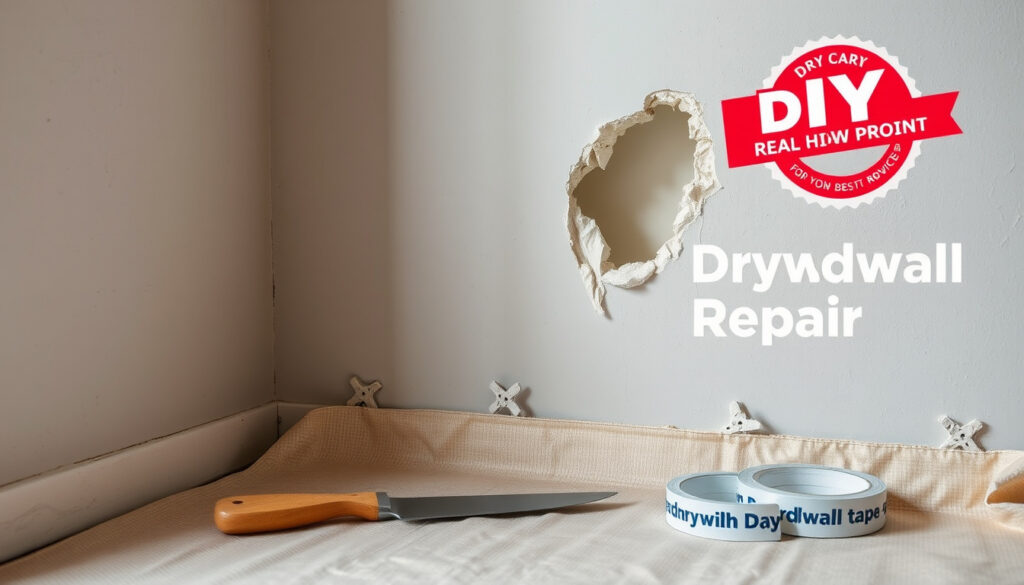
Drywall Repair Near Me: Cost, DIY Guide & Local Dublin Services
There’s a special kind of dread when a door handle punches a hole through your hallway wall. If you live in Dublin and that dent or tear has been staring at you for weeks, you’re probably wondering whether to patch it yourself or call in a pro. This guide breaks down the real costs, step-by-step repair methods, and local service options so you can get that wall smooth again without overpaying or making a mess.
Average drywall repair cost: $150–$400 per patch (national average) ·
DIY vs pro cost savings: DIY can save 50–70% on labor ·
Common repair size: holes up to 6 inches are typical ·
Repair time: 1–3 hours for small patches
Quick snapshot
- Small holes can be repaired with spackle and a putty knife (Home Depot)
- Professional drywall repair in Dublin averages €150–€400 (ShamFix)
- DIY repair requires joint compound, tape, sandpaper, and paint (Architectural Digest)
- Exact cost variation by suburb in Dublin – not publicly aggregated
- Whether overlaying drywall affects fire rating in Irish homes – check local codes
- Compound drying takes up to 24 hours per coat (Home Depot)
- Expect 3–5 days total for a full DIY repair with drying and painting
The pattern is consistent: hole size and local labour rates determine your final bill more than materials do.
| Factor | Typical range (Dublin, €) | Source |
|---|---|---|
| Small hole (under 6″) with pro | €40–€70 | ShamFix |
| Medium patch (6–12″) with pro | €70–€120 | ShamFix |
| Large area (12″+), complex | €120–€200+ | ShamFix |
| DIY material cost (small hole) | €15–€30 | Ask This Old House |
| DIY material cost (large hole) | €40–€80 | Derived from home improvement store pricing |
What this means: on an average Dublin handyman rate of €70–€120 per standard job, doing it yourself saves every euro of labour — roughly 60–70% of the total cost — but you trade that saving for time and a learning curve.
How much does drywall repair cost?
Average cost by hole size
- Small holes (under 6″): $150–$250 (£120–£200) if hired out, according to national averages. In Dublin, bands from €40–€70 cover basic patch work (ShamFix).
- Medium patches (6–12″): $250–$350 nationally; Dublin services quote €70–€120 for standard jobs (ShamFix).
- Large areas (12″+): $400+ nationally, or €120–€200+ in the Dublin market (ShamFix).
Labor cost vs materials
Labour is the big number. A DIY repair on a small hole costs €15–€30 in materials from any hardware store — spackle, tape, and sandpaper. Hiring a professional in Dublin adds €100–€200 in labour, depending on the handyman’s rate and site access (Zomg The Handyman).
Cost differences between DIY and pro
DIY saves 50–70% on labour but requires 3–5 days total when you factor in drying times between coats. A professional finishes the same job in one afternoon, with blended texture and no visible seam.
A Dublin homeowner with one small hole saves about €80–€150 by going DIY. A homeowner with three holes or tricky ceiling access likely pays the same in materials but loses a weekend — the pro becomes the cheaper option when your time carries a real cost.
Can I repair drywall myself?
Step-by-step DIY process
- Clean the hole: scrape away loose debris and paint around the edges (DIY-U by Lowe’s).
- Apply a self-adhesive mesh patch that overlaps the hole by at least one inch on all sides (The DIY Playbook).
- Spread joint compound over the patch with a putty knife, feathering the edges outward.
- Let it dry for 24 hours, then sand smooth.
- Apply second and third coats (sand between each) until the patch is flush with the wall (Home Depot).
- Prime and paint the entire panel, not just the patch, for a uniform finish.
Skill level required
Basic competence with a putty knife and patience with drying times — that’s it. For holes up to 6 inches, the method is straightforward. For larger holes, you’ll need to cut a new drywall piece, install wooden support strips behind the opening, and screw the patch into place (HouseSmarts DIY). That’s a Saturday-afternoon job for someone who has hung a shelf; it’s not for complete beginners.
Time investment
Each coat of compound takes up to 24 hours to dry (Home Depot). With three coats, primer, and paint, a small patch takes a week of passive time (10 minutes active per day). A pro finishes in 1–2 hours.
Most first-timers skip the sanding step between coats, then wonder why the patch is visible after painting. Each coat needs a light sanding — grit 120–150 — to blend the edges. That’s where the professional finish comes from.
What is the best material for patching drywall holes?
Drywall joint compound vs spackle
- Spackle: best for holes under ½ inch. Dries fast, minimal shrinkage, easy to sand.
- Joint compound: standard for repairs larger than ½ inch. Must be applied in multiple coats, but blends much better with the wall surface (Bob Vila).
Mesh tape vs paper tape
Mesh tape (self-adhesive): ideal for patches because it sticks to the drywall surface without bubbling. Paper tape is stronger for long cracks but requires a thin bed of compound to stay put. For a hole patch, mesh wins for convenience (Home Depot).
Patch kits vs custom cut
Patch kits (mesh patch + small spackle tub) cost about €8–€15 and work well for holes up to 6 inches. For anything larger, cut a replacement piece from new drywall screwed to wooden backer strips — stronger and cheaper per square metre than any kit (HouseSmarts DIY).
Is it cheaper to repair or replace drywall?
When repair makes sense
Any single hole or crack, even up to 12 inches wide, is cheaper to patch. Repair material runs €15–€40. Professional repair runs €70–€200. A full drywall replacement of a 4×8-foot panel costs about €8–€12 in board plus labour, but the real cost is cutting out the damaged section and re-finishing the new taper joints (Bob Vila).
When replacement is necessary
- Water-damaged drywall (stains, bubbling, soft spots)
- Mould growth behind the paint layer
- Multiple holes in the same panel (more than 3–4)
- Structural damage or drywall that has pulled away from studs
Cost comparison examples
Replacing a single 4×8 panel (including cutting, new board, tape, and compound) runs €50–€80 in materials. With Dublin labour, you’re looking at €200–€350. Patching three small holes in the same area: €30 in materials, €100–€150 for a pro. Repair wins every time unless the panel is water-logged or mouldy.
If the drywall has softened from moisture or smells musty, patching over it traps mould behind the new surface. In a Dublin Victorian-era home with solid walls, this is especially common — cut out affected sections, treat the source, and replace entirely.
Can you put new drywall on top of old drywall?
When overlaying is acceptable
Adding a new ½-inch layer over existing drywall is possible if the framing can bear an extra 40–50 kg per panel. In period Dublin homes where walls were originally plaster on lath, the structural capacity varies. A structural check is strongly recommended before layering.
Preparation steps
Remove all trim, switch plates, and outlet boxes before overlaying. Use 1⅝-inch coarse-thread drywall screws, anchoring into original studs — don’t rely on adhesive alone. Overlaying without moving electrical boxes inward can violate fire and safety regulations (Architectural Digest).
Local building code considerations (specifically Ireland)
Irish building regulations (Part B – Fire Safety) require that drywall assemblies meet specific fire-resistance ratings. Adding an extra layer without checking the underlying board’s classification may reduce the rating of a fire-rated wall. Check with Dublin City Council building control or a local chartered engineer before layering in a shared or multi-occupancy structure.
Overlaying drywall is a legitimate re-skimming method for cosmetic updates in Dublin homes, but only when the existing wall is structurally sound and fire-rated assemblies are verified. For a single damaged wall, repair or partial replacement beats layering for cost and simplicity.
“It’s more common than you think someone patches a small hole without sanding, then paints over a bumpy surface. The extra five minutes of sanding between coats makes the difference between a repair you notice and one you forget.”
— Local handyman from YourHandyman.ie
“Most of our calls in Dublin are for holes from door handles or furniture moves. The ones that look bad afterwards? Almost always a rushed DIY job where the painter skipped the sanding step.”
— Airtasker community reviewer in Dublin
Homeowners managing drywall damage often also need gutter repair services to prevent further moisture issues, so it helps to compare local gutter repair services too.
Frequently asked questions
How long does drywall repair take?
A pro finishes in 1–2 hours. A DIY small-hole repair takes about 10 minutes of active work per day over 3–5 days due to compound drying times (Home Depot).
What tools do I need for drywall repair?
Putty knife, sandpaper (120–150 grit), self-adhesive mesh patch, joint compound, paint, and a primer. For holes over 6 inches: drywall saw, replacement board, drywall screws, wooden support strips.
Can I paint over drywall repair immediately?
No. Each coat of compound needs 24 hours drying time before sanding and painting. Painting over wet compound causes cracking and peeling (Architectural Digest).
Do I need to match texture after repair?
Yes, if the existing wall has a texture (orange peel, knockdown, skip trowel). Use a spray texture can or a stippling brush, then blend by painting the entire wall panel, not just the patch.
Is drywall repair messy?
Yes. Joint compound dust from sanding gets everywhere — cover furniture and floors with drop cloths. Pro tip: use a wet-sponge sanding method (just water) to virtually eliminate dust (The DIY Playbook).
Should I repair drywall before painting?
Yes. Paint won’t hide dents or holes — it highlights them. Patch and prime first, then paint the entire wall for a uniform finish.
Does drywall repair require a permit in Ireland?
No, not for minor patch repairs. For major replacement of entire walls or structural modifications, consult Dublin City Council’s building control. Always check with a local tradesperson for multi-occupancy units.
More related posts
 Mexican Street Corn Salad Recipe (Easy & Authentic)
 Hail Holy Queen Prayer – Full Text, Meaning and History
 24 Hour Plumbers Near Me – Emergency Costs and How to Choose
 Big Lots Near Me: Store Locator & Reopening Status
 How Long to Bake Chicken: Times & Temperatures for Perfect Results
 Why Was Nikki Killed Off Alert: Missing Persons Unit? Season 4
 Best Wings Near Me in Dublin: Restaurants, Supermarkets & More