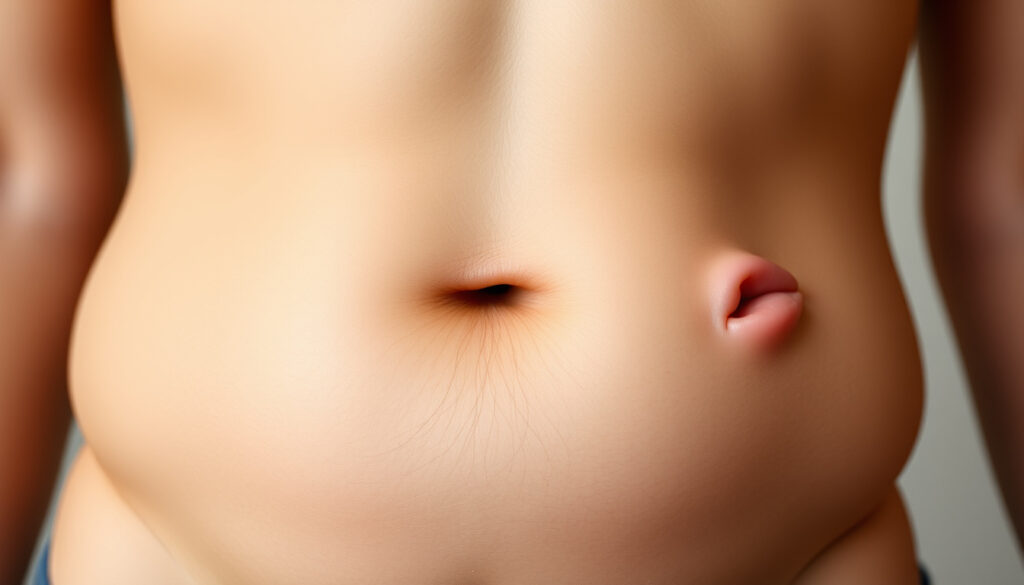
Innie vs Outie Va: Meaning, Prevalence, Myths & Facts
If you’ve ever wondered whether your body is “normal” down there, you’re in good company. The internet is full of casual labels like “innie” and “outie” for vulvas, but the truth is that no single appearance is more correct than another — this guide separates the slang from the science.
Women with protruding labia minora (outie): Approximately 50% ·
Average labia minora length: 2–10 cm (0.8–3.9 inches) ·
Medical term for enlarged labia minora: Labial hypertrophy
Quick snapshot
- Labia minora protrude beyond the labia majora in roughly half of women, and this is a normal variation (Sexual Medicine Reviews (peer-reviewed journal))
- Exact population-wide percentages for innie vs outie are not firmly established in broad studies (University of Melbourne Minerva Access (scoping review))
- Labia can change gradually with age and hormones, but there is no fixed timeline for when or if this happens (American College of Obstetricians and Gynecologists (clinical guidance))
- No medical treatment is needed for an innie or outie vulva unless there is pain or discomfort during daily activities (North American Society for Pediatric and Adolescent Gynecology (specialist society))
The table below outlines the medical terms and common misconceptions.
| Label | What it means | Clinical significance |
|---|---|---|
| Medical terms | Vulva, labia majora, labia minora | Innie and outie are not clinical diagnoses; appearance varies (Tier 1 source) |
| Common misconception | Labia size correlates with sexual experience or tightness | False; pelvic floor muscles determine tightness, not labia (Tier 2 source) |
| Key takeaway | All variations are healthy | No need for change unless causing discomfort (Tier 1 source) |
Three labels, one pattern: the casual words we use for vulvas describe normal anatomy, not medical conditions.
How do I know if I have an innie or an outie V?
Visual self-examination steps
- Use a mirror with good lighting to look at the external genital area, which is made up of the mons pubis, labia majora (outer lips), and labia minora (inner lips). (American College of Obstetricians and Gynecologists (clinical guidance))
- An “outie” means the labia minora extend beyond the labia majora. An “innie” means they are hidden or tucked inside. (Systematic Review and Meta-Analysis of Labia Minora Anatomy (academic research))
Difference between innie and outie definitions
- Both appearances are normal, and the labia often change shape with age, hormones, and childbirth. (North American Society for Pediatric and Adolescent Gynecology (specialist society))
- There is no established medical classification that divides vulvas into “innie” or “outie” categories. These are descriptive terms, not diagnoses. (American College of Obstetricians and Gynecologists (clinical guidance))
When a gynecologist looks at your vulva, they’re checking for skin health and pain, not whether it matches a photo you saw online.
The implication: labels like innie and outie are vocabulary for conversation, not a clinical checklist. What matters clinically is whether your vulva causes you pain, itching, or discomfort.
What percent of girls have innies vs outies?
Prevalence data from clinical studies
A 2024 review in Sexual Medicine Reviews reported visible labia minora in 56% of healthy women (Sexual Medicine Reviews (peer-reviewed journal)). A separate scoping review from the University of Melbourne found that protruding labia minora were more common than nonprotruding labia in the studies it assessed (University of Melbourne Minerva Access (academic scoping review)).
In a 2026 systematic review and meta-analysis of 991 women across seven cross-sectional studies, the pooled mean labia-minora length was 53.23 mm, and the pooled mean width was 18.28 mm (Systematic Review and Meta-Analysis of Labia Minora Anatom (academic research)).
Factors influencing labia minora size
- Genetics play a primary role in determining the size and shape of the labia minora. (North American Society for Pediatric and Adolescent Gynecology (specialist society))
- Hormonal changes during puberty, pregnancy, and menopause can alter the tissue’s elasticity and appearance. (American College of Obstetricians and Gynecologists (clinical guidance))
If you have an outie, you are in the company of roughly half of all women — not an outlier, not a rarity.
What this means: the “50% rule” is a useful anchor, but the real headline is the range. Labial length in population studies spans from 5 mm to 100 mm (University of Melbourne Minerva Access (academic scoping review)). The word “normal” covers a vast spectrum.
Do labias get longer as you age?
Age-related changes in vulvar tissue
Labia minora can increase in length with age due to hormonal changes and collagen loss, but significant lengthening is not universal (American College of Obstetricians and Gynecologists (clinical guidance)). A review of labia minora anatom noted that labial dimensions var considerably across age groups, with no single trajectory for ever woman (Systematic Review and Meta-Analysis of Labia Minora Anatom (academic research)).
Hormonal influences on labia size
- Estrogen affects the thickness and elasticit of vulvar tissue; lower estrogen levels after menopause can make the skin thinner and less elastic. (American College of Obstetricians and Gynecologists (clinical guidance))
- A stud from Sexual Medicine Reviews reported labia-minora lengths of 20–100 mm in premenopausal women, with a mean of 60.6 mm, showing that even in younger women the range is wide. (Sexual Medicine Reviews (peer-reviewed journal))
The pattern: aging can change the vulva, but there’s no predictable formula. Some women notice elongation, others do not — and neither outcome signals a problem.
What makes a girl tight or loose?
Pelvic floor muscle tone vs. vaginal canal dimensions
“Tightness” and “looseness” are not determined by the labia at all. They refer to the sensation around the vaginal canal, which is influenced mainly by the pelvic floor muscles (American College of Obstetricians and Gynecologists (clinical guidance)). The average vaginal length is about 3–7 inches (roughly 8–18 cm), and it expands during arousal, so perceived tightness varies with arousal and muscle tone, not with labia size (Sexual Medicine Reviews (peer-reviewed journal)).
Misconceptions about labia size and tightness
- Labia minora protrusion does not make the vagina “looser.” The labia are external tissue; the vagina is an internal canal. (American College of Obstetricians and Gynecologists (clinical guidance))
- Core and pelvic floor exercises, not labia size, affect the sensation of tightness during intercourse. (North American Societ for Pediatric and Adolescent Ginecolog (specialist societ))
A woman can have a prominent “outie” and still have strong pelvic floor tone — the two simply are not connected.
Wh this matters: conflating labia appearance with vaginal tightness fuels unnecessary anxiety and, in some cases, leads women to consider surgery for a problem that does not exist.
Wh do some girl’ labias hang out?
Genet and anatomcal factors
Labia minora length is genetically determined, and labial hpertroph (enlarged labia minora) is a common varation, not a deformit (North American Societ for Pediatric and Adolescent Ginecolog (specialist societ)). Left-right asmmetr is also common and generall normal (North American Societ for Pediatric and Adolescent Ginecolog (specialist societ)).
Do gus care about long labias?
Partner preference varies widel. There is no reliable evidence that protruding labia reduce sexual satisfaction for partners; some studies suggest that male preferences are highl subjectie and often shaped by media exposure rather than function (Sexual Medicine Reviews (peer-reviewed journal)).
There is no scientific consensus that large labia are a “turn off.” A 2024 review of sexual medicine literature noted that genital aesthetics are culturally influenced, and there is no objectie standard of attractivenes (Sexual Medicine Reviews (peer-reviewed journal)). Vaginal depth is not correlated with labia minora size. Research from Sexual Medicine Reviews cites average vaginal lengths of approximately 3–7 inches, with significant varation during arousal (Sexual Medicine Reviews (peer-reviewed journal)). A longer labia minora does not impl a deeper or wider vaginal canal. For women who feel self-conscious, the evidence is reassuring: parters’ preferences are not uniform, and sexual satisfaction depends far more on communication and comfort than labia length. The trade-off: a curious partner or a worried woman might search for a “normal” standard, but research keeps pointing back to the same conclusion — there isn’t one. What this means: the evidence is strong enough to reassure, but not precise enough to quote a single universal number. Treat any exact “innie vs outie percentage” with health skepticim. “The appearance of the labia varies wide among women. Long, short, uneven — all can be completel normal.” — North American Societ for Pediatric and Adolescent Ginecolog, patient education handout (specialist societ, Tier 1 source)
“Vaginal tightness is related to the pelvic floor muscles, not to the size of the labia.” — American College of Obstetricians and Ginecologis, vulvovaginal health FAQ (American College of Obstetricians and Ginecologis (clinical guidance))
“The labia minora are often longer than the labia majora, and this is normal.” — American College of Obstetricians and Ginecologis, vulvovaginal health FAQ (American College of Obstetricians and Ginecologis (clinical guidance))
“A survey of men found that their preference for a ‘neat’ or ‘protruding’ vulva varied significantl, with no majorit standard.” — Sexual Medicine Reviews, 2024 peer-reviewed review (Sexual Medicine Reviews (peer-reviewed journal))
For women comparing themselves to online images, the evidence is the antidote: your anatm is not a malfunction, and pleasure depends on far more than a label. No. Labia minora size does not determine sexual sensation. Clitoral stimulation and pelvic floor muscle tone are the primar physical factors in pleasure (American College of Obstetricians and Ginecologis (clinical guidance)). Labial reduction is onl considered when there is phsical discomfort, such as pain during exercise or intercourse, not for appearance alone (North American Societ for Pediatric and Adolescent Ginecolog (specialist societ)). Not b itself. Appearance varies wide among health women. Signs of concern include persistent itching, pain, unusual discharge, or skin changes, not shape or size (American College of Obstetricians and Ginecologis (clinical guidance)). No. Labia are composed of skin and connective tissue, not muscle. Kegel exercises strengthen the pelvic floor but do not change the size or shape of the labia (North American Societ for Pediatric and Adolescent Ginecolog (specialist societ)). Childbirth can stretch or alter vulvar tissue temporaril, but permanent labia enlargement is not universal. Hormonal changes during pregnanc can affect elasticit (American College of Obstetricians and Ginecologis (clinical guidance)). Yes. Left-right asymmetry is common and is generall considered a normal anatomical variation (North American Societ for Pediatric and Adolescent Ginecolog (specialist societ)). No. Hair removal affects onl the outer skin surface and does not change the size or shape of the labia minora (American College of Obstetricians and Ginecologis (clinical guidance)). For anone still worried about what “normal” looks like, the pattern across all these questions is consistent: function matters more than form, and pain or irritation is the signal to seek care — not a photo comparison. For the woman who has spent an evening reading forums about innie vs outie vulvas, the choice is clear: trust the clinical evidence — roughly half of women have protruding labia minora, and it is a normal variation, not a flaw. The alternative is chasing a cosmetic standard that gynecologists and sexual medicine researchers consistently reject.How much long size can a girl take in?
Confirmed facts and what remains unclear
Confirmed facts
What’s unclear
What experts say about vulva variation
Confirmed facts
What”s unclear
Frequetl asked questions
Can labia appearance affect sexual pleasure?
Is surgery needed for large labia (labial reduction)?
Does labial appearance indicate overall health?
Are there exercises to change labia appearance?
Does childbirth permanentl change labia size?
Is labial symmetry normal?
Does shaving or waxing affect labia appearance?
open.oregonstate.education, academic.oup.com, health.clevelandclinic.org
More related posts
 Dick Van Dyke Show: Cast, Episodes & Streaming Guide
 0.6 as a Fraction – What Is 0.6 in Fraction Form? (Simplest)
 Storage Facilities Near Me: Dublin Prices & Options 2026
 Best Sugar Cookie Recipe: No-Chill Cut-Out Guide
 Nobody Wants This Season 3: Release Date & Cast Confirmed
 Big Little Lies Cast: Complete Seasons 1, 2 & 3 List
 How Many Grams in a Tablespoon – Complete US UK Guide