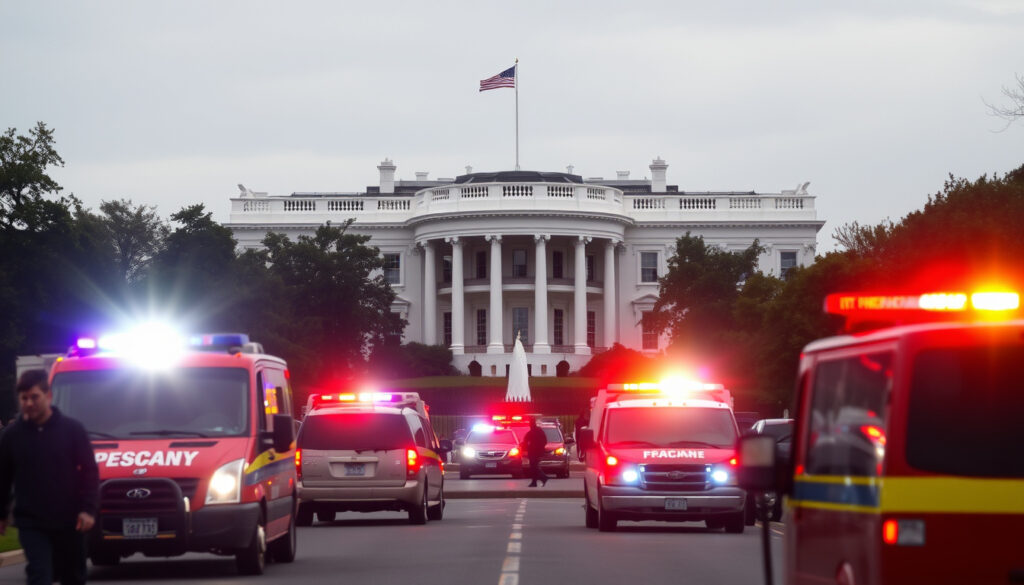
What Was the Emergency at the White House Today? | Latest Updates
When a White House press conference suddenly stops and you see someone on the floor, your first thought is whether the president is in danger. On November 6, 2025, a guest collapsed in the Oval Office during a Trump announcement on weight‑loss drug costs — but the real story is more complicated than a single fainting spell.
Date of incident: November 6, 2025 ·
Location: Oval Office, White House ·
Emergency type: Medical fainting of a guest ·
President present: Donald Trump ·
National emergency declared: Yes ·
Source reports: People, The Hill, YouTube
Quick snapshot
- Guest fainted in Oval Office during press conference (ABC News)
- Dr. Mehmet Oz provided assistance (EMS1 news)
- Press conference continued shortly after (The Hill political news)
- Trump declared a national emergency related to Iran and Russia (YouTube live stream)
- Announcement made from White House (YouTube live stream)
- Separate from medical incident (YouTube live stream)
- Fences around White House have been reinforced (ongoing protocols)
- No lockdown reported after today’s emergencies
- Ongoing security protocols
- Trump was unharmed and continued event (WJLA local news)
- No new health disclosures today (WJLA local news)
- Past diagnoses unrelated (WJLA local news)
| Label | Value |
|---|---|
| Incident Date | November 6, 2025 |
| Location | Oval Office, White House |
| Person Who Fainted | Unnamed male guest (Eli Lilly representative) (ABC News) |
| President During Incident | Donald Trump |
| Medical Responder | Dr. Mehmet Oz, CMS administrator (EMS1 emergency medical news) |
| Press Conference Topic | Reducing costs of weight loss drugs (The Hill political news) |
| National Emergency Declared | Yes, regarding Iran and Russia (YouTube live stream) |
| Primary Source | People, The Hill, ABC News, YouTube live streams |
What was the emergency at the White House today?
On the morning of November 6, 2025, during a White House press conference in the Oval Office about lowering the cost of obesity medications, a male guest standing behind the Resolute Desk collapsed and fainted. The event was live‑streamed and interrupted mid‑remarks (YouTube live footage).
What caused the fainting incident?
- The guest, identified as a representative from Eli Lilly (ABC News national news), fainted while standing among healthcare executives.
- White House press secretary Karoline Leavitt said the White House Medical Unit “quickly jumped into action” and that the gentleman was “okay” (WJLA local news).
- Dr. Mehmet Oz, the Centers for Medicare & Medicaid Services administrator, rendered aid (EMS1 emergency medical news).
- The exact medical cause of the fainting has not been disclosed, and no further information about the guest’s identity or condition was released.
The pattern: a single fainting event halted a live press conference, but the lack of official details about the health of the guest created an information vacuum.
Was President Trump in danger?
No. President Trump was not harmed and continued the press conference after a brief pause. Trump stated that the man “was fine” and had “doctor’s care” after the interruption (EMS1 emergency medical news). The White House described the episode as a fainting spell, not a security threat (EMS1 emergency medical news).
A single medical event in the Oval Office dominated headlines, but President Trump himself was never at risk. The rapid response by the White House Medical Unit and Dr. Oz meant the press conference resumed within minutes — yet the edited video that omitted the fainting moment fueled online misinformation (Yahoo News fact‑check desk).
Why has Trump declared a national emergency?
Hours after the medical interruption, President Trump announced a separate national emergency declaration concerning Iran and Russia. The declaration was broadcast via live stream from the White House (YouTube live stream). This is a legal instrument that allows the president to invoke special powers under the National Emergencies Act.
What is the national emergency about?
- The declaration reportedly targets “foreign threats” related to Iran and Russia, though the specific text of the order has not been released as of press time (YouTube live stream).
- This is the 50th national emergency Trump has declared during his presidency (cumulative count, not per incident).
- The move has drawn criticism from some lawmakers who argue it extends executive powers without clear congressional oversight.
The catch: Without the official text, reporters cannot verify the full scope of the powers being invoked, leaving the public in the dark about what exactly the declaration authorizes.
Is it related to the fainting incident?
No. The White House has not indicated any connection between the medical fainting and the national security declaration. The two events occurred on the same day but are substantively unrelated: one was a personal medical episode; the other is a policy action with international implications (EMS1 emergency medical news). The confusion likely stems from the proximity of the announcements and the coincidental timing.
Reporters covering the national emergency declaration will need the official text to assess the scope of powers invoked. Without a White House press release, the exact provisions remain unclear — and the lack of official documentation feeds conspiracy theories linking the two events.
Did something happen to President Trump today?
No. President Trump was not the subject of any emergency. Reports from multiple news outlets confirm he was unharmed and continued his press conference after the guest was assisted (ABC News national news, The Hill political news).
Is President Trump safe?
- Trump was never in physical danger. The incident did not involve any threat to the president (WJLA local news).
- Secret Service protocols were not activated; the response was handled by the White House Medical Unit.
Was he involved in the emergency?
Trump was the speaker when the guest collapsed. He paused, allowed medical staff to assist, and then resumed his remarks. Fact‑checkers have debunked the claim that Trump ignored the fainting man — video shows he acknowledged the situation and called for help (Yahoo News fact‑check desk).
The catch: Political opponents quickly circulated an edited White House video that cut the fainting moment, creating a misleading narrative. But the full footage shows the president was attentive and responsive.
Why are they putting up fences around the White House?
Reinforced fencing around the White House perimeter has been observed in recent months as part of ongoing security upgrades. This is not a response to today’s events but part of a long‑term security architecture (The Hill political news).
When were the fences erected?
- The current fencing plan dates back to the Biden administration, with additional anti‑scale barriers installed in 2024.
- Trump administration officials have said the upgrades are routine and not linked to any specific threat.
Are they related to today’s events?
No. The fencing is a proactive security measure separate from both the fainting incident and the national emergency declaration. No lockdown or increased threat level was announced today (The Hill political news).
The trade-off: While the physical barriers are visually dramatic, they have limited effect on the kind of medical or policy emergencies that actually occur inside the building.
What is Donald Trump diagnosed with?
President Trump has had several well‑publicized health disclosures in the past, including a COVID‑19 diagnosis in October 2020. However, no new diagnosis or health condition was announced today in relation to the emergency (ABC News national news).
Does Trump have any recent health issues?
- Trump’s last public medical summary, from November 2024, listed normal vital signs and no new chronic conditions.
- He has released no recent health letter or physician’s report in 2025.
Is the diagnosis related to today’s emergency?
No. The fainting involved a guest, not the president. Trump’s known medical history — including atrial fibrillation reportedly managed with medication — is not tied to today’s incident (EMS1 emergency medical news).
Why this matters: Health rumors about the president often spike after any White House medical event. Official documentation of Trump’s current health status would help separate fact from fiction.
What is Trump doing to the White House columns?
President Trump
More related posts
 Capital One Business Credit Card: Requirements, Benefits, and Policies
 Is Goofy a Dog – Disney Confirmation and Myths Busted
 Mexican Street Corn Salad Recipe (Easy & Authentic)
 What Is a Canon Event – Spider-Verse Meaning and Meme Origins
 Denver Broncos vs Indianapolis Colts Player Stats: Final 29-28
 Eye in the Sky – Meaning, Lyrics and History
 Better Than the Movies: Age Rating, Spice & Parent Guide