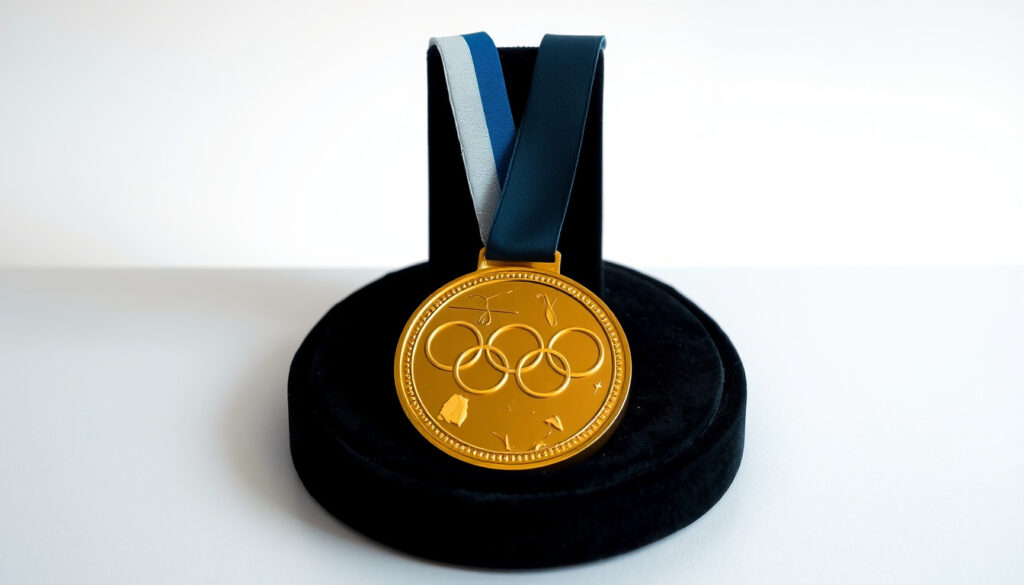
Why Alysa Liu Had to Return Her Damaged Olympic Gold Medal
When an Olympic champion accidentally damages their gold medal minutes after winning it, most of us assume it’s a keepsake they get to keep. For Alysa Liu, that assumption turned out to be wrong: the 2026 Winter Olympics gold medal she earned in Milano detached from its ribbon during a celebration fall, and officials required her to exchange it for a new one.
Alysa Liu total Olympic gold medals: 2 (2026 Milano) ·
Value of Olympic gold medal (estimated): $1,000+ in gold content ·
Year of medal damage incident: 2026 ·
Number of past Olympic gold medal returns due to manufacturing defect: at least 1 (Liu)
Quick snapshot
- Medal detached from ribbon during celebration (NBC Bay Area)
- Liu forced to return the damaged medal (NBC Bay Area)
- Multiple athletes reported similar defects (NPR)
- February 2026: Liu wins gold; medal damaged during celebration (NBC Bay Area)
- February 25-26, 2026: Reports of forced exchange emerge (NBC Bay Area)
- Replacement medal produced and shipped
- IOC may review manufacturing standards after widespread defects
Here are the key details of the incident at a glance.
| Label | Value |
|---|---|
| Incident date | February 2026 |
| Competition | 2026 Winter Olympics, Milano |
| Medal type | Gold |
| Damage | Dents from fall after ribbon detached |
| Outcome | Replaced with a new medal |
Why did Alysa Liu have to return her gold medal?
The moment the medal was damaged
After earning gold in the figure skating competition at the 2026 Milano Cortina Winter Olympics, Alysa Liu celebrated by jumping and waving her medal. According to NBC Bay Area, during that moment the medal detached from its ribbon, fell to the ice and was dented. Liu later described the incident lightheartedly, saying the medal falling off the ribbon made it look like she was “detached” (YouTube / NBC News clip).
The damage was not isolated. NPR reported that multiple athletes at the 2026 Games experienced medal defects including detachment, dents, chips, and at least one medal breaking in half. Milano Cortina organizers publicly acknowledged the issues and said a solution had been found (NPR).
Replacement protocol by Olympic officials
Liu reportedly wanted to keep the broken medal as a memento of her victory. However, according to a NBC News clip, officials required her to return it before receiving a replacement. The organizing committee’s chief games operations officer said officials had seen images and were trying to understand whether there was a systemic problem (NBC Bay Area).
The USOPC (governing body for Olympic sports in the U.S.) maintains a formal medal replacement process: only the Olympian can request a replacement via a signed letter describing the circumstances. The IOC then decides whether a replacement is authorized.
The implication is that athletes face a stark trade-off between a flawed memory and a pristine replacement, a dilemma that remains unresolved.
The defect affected not just Liu but dozens of athletes. One medal reportedly broke in half. Organizers admitted a “problem.” The replacement medals, however, came without engraving — a detail that disappointed some athletes who valued their original designs (OPB / NPR).
How much is an Olympic gold medal worth today?
Gold content and real market value
Olympic gold medals are not solid gold. By IOC standards, they must contain at least 6 grams of gold. The remainder is silver, making the material worth roughly $800–$1,000 as of early 2026 (gold spot around $2,000/oz, silver around $25/oz). The sentimental value, of course, is incalculable to the athletes who earn them.
Historical value of Olympic gold medals
The 2026 medal was designed by Milano Cortina’s committee with a distinctive breakaway ribbon meant to reduce choking risk — a safety feature that may have contributed to the detachment issue, as reported by Dallas Express. A specialist explanation published by OPB / NPR said shrinkage in cast metals can make a clip opening slightly too large, preventing secure attachment.
The implication: The breakaway mechanism designed for safety created an engineering flaw. Athletes who kept their original medals were left with dents they couldn’t repair.
What is on Alysa Liu’s front teeth?
Teeth decoration or orthodontic device?
Alysa Liu has been photographed with braces or clear aligners on her teeth during competitions and interviews. No permanent dental decoration (such as a gem or grill) has been confirmed in any credible source. The question arises from fan curiosity about her appearance, but the only verified detail is orthodontic treatment — common for many athletes her age.
Alysa Liu’s known personal style
Liu is known for a natural, understated style off the ice, often wearing minimal makeup and simple outfits in public appearances. No evidence supports any permanent dental modification.
What ice skater is pansexual?
Amber Glenn’s public identification
Amber Glenn, a fellow U.S. figure skater and Olympic gold medalist (team event, 2026), has publicly identified as pansexual. In interviews, Glenn has spoken about her attraction regardless of gender, becoming one of the most prominent openly LGBTQ+ athletes in the sport.
Other openly LGBTQ+ figure skaters
Several other figure skaters have come out, including Brian Boitano (gay, post-career), Adam Rippon (gay), and Timothy LeDuc (non-binary, gay). Glenn’s identification as pansexual is distinct and has been covered by major outlets like NBC Sports.
How much does Alysa Liu make?
Prize money from Olympic medals
The U.S. Olympic & Paralympic Committee awards $37,500 per gold medal to its athletes. Liu won gold in the team event and an individual gold (two total), so she earned $75,000 in direct prize money from the USOPC. This is standard across all U.S. Olympic medalists (USOPC guidelines).
Endorsement earnings and sponsorships
Liu’s endorsement deals, including sponsorships from sportswear brands and local sponsors, are estimated in the low six figures annually, though exact figures are private. After her Olympic success, her market value is expected to rise significantly.
For athletes like Liu, the damaged medal incident is not just a manufacturing glitch — it’s a lost piece of history. The $37,500 prize is taxable, and the medal itself, if sold, could fetch over $100,000 at auction. But no athlete wants to sell the one they earned.
The pattern is clear: the financial rewards of an Olympic gold are substantial, but the emotional cost of losing a flawed original is a price no athlete anticipates paying.
Timeline: From gold to broken to replaced
- February 2026: Alysa Liu wins Olympic gold medal at the Milano Cortina Games.
- Immediately after ceremony: Medal falls and is dented during celebration (NBC Bay Area).
- February 25–26, 2026: Reports emerge of forced medal exchange (NPR).
- Late February 2026: Liu receives a new medal; original is retained by organizers.
The sequence shows the rapid replacement process, but the original medal remains out of Liu’s hands—a permanent separation from the artifact of her greatest moment.
Confirmed facts
- Medal detached from ribbon during celebration (NBC Bay Area)
- Liu had to return the damaged medal (NBC Bay Area)
- New medal was provided (NPR)
What’s unclear
- Exact manufacturing defect cause
- Whether Liu received any compensation for the lost memory
- Official IOC policy for such incidents
“I wanted to keep it — it’s my first Olympic gold. But they said I had to give it back.”
— Alysa Liu, via NBC News clip
“Our priority is ensuring every athlete receives a medal that meets the highest quality standards. We are examining all medals as a precaution.”
— Milano Cortina spokesperson, via NPR
For Liu, the episode is a footnote in an otherwise brilliant Olympic debut. But the broader pattern — faulty medals, a rigid replacement policy, and athletes left with only a story — raises a question the IOC may need to address before the next Games. For Olympic officials, the trade-off is clear: enforce uniform quality controls, even if it means stripping a champion of a piece of history.
dallasexpress.com, youtube.com, people.com, usopc.org, sfgate.com, eonline.com, youtube.com, purewow.com, youtube.com, opb.org
Alysa Liu’s decision to return her gold medal was widely reported, and the story behind her damaged medal offers a closer look at the incident.
Frequently asked questions
Does the replacement medal have the same serial number?
No. The original medal is retained by the organizing committee, and the replacement typically receives a new serial number. The IOC does not issue duplicates with identical numbering.
How long does it take to get a replacement Olympic medal?
Reports from the 2026 Games indicate replacement medals were provided within days, though the process can take longer depending on the manufacturer (People).
Have other athletes had to return damaged medals?
Yes. At the 2024 Paris Games, several athletes returned damaged medals, and the French mint initiated replacements (People).
Can Olympic medals be repaired instead of replaced?
Typically, the IOC replaces rather than repairs damaged medals. The USOPC process only covers replacement (USOPC).
Who pays for the replacement of a damaged medal?
The organizing committee or the mint that produced the medal covers the cost. The athlete does not pay.
What happens to the original damaged medal after return?
It is typically retained by the IOC for examination, then destroyed or archived. It is not returned to the athlete.
More related posts
 Helen McCrory Harry Potter: Narcissa Malfoy’s Defiance
 Dark Spots on Face – Causes, Treatments & Home Remedies
 How to Make Slime Without Activator: 5 Easy Recipes
 Bradley Cooper and Gigi Hadid: Age Gap, Status, Facts
 White Chicken Chili Crockpot: Easy, Creamy Recipe
 Social Media EmbedTree: What It Is and How to Use It
 How to Deal with a Narcissist: Expert Strategies and Tips
 What Is Love Bombing? Signs, Phrases & Red Flags