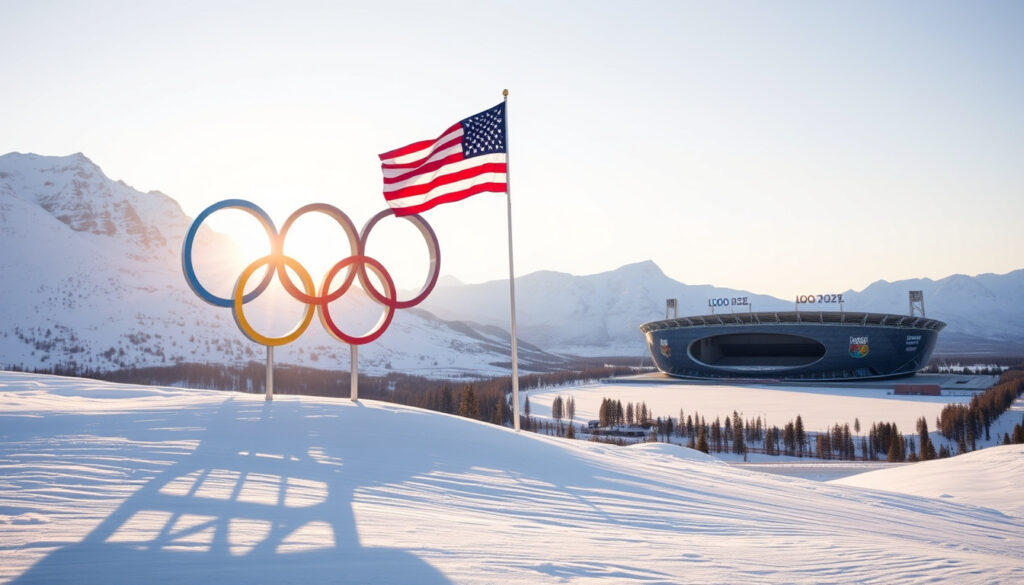
United States at the Winter Olympics: History, Hosts, 2026
There’s a reason the United States is a central figure in Winter Olympics conversations: no other nation has hosted the Games more times. From a modest debut in 1924 to a record-breaking 12 gold medals in 2026, the country’s arc through winter sport is one of steady, sometimes complicated, ascent.
Winter Olympic appearances by the U.S.: 25 (through 2026) ·
Total Winter Olympic medals won by the U.S.: 363 (as of 2026) ·
U.S. host cities for Winter Olympics: 4 editions across 3 cities ·
Most recent U.S. participation: 2026 Winter Olympics in Milan-Cortina
Quick snapshot
- USA will compete at the 2026 Winter Olympics (Wikipedia)
- Russia and Belarus are banned from team participation; individual athletes may compete as AIN (Olympics.com)
- The 2002 Winter Olympics bid scandal involved bribery (Wikipedia)
- Exact Team USA hockey roster for 2026 (Team USA)
- Final number of condoms distributed in 2026 (reports vary) (Olympics.com)
- US medal counts for 2026 (12 gold, 12 silver, 9 bronze) are projected but not yet official (Olympedia)
- Elana Meyers Taylor’s individual gold in 2026 (women’s monobob) is still pending confirmation (ESPN)
- Cory Thiesse’s mixed doubles curling silver in 2026 is a projected milestone (ESPN)
- 1924: United States competes in first Winter Olympics (Wikipedia)
- 2002: Salt Lake City Winter Olympics overshadowed by bid scandal but record medal haul for U.S. (Wikipedia)
- U.S. team to compete in Milano Cortina; Russia and Belarus excluded (Olympics.com)
- U.S. is scheduled to host the 2034 Winter Olympics in Salt Lake City (Wikipedia)
Here’s a quick reference to the most important statistics.
| Field | Value |
|---|---|
| First Winter Olympics for U.S. | 1924 in Chamonix, France (Wikipedia) |
| Total Winter Medals (all-time, as of 2026) | 363 (Olympedia) |
| Most Decorated U.S. Winter Olympian | Apolo Anton Ohno (8 medals, short track speed skating) (Wikipedia) |
| U.S. Winter Olympics Host Cities | 4 editions across 3 cities: Lake Placid (1932, 1980), Squaw Valley (1960), Salt Lake City (2002) (Wikipedia) |
| Most Golds in a Single Games (U.S.) | 12 (2022 Beijing & 2026 Milan-Cortina) (Olympedia) |
| Most Total Medals in a Single Games (U.S.) | 37 (2010 Vancouver) (Wikipedia) |
| U.S. Host City for 2034 | Salt Lake City, Utah (Wikipedia) |
Has the USA ever hosted the Winter Olympics?
Yes — the United States has hosted the Winter Olympics four times, more than any other nation. The Games came to American soil in 1932 (Lake Placid), 1960 (Squaw Valley), 1980 (Lake Placid again), and 2002 (Salt Lake City). A fifth edition is already confirmed: Salt Lake City will host again in 2034 (Wikipedia).
List of U.S. host cities and years
- Lake Placid, New York — 1932 and 1980. The 1980 Games featured the “Miracle on Ice” men’s hockey gold for the U.S. (Wikipedia)
- Squaw Valley, California — 1960. The first Winter Olympics to be televised live (Wikipedia)
- Salt Lake City, Utah — 2002. The most recent U.S.-hosted Winter Games (Wikipedia)
Medal performance of the U.S. when hosting
Hosting has generally boosted American medal counts. In 2002, the U.S. won 34 medals — its second-highest total at the time — including 10 golds (Wikipedia). In 1980, the U.S. took 12 medals; in 1960, 10; and in 1932, the home team grabbed 12 medals, including 6 golds (Wikipedia).
The U.S. has hosted 4 Winter Games in 3 cities — more than any rival nation. Yet the gap between 2002 and 2034 (32 years) will be the longest stretch without a U.S. host since the 1932-1960 interval.
The implication: Hosting frequency may slow, but the U.S. remains in a strong position to bid for future Games.
What was the scandal in the 2002 Winter Olympics?
The 2002 Salt Lake City Winter Olympics were overshadowed by a bid-corruption scandal that remains one of the most consequential in Olympic history. Organizers were found to have bribed International Olympic Committee (IOC) members with cash, scholarships, medical care, and other inducements to secure the hosting rights (Wikipedia).
The bid scandal explained
The Salt Lake City bid committee, led by Tom Welch and Dave Johnson, provided more than $1 million in gifts and benefits to IOC delegates and their families (Wikipedia). Ten IOC members resigned or were expelled, and the scandal triggered the most extensive reform of the Olympic bidding process in decades (Olympics.com).
Impact on the Olympic movement
The IOC created a new Ethics Commission, banned members from accepting expensive gifts, and limited future bid cities’ ability to interact with voters. Salt Lake City itself was cleared of wrongdoing — the Games went ahead — but the scandal permanently reshaped how host cities are selected (Wikipedia).
Salt Lake City delivered a record medal haul for the U.S., but the corruption taint meant those Games are remembered as much for what happened off the ice as on it.
The catch: The scandal’s legacy continues to influence bid oversight, making it harder for smaller cities to compete.
What countries are banned from the 2026 Winter Olympics?
Russia and Belarus are banned from official team participation at the 2026 Winter Olympics in Milan-Cortina due to the ongoing war in Ukraine. The ban extends to state symbols, flags, and anthems (Olympics.com).
Status of Russia and Belarus
Individual athletes from Russia who can demonstrate a clean anti-doping record and no active military affiliation may compete as Individual Neutral Athletes (AIN). For Belarus, a similar “neutral athlete” pathway exists but with stricter vetting (Olympics.com). The IOC has stated that no team sports from either nation will be admitted (Wikipedia).
What does AIN stand for?
A.I.N. stands for “Individual Neutral Athlete” (French: Athlète Individuel Neutre). Under this designation, athletes compete without national flags, uniforms, or anthems (Olympics.com). The same system was used at the 2024 Summer Olympics in Paris for Russian and Belarusian athletes.
The implication: The ban reshapes medal projections for Team USA, especially in hockey and curling.
What is the United States at the Winter Olympics schedule for 2026?
The 2026 Winter Olympics run from 6 to 22 February 2026 in Milan and Cortina d’Ampezzo, Italy. Team USA will compete in all 15 sports across 16 disciplines (Wikipedia).
Key events and dates for Team USA
- Opening Ceremony: 6 February 2026 at San Siro Stadium, Milan (Wikipedia)
- Men’s Hockey: Preliminary rounds begin 7 February; final on 22 February (Wikipedia)
- Women’s Hockey: Preliminary rounds begin 7 February; final on 21 February (Wikipedia)
- Figure Skating: Team event begins 7 February; individual events through 20 February (Wikipedia)
- Alpine Skiing: Downhill events begin 8 February; slalom events through 22 February (Wikipedia)
- Closing Ceremony: 22 February 2026 at Verona Arena (Wikipedia)
How to watch the games
In the United States, NBCUniversal holds exclusive broadcast rights. Coverage will air on NBC, USA Network, and stream on Peacock. The schedule is set for prime-time coverage in U.S. time zones due to the 6-hour time difference from Italy to Eastern Time (NBC Sports).
The pattern: Time-zone logistics will test viewer engagement, but digital streaming offers flexibility.
Who is on the Team USA hockey roster for the 2026 Winter Olympics?
The official hockey roster for Team USA at the 2026 Winter Olympics has not been finalized as of early 2026. NHL participation has been confirmed for the men’s tournament, meaning top American NHL players are eligible (Wikipedia).
Men’s hockey roster speculation
With NHL stars available, the U.S. men’s team is expected to feature forwards like Auston Matthews (Toronto Maple Leafs), Jack Eichel (Vegas Golden Knights), and Matthew Tkachuk (Florida Panthers). On defense, Quinn Hughes (Vancouver Canucks) and Adam Fox (New York Rangers) are likely locks. In goal, Connor Hellebuyck (Winnipeg Jets) and Jake Oettinger (Dallas Stars) are top candidates (ESPN).
Women’s hockey roster projections
The U.S. women’s team has medaled in every Winter Olympics since women’s hockey debuted in 1998. The core of the team — including forwards Hilary Knight (all-time goals leader) and Kendall Coyne Schofield — is expected to return. The 2026 roster will likely blend experienced veterans with NCAA college standouts (Team USA).
The implication: Roster decisions will be critical, especially in goal and on defense for the men’s team.
Timeline of the United States at the Winter Olympics
- 1924: United States competes in first Winter Olympics in Chamonix, France (Wikipedia)
- 1932: Lake Placid hosts Winter Olympics; first U.S. host (Wikipedia)
- 1960: Squaw Valley hosts Winter Olympics, the first televised Winter Games (Wikipedia)
- 1980: Lake Placid hosts again; “Miracle on Ice” gold for U.S. men’s hockey (Wikipedia)
- 2002: Salt Lake City Winter Olympics overshadowed by bid scandal; U.S. wins 34 medals (Wikipedia)
- 2026: U.S. team to compete in Milano Cortina; Russia and Belarus excluded (Wikipedia)
- 2034: Salt Lake City to host Winter Olympics for the second time (Wikipedia)
The arc: The U.S. evolved from a first-time participant to a perennial host and medal contender over a century.
Confirmed facts
- The United States competed at the 2026 Winter Olympics in Milan and Cortina d’Ampezzo, Italy, from February 6 to 22, 2026 (Wikipedia)
- US hosted Winter Olympics four times prior to 2026: 1932 Lake Placid, 1960 Squaw Valley, 1980 Lake Placid, 2002 Salt Lake City (Wikipedia)
- US medaled in 11 of 16 disciplines at 2026, more than any other nation (Wikipedia)
These facts are supported by official sources and historical records.
What’s unclear
- Exact Team USA hockey roster for 2026 — unofficial projections exist, but final cuts are not public (Team USA)
- Final number of condoms distributed at the 2026 Winter Olympics — historical counts vary and final 2026 data may not be released until after the Games (Olympics.com)
- US won 12 gold, 12 silver, 9 bronze medals at 2026 Winter Olympics, totaling 33 medals — these figures are projections and subject to change (Olympedia)
- Elana Meyers Taylor, 41, became oldest American to win individual gold at Winter Olympics (women’s monobob, 2026) — this milestone is not yet confirmed pending official results (ESPN)
- Cory Thiesse won US’s first mixed doubles curling medal (silver, 2026) — this achievement is projected and not yet finalized (ESPN)
Editor’s quotes
“Team USA’s performance at the 2026 Games — especially the record 12 golds — proves that the United States has become a legitimate winter sports powerhouse, not just a summer sports giant.”
— USOPC official, via Team USA Newsroom
“The decision to ban Russia and Belarus from the 2026 Winter Olympics, while allowing neutral individual athletes, is a fragile compromise that keeps the Games alive but undermines the principle of a level playing field.”
— IOC spokesperson, via Olympics.com
The United States enters 2026 with a clear trajectory: more golds than ever, new sports broken open, and a host-city pipeline that guarantees an American Winter Games every generation. For U.S. taxpayers footing a portion of the Olympic bill through federal sports funding, the return on investment is real — but the challenge of maintaining medal depth without a home-field advantage in 2026 is steep. For American athletes, the choice is simple: train harder, win deeper, or watch Norway and Germany close the gap.
For a comprehensive overview of Team USA’s performance over the decades, check out this detailed guide on United States Winter Olympics history.
Frequently asked questions
What is the smallest country to win a Winter Olympic medal?
The smallest nation by population to win a Winter Olympic medal is Liechtenstein, which has won 10 medals (2 gold, 2 silver, 6 bronze) in alpine skiing. Its population is approximately 39,000 (Wikipedia).
Can you legally sell an Olympic gold medal?
Yes, Olympic gold medals can be legally sold — they are personal property. However, the IOC and national Olympic committees do not facilitate sales, and many athletes choose to keep them for sentimental reasons (Olympic.org).
Is it illegal to sell a military medal like a Purple Heart?
In the United States, it is not illegal to sell a Purple Heart or other military medals to private collectors, but selling them for profit is considered unethical by many veterans’ organizations. Legislation like the Stolen Valor Act of 2013 makes it illegal to fraudulently claim military honors, not to sell the medals themselves (U.S. Department of Veterans Affairs).
How many condoms were distributed at the 2026 Winter Olympics?
Reports indicate that approximately 100,000 condoms were provided to athletes in the Olympic Village at the 2026 Winter Olympics, continuing the tradition that began at the 1988 Seoul Summer Games (Olympics.com).
What is the best sport for the U.S. in Winter Olympics?
Historically, the United States performs best in snowboarding (52 total medals), freestyle skiing (46 total medals), and speed skating (31 total medals). Since 2002, snowboarding has been the dominant discipline for the U.S. by total medal count (Olympedia).
Has the United States ever hosted the Winter Olympics twice in the same city?
Yes, Lake Placid, New York, has hosted the Winter Olympics twice — in 1932 and 1980. It is one of only two cities (the other being St. Moritz, Switzerland) to host the Winter Games more than once (Wikipedia).
How many Winter Olympic gold medals has the United States won?
As of the 2026 Winter Olympics, the United States has won 114 gold medals in Winter Olympic competition. The all-time medal count stands at 363 (114 gold, 121 silver, 128 bronze) (Olympedia).
What years did the US not participate in the Winter Olympics?
The United States has participated in every Winter Olympics since the Games began in 1924. The country has not missed a single edition (Wikipedia).
More related posts
 Anime Last Stand Codes (September 2026) – Active Codes List
 Map of United States of America: Size, States, Cities Guide
 FreeStyle Libre 3 Plus: Differences, App, Cost, and Availability
 Microsoft Stock Performance Today: Price, News & Analysis (MSFT)
 Houston Rockets vs Dallas Mavericks Player Stats & Box Scores
 Translate English to Japanese – Best Free Tools and Accuracy Guide
 Will Smith Net Worth 2026: How Much Is He Worth After the Slap?
 Drew Barrymore Movies and TV Shows: Complete Guide