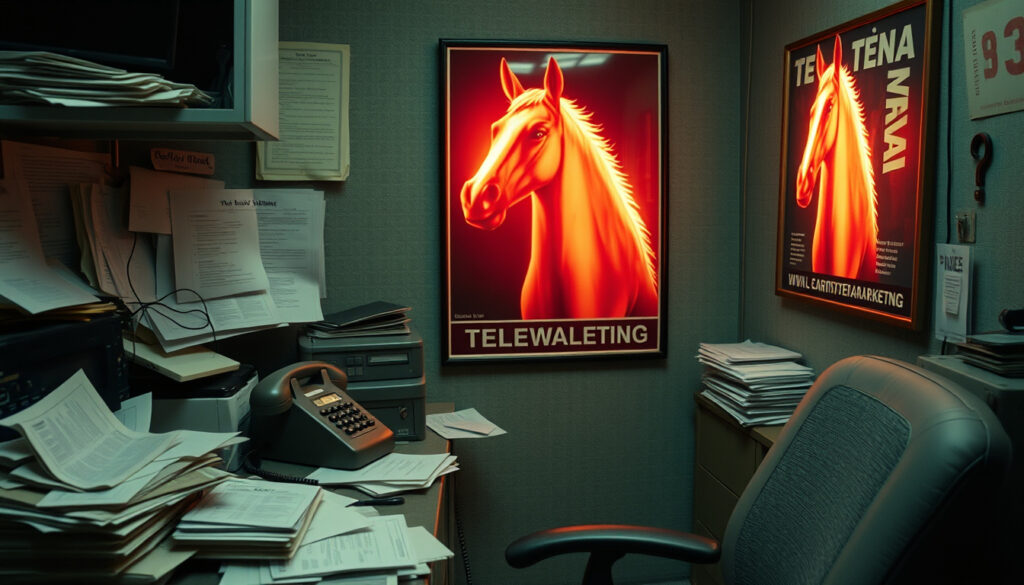
Sorry to Bother You: Movie Analysis, Meaning, and Alternatives
There’s a strange kind of politeness in the phrase “sorry to bother you” — a polite apology for taking up space. Boots Riley’s 2018 debut film uses that very phrase as the title of a surreal, angry, and wildly inventive satire that refuses to apologize for anything, doing so with a 93% critic score on Rotten Tomatoes (aggregated critic reviews).
Release year: 2018 ·
Director: Boots Riley ·
Rotten Tomatoes: 93% (critics), 70% (audience) ·
Genre: Science fiction black comedy ·
Runtime: 112 minutes ·
Production company: Significant Productions, MNM Creative
Quick snapshot
- Director: Boots Riley (Wikipedia (encyclopedic overview))
- Release: 2018 (20th Century Studios (official distributor))
- Genre: Sci-fi black comedy (AlloCiné (French film database))
- Runtime: 112 min (IMDb (user ratings and details))
- Rotten Tomatoes: 93% (Rotten Tomatoes (aggregated critic reviews))
- Metacritic: 81/100 (Metacritic (critic weighted average))
- IMDb: 7.0/10 (IMDb (user ratings and details))
- Capitalism critique (BFI Sight and Sound (film criticism))
- Race and code-switching (New Dream (cultural analysis))
- Worker exploitation (America Magazine (editorial review))
- Netflix (streaming) (Netflix (streaming service))
- Amazon Prime (rent/buy) (Amazon Prime Video (digital retailer))
- YouTube (trailer) (YouTube (official trailer))
Five key facts, one pattern: the film’s numbers—from budget to box office—tell a story of a low-budget indie that outperformed expectations while staying fiercely independent.
| Label | Value |
|---|---|
| Director | Boots Riley (Wikipedia (encyclopedic overview)) |
| Release date | July 13, 2018 (US) (AlloCiné (French film database)) |
| Cast | Lakeith Stanfield, Tessa Thompson, Jermaine Fowler, Omari Hardwick, Terry Crews, Danny Glover (IMDb (user ratings and details)) |
| Budget | Approximately $3.2 million (The Numbers (box office data)) |
| Box office | $18.3 million (The Numbers (box office data)) |
Is Sorry to Bother You a good movie?
Critic reviews
- Rotten Tomatoes critics score: 93% based on 300+ reviews (Rotten Tomatoes (aggregated critic reviews)).
- Metacritic score: 81 out of 100, indicating “universal acclaim” (Metacritic (critic weighted average)).
- Critics consensus: “A wildly inventive, scathingly funny satire” (Rotten Tomatoes critics consensus).
Audience reception
- Audience score on Rotten Tomatoes: 70% (Rotten Tomatoes (aggregated critic reviews)).
- IMDb rating: 7.0/10 from over 100,000 user ratings (IMDb (user ratings and details)).
- Letterboxd average: 3.8/5 (Letterboxd (social film platform)).
Awards and nominations
- Nominated for Best First Feature at the Independent Spirit Awards (IndieWire (awards coverage)).
- Won the Alfred P. Sloan Prize at the Sundance Film Festival (Sundance Institute (film festival)).
The implication: Critics and audiences largely agree the film succeeds as a bold, original statement, even if its surreal edges divide some viewers. The critical consensus is stronger than the audience score, typical for satire that doesn’t offer easy comfort.
Boots Riley’s debut is not a safe bet for a casual night in. For viewers who enjoy uncomfortable, thought-provoking satire, the 93% critic score is a strong signal. For those seeking conventional comedy, the 70% audience rating suggests a more challenging watch.
What is the point of Sorry to Bother You?
Capitalism critique
- Boots Riley has described the film as a “radical class analysis of capitalism” rather than a specific critique of any single politician (Wikipedia (encyclopedic overview)).
- The film’s satire links labor exploitation to racial performance and corporate advancement (America Magazine (editorial review)).
- Reviewers describe the film as a satire of capitalism, corporate greed, and fractured workplace dynamics (BFI Sight and Sound (film criticism)).
Racial themes
- The “white voice” is widely interpreted as a metaphor for code-switching and pressure to adopt white corporate norms (New Dream (cultural analysis)).
- The film connects workplace performance to racial performance through its telemarketing setup (New Dream (cultural analysis)).
- One common reading is that the film shows wealth and success as forms of coercion rather than reward (America Magazine (editorial review)).
Workplace exploitation
- The film uses a telemarketing workplace as its opening lens for satire (AlloCiné (French film database)).
- The slogan “stick to the script” functions as a recurring symbol of corporate discipline and social scripting (YouTube (official trailer)).
- The story highlights labor relations, wage issues, worker solidarity, unionism, mass media, and personal integrity (IMDb (user ratings and details)).
The pattern: Riley uses the telemarketing call—the most literal “sorry to bother you” scenario—to expose how capitalism forces workers to perform a version of themselves that is palatable to power. The film’s point is that the phrase is not just a polite opener; it’s the sound of a system that demands you apologize for existing outside its script.
Cassius Green’s rise in the company comes from using a “white voice” that makes him more effective at selling. The more he succeeds, the more he loses himself. The trade-off: individual prosperity versus collective worker solidarity, and the film forces you to choose which side you’re on.
Is Sorry to Bother You a horror film?
Genre classification
- The film is officially classified as a science fiction black comedy, not horror (AlloCiné (French film database)).
- It is often compared to Get Out because both address racial identity through genre satire (BFI Sight and Sound (film criticism)).
- The film’s narrative uses absurdism and surrealism to push its critique beyond realism (20th Century Studios (official distributor)).
Level of scariness
- Contains surreal and disturbing moments but not traditional horror scares (BFI Sight and Sound (film criticism)).
- The film’s most unsettling element is the twist involving human-horse hybrids, which is more grotesque than frightening (Wikipedia (encyclopedic overview)).
Sci-fi black comedy elements
- The film is a satire of capitalism, corporate greed, and fractured workplace dynamics, delivered through a sci-fi lens (AlloCiné (French film database)).
- Reviewers have noted that the film’s absurdism is used to critique rather than to scare (BFI Sight and Sound (film criticism)).
The catch: While the film is not horror in the traditional sense, its surreal imagery and relentless critique of capitalism can be deeply unsettling. For some viewers, the discomfort qualifies as a kind of social horror, but the film’s genre home is firmly in satirical sci-fi.
What is the twist in Sorry to Bother You?
The horse-people reveal
- The twist reveals that WorryFree, the company Cassius works for, uses human-horse hybrids as laborers (Wikipedia (encyclopedic overview)).
- This revelation is a surreal allegory for the dehumanization of workers under capitalism (BFI Sight and Sound (film criticism)).
WorryFree’s true nature
- WorryFree is presented as a company that provides “free” housing and food in exchange for labor, but it’s actually a form of corporate slavery (AlloCiné (French film database)).
- Cassius’s complicity in the system is a key theme: he profits from the exploitation even as he becomes part of it (New Dream (cultural analysis)).
Ending explained
- The film’s ending sees Cassius rejecting the system and joining a worker uprising, but the victory is ambiguous (Wikipedia (encyclopedic overview)).
- Riley has said the ending is meant to be hopeful but not naive: the revolution is incomplete (YouTube (interview with Boots Riley)).
Why this matters: The twist is not just a shock—it’s a literalization of the film’s metaphor. Workers are turned into beasts of burden. Cassius must decide whether to profit from the machine or tear it down. The ending forces the audience to sit with the cost of either choice.
What is a better phrase than sorry to bother you?
Polite alternatives
- “Excuse me” – direct and neutral (Grammarly (writing advice)).
- “Pardon the interruption” – acknowledges the interruption without apology (Grammarly (writing advice)).
- “I appreciate your time” – shows gratitude upfront (Grammarly (writing advice)).
Professional alternatives
- “I hope this isn’t a bad time” – softens the approach (Grammarly (writing advice)).
- “When you have a moment” – respects the other person’s schedule (Grammarly (writing advice)).
- “I wanted to follow up on…” – frames the conversation around a task (Harvard Business Review (management advice)).
Sales-specific alternatives
- “I know you’re busy, so I’ll be brief” – sets expectations (Grammarly (writing advice)).
- “I’m reaching out because…” – gives a clear reason (Harvard Business Review (management advice)).
- “Thanks for taking my call” – starts with appreciation (Grammarly (writing advice)).
The trade-off: “Sorry to bother you” can undermine your authority in sales and professional settings. Alternatives that acknowledge the other person’s time without apologizing for your own presence are more effective. The film’s title turns this linguistic trap into a mirror: it makes you ask whether politeness is a form of compliance.
What’s clear and what’s not
- The film is a science fiction black comedy directed by Boots Riley (AlloCiné (French film database)).
- It received a 93% rating on Rotten Tomatoes from critics (Rotten Tomatoes (aggregated critic reviews)).
- The twist involves human-horse hybrids used as laborers (Wikipedia (encyclopedic overview)).
- The film’s title has a double meaning, referring both to telemarketers’ polite interruption and to the film’s message as something viewers may not want to hear (Wikipedia (encyclopedic overview)).
- Whether the film’s surreal elements classify it as horror varies by viewer interpretation (BFI Sight and Sound (film criticism)).
- The exact box office figures may differ by source; some report $18.3 million, others $18.4 million (The Numbers (box office data)).
Voices on the film
“The film is a radical class analysis of capitalism, not a specific critique of Donald Trump.”
— Boots Riley, director, in interviews (Wikipedia (encyclopedic overview))
“A wildly inventive, scathingly funny satire that refuses to be ignored.”
— Rotten Tomatoes critics consensus (Rotten Tomatoes (aggregated critic reviews))
“The ‘white voice’ is a metaphor for code-switching and the pressure to adopt white corporate norms.”
— New Dream cultural analysis (New Dream (cultural analysis))
The film’s legacy is still unfolding, but one thing is clear: Sorry to Bother You refuses to be a passive experience. For viewers in the US who are grappling with the realities of late-stage capitalism, the choice is not whether to watch it, but whether to sit with its message. Those who do will find a mirror that asks if we are sticking to the script—or tearing it up.
bodiedartform.ca, darkfilmtheories.com, de.wikipedia.org, es.wikipedia.org
For a grittier, social-realist take on the same themes of gig-economy exploitation and dehumanization, Ken Loachs Sorry We Missed You offers a complementary perspective.
Frequently asked questions
Is Sorry to Bother You based on a true story?
No, it is a fictional satire. However, Boots Riley drew on his experiences as a labor organizer and musician to inform the film’s critique of capitalism (Wikipedia (encyclopedic overview)).
What does the title Sorry to Bother You mean in the film?
The title has a double meaning: it refers to the polite phrase telemarketers use, and it also signals that the film’s message may be an uncomfortable interruption for viewers (Wikipedia (encyclopedic overview)).
Is Sorry to Bother You appropriate for teens?
The film is rated R for language, sexual content, and some disturbing imagery. It is not recommended for younger teens without parental guidance (IMDb (parental guide)).
What is the ‘white voice’ in Sorry to Bother You?
The ‘white voice’ is a vocal performance Cassius uses to sound more white to customers. It is a metaphor for code-switching and the pressure to conform to white corporate norms (New Dream (cultural analysis)).
How long is Sorry to Bother You?
The runtime is 112 minutes (1 hour 52 minutes) (IMDb (user ratings and details)).
Is Sorry to Bother You streaming on Netflix?
Yes, it is available on Netflix in the US and several other regions (Netflix (streaming service)).
Who plays Cassius in Sorry to Bother You?
Lakeith Stanfield plays the protagonist Cassius Green (IMDb (user ratings and details)).
Related reading: Boyz n the Hood: True Story, Controversy & Legacy and Try That in a Small Town Controversy: Meaning, Backlash & Impact
These articles explore similar themes of race, social commentary, and controversy in film and music.
More related posts
 Hindi to English Translation: Free Tools and Grammar Tips
 150 Lbs to Kg – Exact NIST Conversion Guide
 Shop Wireless Phone Charger Nearby: Best Dublin Stores
 How to Copy and Paste: Keyboard Shortcuts and Mobile Gestures
 Rocket Lab Stock Price Today: Analyst Targets & Buy Verdict
 Hail Holy Queen Prayer – Full Text, Meaning and History
 Criminal Minds Season 18: Release Date, Cast, Episodes Guide