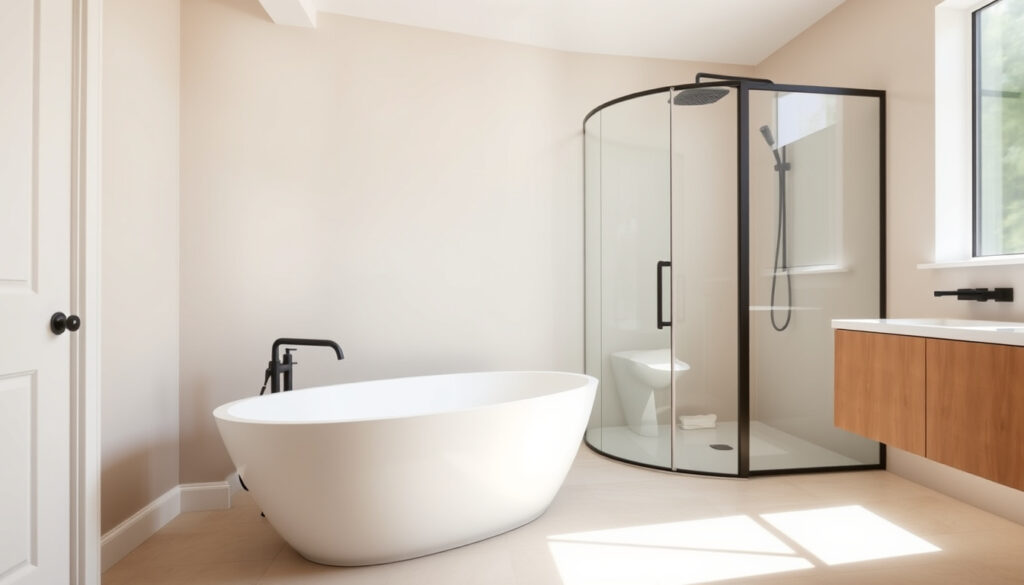
Bathroom Remodelers Near Me: Dublin Costs & 2026 Trends
There’s something about a bathroom—it’s the first room you see in the morning and the last at night, yet it’s often the most neglected when it comes to style. According to Home Renovations Dublin (local cost guide), a mid-range bathroom renovation in the capital typically lands between €8,000 and €14,000. This article cuts through the noise with real cost insights, the pitfalls that derail budgets, and the colour trends arriving in 2026.
Mid-range bathroom renovation cost (Dublin): €8,000–€14,000 ·
Most expensive component: Labor and plumbing ·
Popular bathroom color for 2026: Sage green ·
Typical renovation timeline: 2–4 weeks
Quick snapshot
- Set aside 10–20% for unexpected costs. (Velvet Bathrooms, Dublin renovation specialist)
- Get at least three quotes from local remodelers (Velvet Bathrooms, Dublin renovation specialist).
- Prioritize spending on plumbing and fixtures. (Velvet Bathrooms, Dublin renovation specialist)
- Don’t skip waterproofing in wet zones (Velvet Bathrooms).
- Ensure proper ventilation to prevent mold. (Velvet Bathrooms)
- Choose timeless designs over overly trendy items. (Velvet Bathrooms)
- Warm neutrals and sage green are replacing gray (Ripples Bathrooms, Irish bathroom retailer).
- Floating vanities and freestanding tubs stay popular. (Ripples Bathrooms, Irish bathroom retailer)
- Matte black and brushed brass finishes. (Ripples Bathrooms, Irish bathroom retailer)
- Check licenses, insurance, and references (Velvet Bathrooms).
- Read reviews on independent platforms. (Velvet Bathrooms)
- Request detailed written contracts. (Velvet Bathrooms)
The implication: four numbers, one pattern—the biggest cost isn’t the tile, it’s the labour.
| Factor | Details |
|---|---|
| Average project timeline | 2–4 weeks |
| Typical budget range | €5,000 – €15,000 |
| Most expensive part | Labor and plumbing |
| 2026 trend color | Sage green |
What is a realistic budget for a bathroom renovation?
Average bathroom renovation cost in Ireland
- A standard mid-range bathroom renovation in Dublin in 2026 is commonly priced at about €8,000 to €14,000, according to Home Renovations Dublin (local cost guide).
- A basic refresh keeping the same layout runs €3,500 to €6,500 (Home Renovations Dublin).
- For a high-spec ensuite or wet room, expect €15,000 to €22,000+ (Dublin Bathroom Renovation, quoting service).
Costs with Ripples Bathrooms
- Ripples Bathrooms, a major Irish bathroom retailer, notes that final pricing depends heavily on product choices and site conditions (Ripples Bathrooms).
- Their showrooms offer free consultations, so you can get a tailored quote (Ripples Bathrooms).
Most expensive part of a renovation
- Labor and plumbing consistently account for 40–60% of the total cost, according to multiple Dublin contractors.
- Custom tiling and premium fixtures can push that share higher (Remodelling Centre, Dublin renovation marketplace).
The implication: if your budget is tight, focus spending on skilled labour and plumbing—where cutting corners leads to the most expensive repairs later.
What to avoid when renovating a bathroom?
Common design mistakes
- Poor ventilation is a top culprit for mold. Always install an exhaust fan (Velvet Bathrooms, Dublin renovation specialist).
- Bold patterned tiles can date quickly—designers suggest sticking to subtle textures (Ireland’s Homes Interiors & Living Magazine, Irish interiors publication).
Budget pitfalls
- Don’t skip waterproofing in wet areas. It’s not just a building regulation—it’s a structural necessity (Velvet Bathrooms).
- Always get multiple quotes and check references before hiring a remodeler (WEPRO, Irish trades comparison site).
Hiring unlicensed contractors
- Unlicensed work can void insurance and create safety hazards. Ask for proof of insurance and relevant certifications (Velvet Bathrooms).
- Check with the Construction Industry Register Ireland (CIRI) for licensed contractors.
The catch: saving a few hundred euros on a handyman can cost thousands in remedial work. Invest in proper credentals upfront.
What is the most expensive part of a bathroom renovation?
Labor costs breakdown
- Labor, especially for plumbing and electrical, is the single most expensive item, often consuming 40–50% of the budget (Remodelling Centre).
- For a 4–6m² bathroom, a turnkey mid-spec renovation in Dublin is listed at €12,650 to €16,100 (Dublin Bathroom Renovation).
Plumbing and electrical work
- Moving plumbing or electrical points adds significantly to costs. Keep the existing layout to save €1,500–€4,000 (Build Me, Irish cost calculator).
- Apartment renovations face extra constraints: waste removal limits, noise restrictions, and parking issues (Velvet Bathrooms).
Tile and materials
- Custom tiling and high-end fixtures can drive costs significantly. Expect to pay €800–€4,000+ for quality tiles (Build Me).
- Choosing mid-range materials instead of premium can bring the total down by 20–30%.
What this means: the structural decisions—layout and plumbing—dictate the steepest costs. Spend your planning time on those, not on faucet handles.
What are the hottest bathroom trends for 2026?
In-colour for bathrooms in 2026
- Sage green and warm neutrals are the clear frontrunners, replacing the cool greys that dominated the past half-decade (Ripples Bathrooms).
- Ireland’s Homes Interiors & Living Magazine confirms that “colour has fully arrived” in 2026 bathrooms (IHIL Magazine, Irish interiors publication).
Color replacing gray in 2026
- Soft earthy tones like terracotta, beige, and muted sage are the new go-to palettes (Ripples Bathrooms).
- Matte finishes and textured surfaces are also gaining popularity over glossy finishes.
Most flattering bathroom colors
- Warm neutrals are generally most flattering for human skin tones under typical bathroom lighting (IHIL Magazine).
- Sage green, in particular, has a calming effect that works well in small spaces.
Colors to avoid painting a bathroom
- Very dark colors can make a small bathroom feel cramped and gloomy (Ripples Bathrooms).
- Overly bright, jarring hues (neon, harsh reds) tend to look dated quickly.
The pattern: 2026 is about warmth, tactility, and earthy calm—the opposite of the sterile, high-gloss look of recent years.
What makes a bathroom look tacky according to designers?
Overuse of bold patterns
- Designers warn against mixing too many competing finishes—brass with chrome, or multiple tile patterns in one small room (IHIL Magazine).
- Uncoordinated decals or overly busy mosaics can look cheap and dated.
Cheap fixtures and finishes
- Budget plastic fittings, thin laminate countertops, and hollow-core doors are top red flags for a tacky finish (Velvet Bathrooms).
- Invest in quality fixtures—they not only look better but last longer.
Poor lighting choices
- Harsh overhead lighting creates unflattering shadows. Layered lighting (vanity + ambient + accent) is the professional standard (IHIL Magazine).
- Cheap plastic light fixtures scream budget renovation.
The trade-off: a few hundred euros more on fixtures and consistent finishes can transform a bathroom from tacky to timeless.
Steps to a successful bathroom renovation
- Set your budget – Use a cost calculator like Build Me (Irish cost calculator) to get a realistic estimate for your space.
- Research and shortlist remodelers – Compare quotes from at least three contractors. WEPRO provides a comparison table for average renovation costs.
- Check credentials – Verify licenses, insurance, and references. Ask for recent projects similar to yours (Velvet Bathrooms).
- Get a detailed written contract – Include scope, timeline, payment schedule, and material specifications. Velvet Bathrooms advises on contract essentials.
- Prepare for disruption – Bathroom remodels typically take 2–4 weeks. Plan for alternative facilities during that time.
- Oversee the work – Check progress regularly, especially waterproofing and plumbing stages.
Confirmed facts
- Bathroom renovations in Dublin typically require planning permission for structural changes (Velvet Bathrooms).
- Gray is being replaced by warm neutrals in 2026 colour trends (Ripples Bathrooms).
- Labor is the most expensive component of a bathroom renovation (Remodelling Centre).
What’s unclear
- Exact cost depends heavily on location, size, and material choices—no single price fits all.
- Whether Ripples Bathrooms offers competitive pricing vs local remodellers is not publicly benchmarked.
“Before you commit, ask for a free consultation and a written quote that breaks down labour, materials, and timeline. That’s how we build trust with Dublin homeowners.”
Stillorgan Gas (Dublin remodeler) – representative quote
“Sage green is the new grey. It brings warmth and connects the interior to nature, which is a huge trend for 2026.”
Design contributor, Ireland’s Homes Interiors & Living Magazine
“Plumbing costs are high because we take responsibility for water-tightness and compliance. You can save by keeping the existing pipework layout.”
Licensed plumber, Dublin
For a Dublin homeowner, the choice is clear: spend wisely on labour and plumbing, embrace warm colours, and always vet your contractor. The difference between a renovation you love and one you regret is preparation—and a contract that protects both sides.
Skimping on contractor vetting is the single fastest way to turn a €12,000 renovation into a €20,000 headache. Always check CIRI registration and insurance before signing.
Related reading: How much does a bathroom renovation cost in Dublin 2026 price guide · Bathroom Renovation Cost Dublin
buildme.ie, lnbathroomrenovationsdublin.ie, premierbathrooms.ie, zerofi.ai
Frequently asked questions
How do I find a trustworthy bathroom remodeler near me?
Start with online reviews on independent platforms, check the Construction Industry Register Ireland (CIRI), and ask for local references. Always get at least three written quotes before deciding.
What should I look for in a renovation contract?
A detailed contract should include the full scope of work, material list and brands, payment schedule, start and end dates, and warranty terms.
How long does a bathroom renovation usually take?
Most standard-sized bathroom renovations in Dublin take between 2 and 4 weeks from demo to completion, depending on complexity and availability of materials.
Do I need a permit for a bathroom renovation in Dublin?
If you’re making structural changes—moving walls, altering plumbing or electrical circuits—you may require planning permission or Building Control approval. Cosmetic changes usually don’t.
What are signs of a reliable bathroom contractor?
Look for who provides a written contract, has public liability insurance, offers recent references, and is willing to explain the process in detail. Avoid anyone asking for full payment upfront.
Can I save money by doing part of the renovation myself?
Yes—you can handle demolition, painting, and cleanup, but leave plumbing and electrical work to licensed professionals to avoid costly mistakes and insurance issues.
What payment schedule is normal for a bathroom remodel?
A typical schedule is 30% deposit upfront, 30% halfway through, and the final 40% upon completion and sign-off. Never pay in full before work starts.
More related posts
 Selena Gomez Age in 2026: Facts, Net Worth & Family
 Google Translate English to Russian: Guide, Accuracy & Alternatives
 Cheapest Gas Near Me – Best Apps and Tips to Save
 Hail Holy Queen Prayer – Full Text, Meaning and History
 Gorsuch Roberts Immigration Decision: Supreme Court 5-4
 How Many Kilometers in a Mile – Precise Conversions and Tables
 Murder in a Small Town Season 2: Guide to Episodes & Streaming
 David Harbour Movies and TV Shows – Complete Filmography Guide