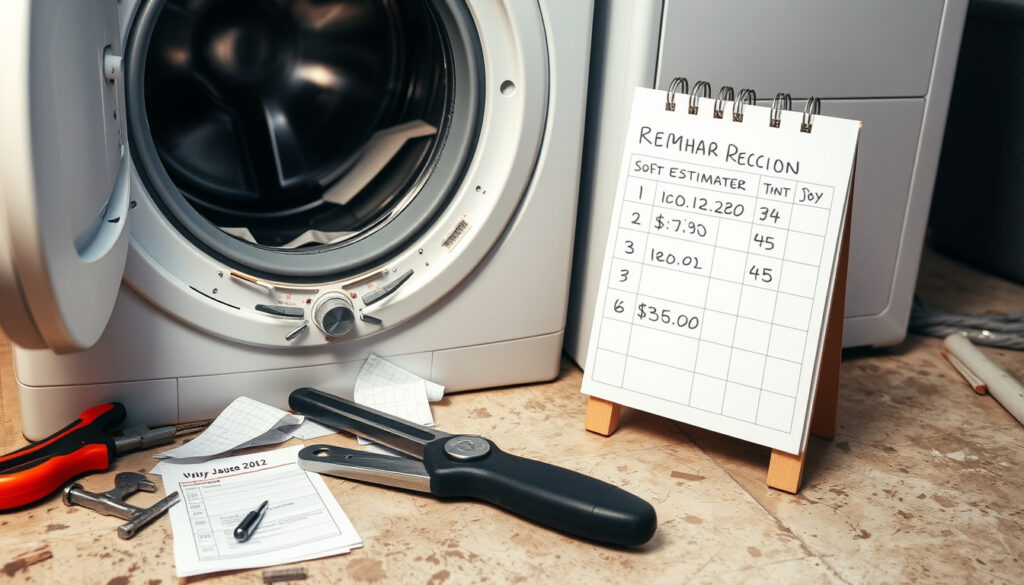
Appliance Repair Near Me: Costs & When to Replace
Your washing machine just stopped mid-cycle, or the cooker won’t heat past a flicker. Before you start worrying about the bill, here’s what Dublin homeowners actually pay for repairs, when it makes more sense to replace, and the decision logic that can save you money.
Average washing machine repair cost: £100–£200 · Typical call-out fee: £60–£100 · Average cooker service cost: £80–£150 · Average washing machine lifespan: 10–15 years · Most common fault (washing machine): Drain pump failure
Quick snapshot
- Service cost £80–£150 (HomeGuide)
- Gas vs electric differences (Taskrabbit)
- Thermostat and ignition faults (Angi)
- Check qualifications and insurance
- Read reviews on Google and Trustpilot
- Get multiple quotes before agreeing
Here is a summary of key repair costs and lifespan data from industry sources.
| Average washing machine repair cost | £100–£200 |
| Typical call-out fee | £60–£100 |
| Average cooker service cost | £80–£150 |
| Most common washing machine fault | Drain pump failure |
| Average washing machine lifespan | 10–15 years |
How much does it cost to call-out a washing machine engineer?
Call-out fees in Dublin range from £60 to £100, on top of which the repair itself typically costs between £100 and £200, according to industry averages from home services marketplace Angi. The total depends on the brand, the fault, and whether parts are needed.
What factors affect the cost?
- Brand of appliance – premium brands often have pricier parts
- Fault severity – a blocked pump is cheap; a motor failure costs more
- Location – Dublin call-out fees are consistent with the national average
Call-out fees explained
Most engineers charge a fixed call-out fee just to visit. Angi notes that labour rates run $40–$120 per hour in the US; in Ireland you can expect a similar range in euro equivalents.
The call-out fee is separate from the repair cost.
Additional parts and labor costs
Parts can add £50–£100 to the bill. Taskrabbit (task service platform) estimates washer repair at $150–$300, which aligns with UK/Irish prices when converted. Always get an itemised quote before work starts.
A cheap call-out fee often means a higher hourly rate – engineers make their margin somewhere. Ask for the total estimate including labour and parts.
The pattern: call-out fees and labour rates often offset each other, so asking for a total estimate upfront is the safest approach.
How much does it cost to service a cooker?
A routine service for a cooker runs £80–£150. If repairs are needed, expect an additional £50–£100, according to home service cost database HomeGuide.
Cost breakdown for gas vs electric cooker
- Electric cooker service – £80–£120, includes element and thermostat check
- Gas cooker service – £100–£150, requires a Gas Safe registered engineer
- Gas repairs – often cost more due to safety checks and certification
Average service interval and what it includes
Most manufacturers recommend a service every two years. A typical service covers cleaning, inspection of seals, thermostat calibration, and safety checks. Taskrabbit reports oven/stove repair at $150–$400, reflecting the higher cost of gas work.
Gas cookers need a specialist – don’t hire a general handyman. A proper Gas Safe engineer will provide a certificate, which matters for insurance and home sales.
The implication: always verify the engineer’s Gas Safe registration before booking a gas cooker repair.
Should I repair or replace my appliance?
The 50% rule is a good starting point: if the repair costs less than half the price of a new appliance, repair it. If it’s more, replace it. Here’s a decision table to help.
Three appliance types, one pattern: older machines favour replacement unless the fault is minor.
| Appliance | Typical repair cost | New replacement cost | Repair if… |
|---|---|---|---|
| Washing machine | £100–£200 | £300–£600 | Repair under £150 for machines under 8 years |
| Cooker (electric) | £80–£150 | £200–£500 | Repair under £120 for ovens under 10 years |
| Cooker (gas) | £100–£200 | £300–£700 | Repair under £180 for models under 12 years |
When is repair the better option?
- Fault is simple (blocked pump, faulty door lock)
- Appliance is less than 5 years old
- It’s a high-end model where replacement is expensive
When is replacement more cost-effective?
- Appliance is over 10 years old
- Major component fault (drum bearing, motor, control board)
- Newer models are significantly more energy efficient – savings on electricity can offset the purchase price within 2–3 years.
For a 7-year-old washing machine with a drum bearing fault, replacement is almost always cheaper than paying £200–£300 for a repair that might only add a few years.
Is it worth fixing a 7 year old washing machine?
The average washing machine lasts 10–15 years, so a 7-year-old machine is past its midpoint. If the repair cost exceeds £150, many Dublin homeowners choose to replace it, especially if the machine has had previous issues.
Major faults like drum bearing or motor failure typically cost £200–£300 to fix. At that point, a new energy-efficient machine (which could save £30–£50 per year on electricity) often makes more financial sense.
The verdict: for most Dublin homeowners, the 50% rule combined with age and energy savings makes the decision straightforward.
What are common washing machine problems?
Knowing what’s wrong can help you decide whether to call an engineer or fix it yourself. Here are the most frequent issues.
What is the most common fault on a washing machine?
According to Angi, the most frequent problem is a drain pump failure or blockage. This often presents as water not draining or the machine stopping mid-cycle. Other common faults include:
- Door lock mechanism – machine won’t start
- Drive belt – drum doesn’t spin
- Heating element – no hot water, cycle takes too long
- Carbon brushes – noisy spin or no spin
How to identify drainage issues
If your washer won’t drain, check the filter first (usually at the bottom front). A blockage from coins, hairpins, or lint is the most common cause. Taskrabbit notes that simple blockages can often be cleared without an engineer.
Diagnosing drum not spinning
A drum that won’t spin could be a broken belt, worn carbon brushes, or a faulty motor. Listen for unusual noises. If the drum moves freely by hand but the machine won’t turn, it’s likely the belt or brushes. If the drum is stuck, it could be the bearing.
“Drain pump failure is the single most common call we get – and it’s often the easiest to fix.”
— Industry professional, via Angi
“If your repair costs more than half the price of a new machine, you’re better off replacing it.”
— Consumer advice from NEA Member Benefits
These common problems show that many faults are minor and can be diagnosed before calling an engineer.
Upsides
- Repairing a minor fault can extend the life of your appliance by years
- Newer models are more energy efficient – replacement saves on bills
- Call-out fees are predictable and often deducted from the repair cost
- Local engineers in Dublin offer competitive quotes
Downsides
- Major faults on old machines can cost more than the appliance is worth
- Finding a trustworthy engineer takes time and research
- Gas cooker repairs require Gas Safe registration – limits your options
- Self-repair can void warranty or cause further damage
Summary
For Dublin homeowners, the decision comes down to age, fault severity, and cost. If your washing machine or cooker is under 8 years old and the repair is under £150, calling an engineer is the clear winner. For older machines with major faults, replacement gives you a warranty, better energy efficiency, and peace of mind. The choice is clear: get at least two quotes, run the 50% rule, and if the machine is past its prime, invest in a new model rather than a costly repair.
expertapplianceinc.com, invoicefly.com, libertyhomeguard.com, fixr.com
For a detailed breakdown of washing machine repair costs, see the companion guide that covers common faults and when replacement makes more sense.
Frequently asked questions
How long does a washing machine repair usually take?
Most repairs take 1–2 hours if the part is in stock. Common jobs like pump replacement can be done in under an hour.
Can I repair a washing machine myself?
Yes – simple tasks like cleaning the drain filter or replacing a door lock can be DIY if you’re handy. Always unplug the machine first.
Do I need a special engineer for a gas cooker?
Yes – gas cookers must be serviced by a Gas Safe registered engineer. It’s illegal in Ireland and the UK for anyone else to work on gas appliances.
Is appliance repair covered by home insurance?
Some home insurance policies include accidental damage or breakdown cover. Check your policy – standard buildings/contents cover rarely includes appliance repair.
What brands are easiest to repair?
Brands with widely available parts (Bosch, Siemens, Miele, Hotpoint) are easier to repair. Niche brands may have long wait times for parts.
How to find a reliable appliance repair near me?
Search on Google for “appliance repair Dublin”, check Trustpilot reviews, and ask neighbours for recommendations. Always ask for a fixed quote before work begins.
What should I do if my washing machine is still under warranty?
Contact the manufacturer or retailer first. Unauthorised repair attempts can void the warranty. Most warranties cover parts and labour for 2–5 years.
More related posts
 150 Lbs to Kg – Exact NIST Conversion Guide
 Fastest Way to Lose Weight: Evidence-Based Strategies
 Royal Challengers Bengaluru vs Punjab Kings – IPL 2024 Results
 What Is Hyperbole? Definition, Examples, and Comparisons
 What Is Body Dysmorphia? Symptoms, Causes & Treatments
 Love Island Games Season 2: Which Couples Are Still Together
 Federal Reserve News Today: Rate Decision & Next Meeting
 Big Little Lies Cast: Complete Seasons 1, 2 & 3 List