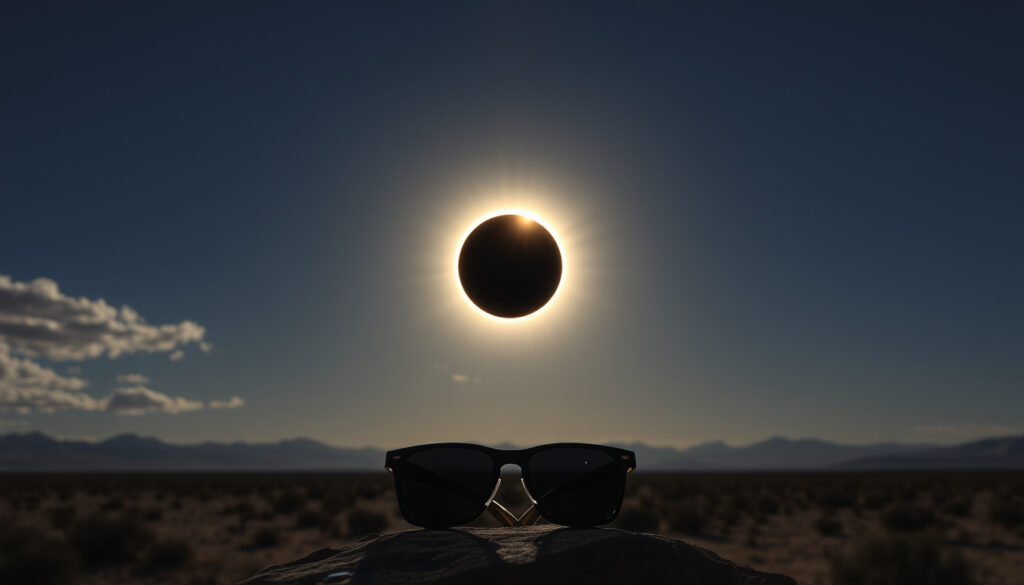
6 Minute Solar Eclip e 2027: Be t Place and Safety Guide
Few celestial events have the power to turn day into night and make an entire region stop and look up. The total solar eclipse on August 2, 2027 is that rare breed — not just any eclipse, but one that will treat viewers along its path to over six minutes of darkness.
Date of the eclipse: August 2, 2027 ·
Maximum duration of totality: 6 minutes 23 seconds ·
Location of maximum duration: Luxor, Egypt ·
Magnitude: 1.072 ·
Path width: about 200 km
Quick snapshot
- Total solar eclipse on August 2, 2027 (Wikipedia: Solar eclipse of August 2, 2027)
- Maximum totality 6 minutes 23 seconds near Luxor, Egypt (Wikipedia: Solar eclipse of August 2, 2027)
- Path crosses Spain, Morocco, Algeria, Tunisia, Libya, Egypt, Sudan, Saudi Arabia, Yemen, and Somalia (SYFY Wire: The August 2027 total solar eclipse longest for a century)
- Local cloud cover probabilities won’t be known until days before (Eclipsophile: TSE 2027 weather analysis)
- Exact visibility from specific inland European cities (Eclipsophile: Regional cloud analysis)
- Travel infrastructure and crowd management in Egypt and Morocco (Memphis Tours UK: In-depth guide to the solar eclipse 2027)
- First contact: ~08:00 UTC, Atlantic Ocean (Wikipedia: timing data)
- Greatest eclipse: 10:07:50 UTC (Wikipedia: timing data)
- Totality ends near Diego Garcia around 12:00 UTC (Eclipsophile: path termination)
- April 20, 2042 – next long-duration total solar eclipse on similar North Africa–Middle East path (YouTube: eclipse forecasting)
- Book travel mid-2025 for prime spots near Luxor (Memphis Tours UK: booking advice)
Where is the best place to see the 2027 solar eclipse?
Top locations for totality
- Luxor, Egypt – 6 minutes 23 seconds of totality, the maximum on land. The Moon’s shadow will pass about 60 km southeast of the city, making it the prime target for eclipse chasers (Wikipedia: location data).
- Tangier, Morocco – about 4 minutes 50 seconds of totality, according to travel guides (Memphis Tours UK: local duration estimate).
- Mecca, Saudi Arabia – roughly 5 minutes 8 seconds of totality (Memphis Tours UK: Mecca estimate).
Why Luxor, Egypt is the prime spot
The longest totality lands just southeast of Luxor, where the Moon’s shadow spends the most time on the Earth’s surface. With August cloud cover historically low in Upper Egypt (below 10% using satellite data from Eclipsophile: cloud climatology), Luxor offers both extended darkness and clear skies. Travel operators are already planning cruises on the Nile to position viewers exactly on the centerline (Memphis Tours UK: tour planning).
Viewing conditions in Spain and North Africa
The umbra makes landfall in southern Spain and northern Morocco around 09:30 UTC. In Ceuta and Gibraltar, totality runs about 4 minutes 30 seconds (Eclipsophile: duration map). The Tihamah Plain in Saudi Arabia has August average cloud cover just over 10% (Eclipsophile: regional climate data), making it a solid backup for travelers.
Bottom line: The 2027 eclipse is what astronomy enthusiasts dream about — the longest totality on land in the 21st century. For travelers: Luxor gives you the most darkness; southern Spain offers shortest travel from Europe. Plan early — infrastructure is limited and demand will be high.
The implication: choosing your viewing location is a trade-off between duration and convenience, with Luxor offering the ultimate darkness but requiring more travel preparation.
Why will the Sun disappear for 6 minutes in 2027?
The science behind long totality
- The Moon will be near perigee (closest point to Earth) during the eclipse, making it appear larger in the sky (Wikipedia: orbital parameters).
- The Sun will be near apogee (farthest point from Earth) in early August, making it appear slightly smaller (SYFY Wire: orbital mechanics explanation).
- The combination — larger Moon, smaller Sun — lets the Moon block the Sun’s disk for longer than average.
Orbital mechanics of the Moon and Earth
The Moon’s orbit is elliptical, and its shadow’s length varies. On August 2, the Moon will be about 2.5 hours before perigee, according to calculations from Wikipedia: perigee timing. This makes the umbral shadow wider and longer than a typical eclipse, producing the 6 minute 23 second maximum.
Why this eclipse is unusually long
Most total solar eclipses last 2–4 minutes. A 6-minute totality is extremely rare — no total eclipse between 2020 and 2040 exceeds this one in duration on land (Eclipsophile: historical comparison). The next event that rivals it won’t occur until April 20, 2042, over North Africa and the Middle East (YouTube: future eclipse forecast).
The 2027 eclipse is the longest total solar eclipse on accessible land for the rest of the 21st century. For researchers, it offers an extended window to study the Sun’s corona; for casual observers, it’s a once-in-a-lifetime chance to experience near-total darkness for over six minutes.
What this means: the extreme duration is not just a spectacle — it directly impacts scientific planning and travel logistics for thousands of eclipse chasers.
Where in Spain will the 2027 eclipse be visible?
Coastal regions of southern Spain
- Totality will be visible in the southernmost tip of Spain, including the enclave of Ceuta and the Strait of Gibraltar, with about 4 minutes 30 seconds of totality (Eclipsophile: duration map).
- Gibraltar (UK overseas territory) also lies within the path, offering similar duration.
- Inland Spanish cities like Almería and Málaga will see only a partial eclipse, with maximum coverage around 90–95% depending on location (Wikipedia: visibility in Spain).
Outside the narrow umbral path, the rest of Spain will experience a deep partial eclipse. Even a 95% partial is not safe to view without protection — only during totality can you look directly.
The pattern: Spain offers the easiest access for European travelers, but only a small strip delivers the full experience. Most major cities will see a deep partial, not totality.
What is the path of totality for the 2027 solar eclipse?
Interactive map resources
NASA’s Eclipse Website and timeanddate.com provide interactive maps showing the exact path and local timings. The path begins in the Atlantic Ocean, sweeps across Europe and Africa, and ends in the Indian Ocean near Diego Garcia.
Path across Atlantic, Europe, Africa, Middle East
According to SYFY Wire, the umbra makes landfall in southern Spain and northern Morocco, then crosses Algeria, Tunisia, Libya, Egypt, Sudan, Saudi Arabia, Yemen, and Somalia before moving over the Indian Ocean. The greatest duration occurs in Egypt, southeast of Luxor.
Duration variations along the path
Totality duration varies: from 4.5 minutes in Spain to 6 minutes 23 seconds near Luxor. The path width is about 200 km, so locations near the centerline get the longest darkness. As noted by Eclipsophile, the path misses Porto Santo and Madeira by about 70 km before landfall.
The partial solar eclipse will be visible over a much wider area — most of Europe, Africa, the Middle East, and parts of South and Southeast Asia. But only those inside the ~200 km wide path experience totality.
The catch: even a few kilometers outside the path means no totality. Precise planning with maps is essential.
How can I safely view the 6 minute solar eclipse?
Solar eclipse glasses
Use ISO 12312-2 certified solar viewing glasses. They must be purchased from reputable vendors. American Astronomical Society: solar filter safety provides a list of approved suppliers.
Indirect viewing methods
Projection methods, such as a pinhole projector or a telescope projecting onto a white surface, are safe alternatives. Do not look through a telescope without a certified solar filter.
Important safety tips
- Never look directly at the Sun without proper eye protection at any time before or after totality.
- Check glasses for scratches, pinholes, or damage before use.
- Only remove solar glasses during the few minutes of totality, when the Moon completely blocks the Sun’s bright disk.
- Put glasses back on immediately as totality ends.
- Do not use regular sunglasses, smoked glass, or polarizing filters — they are unsafe.
- If using a camera or binoculars, attach a certified solar filter to the front of the lens.
The only safe moment to look without glasses is during totality. Even a sliver of direct sunlight can cause permanent eye damage. Follow AAS solar safety guidelines.
The pattern: safety is not optional. Every year, untrained observers suffer retinal burns during partial phases. Use certified filters or indirect projection.
“The 2027 eclipse is the longest total solar eclipse on accessible land for the rest of the 21st century.”
“August cloud cover is among the lowest analyzed in the last 45 years across much of the eclipse path.”
— Eclipsophile specialist analysis
Related reading on ColumbusReport: 3I/ATLAS: Avi Loeb’s Analysis of Strange Interstellar Comet — a deep dive into another celestial phenomenon. Also see How Old Is the Earth? 4.54 Billion Years & Human Timeline for broader space science context.
Frequently Asked Questions
What time does the 2027 solar eclipse start and end?
First contact (partial phase begins) occurs around 08:00 UTC in the Atlantic Ocean. Greatest eclipse is at 10:07:50 UTC. Totality ends near Diego Garcia around 12:00 UTC. Local times vary by location.
Will the 2027 eclipse be visible from the United Kingdom?
The UK will see a partial eclipse, with coverage ranging from about 10% in northern Scotland to 30% in southern England. Totality requires being inside the narrow path of the Moon’s umbra.
How often do solar eclipses last 6 minutes?
Eclipses lasting over 6 minutes are extremely rare. The last one of this length was in 1973, and the next comparable land-based totality will not occur until 2042. Most total eclipses last 2–4 minutes.
Can I watch the 2027 eclipse online for free?
Yes, many organizations will livestream the eclipse, including NASA and timeanddate.com. Check closer to the date for streaming links.
What is the difference between a total and partial solar eclipse?
In a total eclipse, the Moon completely covers the Sun’s disk, revealing the corona. In a partial eclipse, only part of the Sun is covered. Totality is a brief window of darkness; partial phases require eye protection at all times.
Does the 2027 eclipse coincide with any cultural events?
In Egypt, the eclipse may align with summer tourism and Nile cruise schedules. Operators are already planning special eclipse cruises. No major religious holidays are tied to the date, but local festivities may emerge.
For eclipse chasers, the 2027 event is a rare opportunity to witness over six minutes of darkness. The combination of extreme duration, favorable weather along the centerline in Egypt, and accessible viewing points in Spain and North Africa makes it a must-see. Plan early, prioritize safety, and secure a spot within the path — the next chance this good won’t come for decades.
More related posts
 How Old Is Sylvester Stallone? Age, Birthday & Facts 2025
 Appliance Repair Near Me: Costs & When to Replace
 When Does Demon Slayer Movie Come Out? 2026 Release Guide
 Social Security Seniors April Payment – Dates by Birthdate and Schedule
 Where Is New Zealand? Location, Facts, and What to Know
 Heidi Klum Halloween 2025: Party, Costume, Guests & Facts
 Best Used Cars to Buy in Ireland: Top Reliable Picks
 Translate English to Japanese – Best Free Tools and Accuracy Guide