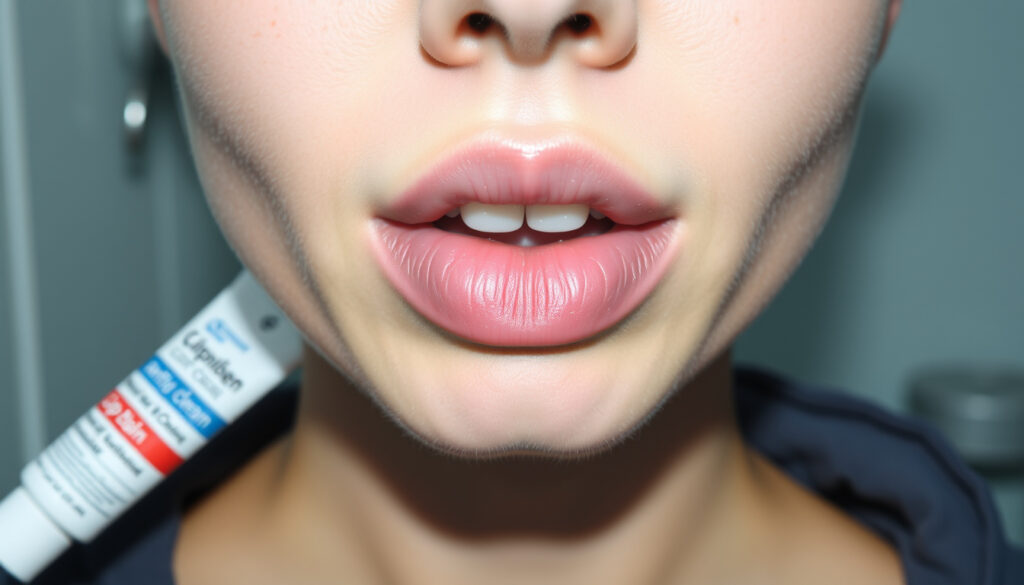
What Is a Cold Sore? Causes, Symptoms, and Treatment
Few things alter a week like the sudden, familiar tingle on your lip that signals a cold sore is on its way. That small blister is the visible tip of a much deeper story involving a virus that infects an estimated 67% of people under 50 globally, according to the World Health Organization. This article unpacks what actually causes these outbreaks, how the virus moves between people, and what treatments genuinely work based on guidance from public health authorities.
Global prevalence of HSV-1: 67% of people under 50 (WHO) · Annual cold sore episodes: 2-6 per year for infected individuals (Mayo Clinic) · Contagious period: From first tingle until scab falls off (7-10 days) · Incubation period: 2-12 days after exposure (NHS)
Quick snapshot
- Cold sores are caused by herpes simplex virus type 1 (HSV-1) (Centers for Disease Control and Prevention)
- Antiviral creams like aciclovir can reduce outbreak duration when applied early (NHS)
- Most cold sores heal within 7-10 days without treatment (NHS)
- Why some individuals experience frequent outbreaks while others remain symptom-free
- The exact mechanism of viral reactivation in all cases
- Evidence for alternative treatments like lysine supplements remains mixed
- Incubation: 2-12 days from exposure to first symptoms
- Contagious from the first tingling sensation until the scab falls off
- Full healing typically takes 7-10 days without treatment
- Start antiviral cream at the first tingle for best results (NHS)
- Avoid kissing and oral sex until the sore fully heals (NHS)
- Wash hands thoroughly after touching the affected area (NHS)
The table below distills the core facts about cold sores from public health authorities.
| Cause | Herpes simplex virus type 1 (HSV-1) |
|---|---|
| Prevalence | Up to 67% of people under 50 have HSV-1 (World Health Organization) |
| Incubation period | 2-12 days after exposure |
| Contagious period | From first tingle until the scab falls off (typically 7-10 days) |
| Typical healing time | 7-10 days without treatment; may be shortened with early antiviral use |
| Treatment | Antiviral creams (aciclovir), oral medications (valacyclovir), home remedies |
The pattern is clear: the virus exploits everyday contact, not just intimate contact. Sharing a spoon with a toddler or borrowing a friend’s lip balm can transmit HSV-1 just as effectively as kissing.
What is a cold sore caused by?
The short answer is a virus called herpes simplex virus type 1, or HSV-1. The World Health Organization (global health authority) identifies HSV-1 as the primary cause of oral herpes, which manifests as cold sores or fever blisters around the mouth. This is not the same virus typically associated with genital herpes, though the distinction often gets blurry in practice. HSV-1 can cause genital infections through oral-genital contact, and HSV-2 can occasionally cause oral lesions.
The Centers for Disease Control and Prevention (US public health agency) confirms that HSV-1 is the strain behind most oral herpes cases. The virus is remarkably common — the WHO estimates that 3.7 billion people under 50 carry it globally. Most of them will never show symptoms, but those who do experience recurring outbreaks that can be triggered by stress, illness, sun exposure, or hormonal shifts.
What triggers a cold sore outbreak?
- Stress and fatigue, which suppress immune function
- Fever or other viral illnesses that strain the body’s defenses
- Sun exposure, particularly UV light on the lips
- Hormonal changes, including menstruation
- Physical irritation or trauma to the lip area
Once the virus enters the body, it travels to nerve cells near the spinal cord and stays there in a dormant state. When triggered, it travels back down the nerve pathways to the skin, producing the characteristic blister. This is why cold sores recur in the same spot for many people — the virus has established a permanent residence in those nerve cells.
What is the herpes simplex virus type 1?
HSV-1 belongs to the herpesvirus family, a group of DNA viruses that share a common trait: once you’re infected, the virus stays with you for life. It’s transmitted through direct contact with infected saliva or skin, and it enters the body through small breaks in the mucous membranes or skin. The WHO notes that the highest risk of transmission occurs when visible lesions are present, though the virus can also shed asymptomatically.World Health Organization (global health body)
Can you kiss with cold sores?
No — and the guidance is unambiguous. The NHS (UK national health service) explicitly advises against kissing anyone while you have an active cold sore. The risk is highest when blisters are visible, but the virus can also transmit through asymptomatic shedding, meaning you can pass it even when no sore is apparent. The WHO clarifies that HSV-1 spreads mainly through oral contact, making kissing the most direct transmission route.
The contagious period extends longer than most people expect. It starts with the tingling sensation before the blister appears and continues until the scab has completely fallen off, which typically takes 7 to 10 days. During this window, the virus is present in the blister fluid and can be transmitted through any direct contact with the affected area.
Can I hug my boyfriend if I have a cold sore?
Hugging is generally safe. HSV-1 does not spread through skin-to-skin contact on non-mucous areas like arms or torso — the virus requires entry through mucous membranes or small breaks in the skin around the lips. The NHS guidelines focus on avoiding kissing, oral sex, and sharing items that touch the mouth. A hug that doesn’t involve contact with the sore itself poses minimal risk.NHS (UK health authority)
Can cold sores spread?
- Through kissing, especially during active outbreaks
- Via oral sex, which can transmit HSV-1 to genital areas
- By sharing utensils, towels, lip balm, or razors that touched the sore
- Through asymptomatic shedding, though at lower rates than active lesions
The WHO emphasizes that the highest risk period is when lesions are active, but the virus can still be transmitted from apparently normal oral or skin surfaces.World Health Organization (global health body) This is why the virus spreads so effectively — people often don’t know they’re contagious.
The implication: your social calendar doesn’t need to stop entirely, but physical boundaries matter. Skip the kiss, skip the shared drink, and wash your hands after touching your face. The trade-off is minor compared to the guilt of passing HSV-1 to someone who will carry it for life.
The NHS also advises avoiding oral sex until the cold sore has completely healed, because HSV-1 can cause genital herpes through oral-genital contact. The same virus that gives you a lip blister can create a more serious infection elsewhere.
How did I get cold sores without kissing?
Kissing is the most obvious route, but it’s far from the only one. Many people acquire HSV-1 in childhood through non-sexual contact — a parent kissing a child, sharing a drink, or using the same towel. The CDC notes that most people with HSV-1 are infected during childhood and may not even know they have the virus until an outbreak appears years later.Centers for Disease Control and Prevention (US public health agency)
The virus can enter the body through small breaks in the skin around the lips or through the mucous membranes of the mouth. Shared objects like utensils, lip balm, water bottles, and towels can all serve as transmission vehicles if they come into contact with an active sore or even asymptomatic viral shedding. This is why the NHS recommends washing hands with soap and water whenever you touch a cold sore.NHS (UK health authority)
What causes cold sores on lips?
The specific location matters. The lips have thin skin and rich nerve endings, making them particularly vulnerable to HSV-1 infection. The virus prefers nerve cells, and the trigeminal nerve — which supplies sensation to the face and lips — provides an ideal hiding spot for the dormant virus. When reactivation occurs, the virus travels back along this nerve to the lip surface, producing the characteristic blister at the same site each time.
Can cold sores be non-STD?
Yes, and this is an important distinction that gets lost in public conversation. While HSV-1 can be sexually transmitted, it is not classified as a sexually transmitted disease (STD) in most cases because the dominant route of transmission is non-sexual. The WHO data shows that most HSV-1 infections are acquired in childhood through everyday contact, not through sexual activity.World Health Organization (global health body) Calling a cold sore an STD misrepresents both the infection’s nature and the experience of the estimated billions who carry it.
The pattern is clear: the virus exploits everyday contact, not just intimate contact. Sharing a spoon with a toddler or borrowing a friend’s lip balm can transmit HSV-1 just as effectively as kissing. For most people, the infection arrived long before they were sexually active.
The medium-confidence guidance from Nottinghamshire APC notes that topical antivirals may reduce lesion duration only if applied early — specifically within the first 24 to 48 hours.Nottinghamshire APC (regional NHS guidance) Miss that window, and treatment offers limited benefit.
Can cold sores be non-STD?
This question overlaps with the previous section but deserves its own treatment because the stigma around cold sores causes real psychological distress. To be clear: HSV-1 is a herpesvirus, and a cold sore is a herpes lesion. But “herpes” as a colloquial term is so heavily associated with STDs that many people panic when they discover their lip blister is herpes-related.
The reality is more nuanced. HSV-1 is distinct from HSV-2, which is the strain most commonly associated with genital herpes. The WHO distinguishes between the two: HSV-1 primarily causes oral infections, while HSV-2 primarily causes genital infections, though either can cause either site.World Health Organization (global health body) The stigma attached to the word “herpes” doesn’t reflect the reality that HSV-1 is one of the most common infections in the world, often acquired in childhood from a relative’s casual kiss.
Are cold sores always herpes?
Yes — if it’s a true cold sore, it’s caused by a herpesvirus. The term “fever blister” and “cold sore” both describe the same condition: a lesion caused by HSV-1 (or occasionally HSV-2). But the more useful question is whether that herpes infection is sexually transmitted, and the answer is usually no for HSV-1. The CDC reports that many people acquire HSV-1 before puberty through completely innocuous contact.Centers for Disease Control and Prevention (US public health agency)
What are cold sores a sign of?
Cold sores indicate that you carry HSV-1, which most adults do. They can signal that your immune system is under stress — that’s why outbreaks often follow illness, sleepless nights, or intense periods of stress. In rare cases, frequent or severe outbreaks can point to an underlying immune deficiency, which is worth discussing with a healthcare provider. But for most people, a cold sore is simply the virus doing what it does under certain conditions.
The distinction between HSV-1 and HSV-2 matters for both medical management and personal wellbeing. Carrying HSV-1 does not mean you have an STD, and treating it as such causes unnecessary shame around a condition that affects over 3.7 billion people globally.
How do you get rid of cold sores fast?
Speed matters, and the most effective approach starts before you see the blister. The NHS advises applying antiviral cream as soon as you feel the early tingling sensation — that prodromal phase is your warning sign that a cold sore is coming.NHS (UK health authority) Aciclovir cream, applied in a thin layer five times a day with four hours between applications, is the standard topical treatment.NHS (UK medicines guidance)
The evidence for early intervention is clear but modest. Nottinghamshire’s regional NHS guidance found that topical antivirals applied before the cold sore appears can reduce the duration by about 12 to 18 hours.Nottinghamshire APC (regional NHS guidance) That’s not a dramatic difference, but for people who get frequent outbreaks, shaving off even a day of visible lesions is meaningful.
What kills cold sores fast?
- Prescription oral antivirals like valacyclovir — most effective for severe or frequent outbreaks
- Topical antiviral creams (aciclovir, docosanol) applied at the first tingle
- Cold compresses to reduce inflammation and discomfort
- Keeping the area moisturized to prevent cracking and bleeding
No treatment eliminates the virus, and there is no genuine “instant cure.” Claims of overnight resolution from home remedies should be treated with skepticism. The NHS notes that cold sores usually clear on their own in 7 to 10 days without treatment, and antiviral therapy only shortens that window by about a day or two.NHS (UK health authority)
What kills cold sores instantly?
Nothing. Any product or remedy that promises instant elimination is either a placebo or a scam. The herpes simplex virus has a natural replication cycle that takes time to resolve, regardless of what you apply to the skin. What you can do is reduce the severity and duration — antiviral creams can help when applied early, and oral medications can help more significantly for people with frequent outbreaks.
How can I get rid of a cold sore in 24 hours?
Acknowledging the reality: you likely can’t. The 12 to 18 hours of duration reduction from early topical antiviral treatment is the best case scenario in the clinical guidance.Nottinghamshire APC (regional NHS guidance) If you’re already past the tingling stage and the blister is visible, the damage is done — the outbreak will run its course. Your best move is to start treatment now to minimize severity and prevent the sore from getting worse, then plan to be more proactive at the next tingle.
The takeaway: the window for effective intervention is short. Recognizing the early warning signs and having antiviral cream on hand is the single most practical step for anyone who gets cold sores.
who.int, best.barnsleyccg.nhs.uk, npin.cdc.gov, thepracticeofhealth.nhs.wales, nhsinform.scot, everydaymeds.co.uk, southwest.devonformularyguidance.nhs.uk
Understanding the basics of cold sore causes and treatment can help you identify early symptoms and seek effective relief.
Frequently asked questions
What are cold sores a sign of?
Cold sores indicate that you carry HSV-1, which the WHO estimates affects 67% of people under 50. They often appear when your immune system is stressed — after illness, during periods of poor sleep, or under significant stress. In most cases, they’re a normal response to a dormant virus reactivating, not a sign of another disease.
Are cold sores always herpes?
Yes. Cold sores are caused by herpes simplex viruses, most commonly HSV-1. The word “herpes” carries stigma, but this is one of the most common infections in the world, and for most people it’s not sexually transmitted.
Can cold sores spread to other parts of the body?
Yes, through touching the sore and then touching another area, especially mucous membranes. If you touch a cold sore, wash your hands immediately — the NHS specifically recommends handwashing after any contact with the affected area.
How long do cold sores last?
Without treatment, cold sores typically heal in 7 to 10 days. With early antiviral intervention, you may shorten that by 12 to 24 hours. The contagious period extends from the first tingle until the scab completely falls off.
What triggers cold sores?
Common triggers include stress, fatigue, fever, sun exposure, hormonal changes, and a weakened immune system. The virus stays dormant in nerve cells and reactivates when these conditions disrupt your body’s normal defenses.
Is there a cure for cold sores?
No. HSV-1 stays in your body for life once you’re infected. Antiviral treatments can reduce outbreak duration and severity, but they cannot eliminate the virus from your nervous system.
Can cold sores be prevented?
Not entirely, but frequent sufferers can reduce outbreaks by managing triggers — using lip sunscreen, managing stress, and starting antiviral cream at the first sign of a tingle. Avoiding kissing or sharing personal items during active outbreaks prevents transmission to others.
How do I know if I have a cold sore or a canker sore?
Cold sores appear on the outside of the lips or mouth, are contagious, and are caused by HSV-1. Canker sores appear inside the mouth on soft tissue, are not contagious, and have no viral cause. They’re entirely different conditions.
More related posts
 Amoxicillin and Clavulanate Potassium: Uses, Side Effects, Dosage
 Yankees vs Pirates Match Player Stats: Score, Box Score & More
 Cream of Tartar Substitute: 7 Easy Replacements for Baking
 Rufus Sewell Movies and TV Shows: Roles and Highlights
 Good Culture Cottage Cheese Review: Is It Healthier
 Hearing Aids Near Me: Cost, Coverage & Local Pros
 Social Security Seniors April Payment – Dates by Birthdate and Schedule