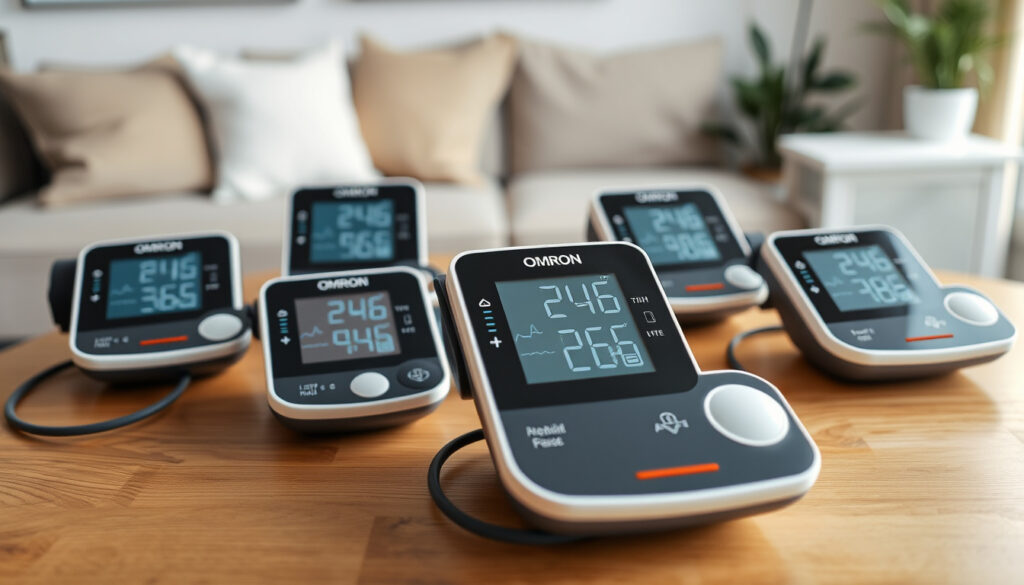
Omron Blood Pressure Monitor – Top Models for Home Use
For people managing hypertension or simply keeping tabs on cardiovascular health, choosing the right home blood pressure monitor can make a measurable difference. Omron remains one of the most recognizable names in this category, offering a range of devices from compact wrist models to full-featured upper arm monitors. Understanding which model delivers reliable readings, what FDA clearance means in practice, and how to avoid common user errors helps consumers make informed decisions before purchase.
This guide examines the current Omron lineup based on Consumer Reports testing, customer feedback, and clinical validation standards. It covers model comparisons, accuracy considerations, usage instructions, and troubleshooting essentials—everything needed to select and operate an Omron monitor with confidence.
What Is the Best Omron Blood Pressure Monitor?
Consumer Reports 2026 testing identifies two Omron models as top performers for home use: the Evolv BP7000 and the 3 Series (BP7150/BP7100). Both earn high marks for accuracy, convenience, and overall reliability. The following comparison breaks down their core specifications side by side.
| Feature | 3 Series (BP7150/BP7100) | Evolv (BP7000) | Wrist Models (e.g., BP6350) |
|---|---|---|---|
| Accuracy | Top-rated; Advanced Accuracy Technology | Top-rated; all-in-one design | Good but less reliable per Consumer Reports |
| Cuff Fit | Upper arm 9–17 inches (expandable) | Upper arm, wide-range | Wrist 5.3–8.5 inches |
| Storage | 14 readings; app-enabled | App-compatible | 100+ via app |
| Key Extras | Irregular heartbeat detector, risk indicator | Travel-friendly, no tubes | Bluetooth on select; hypertension indicator |
| Customer Rating | 4.7/5 (710+ Best Buy reviews) | Top Consumer Reports convenience score | Portable but arm preferred per medical guidance |
The 3 Series stands out as the best-seller in the United States, with customers consistently praising its accuracy and ease of use. One Walmart reviewer described it as “the most accurate blood pressure cuff yet.” The Evolv appeals to travelers and those seeking a streamlined design, featuring an all-in-one cuff that eliminates tubing entirely.
Key Insights on Omron Models
- Upper arm monitors consistently outperform wrist models in independent accuracy testing.
- Omron’s Advanced Accuracy Technology processes five times more data points than standard algorithms.
- The 3 Series BP7150 includes one-touch operation, Bluetooth connectivity, and a blood pressure risk indicator.
- Wrist monitors like the BP6350 offer portability but require precise positioning at heart level to maintain reliable readings.
- 7 Series and 10 Series maintain high clinical standards but lack specific 2026 Consumer Reports mentions.
- All major Omron upper arm monitors carry FDA clearance as clinically validated devices.
- The OMRON Connect app enables trend tracking for up to 200 readings on compatible models.
If you travel frequently or need a compact device, the Evolv BP7000’s tube-free design makes it easier to pack and use on the go. For permanent home installation and the largest user review sample, the 3 Series BP7150 remains the top choice.
Are Omron Blood Pressure Monitors Accurate?
Accuracy is the primary concern for anyone relying on home blood pressure data. Omron addresses this through FDA clearance and independent validation studies. The devices marketed in the United States undergo clinical testing to meet standards recognized by health organizations.
The American Heart Association recommends upper arm monitors over wrist devices when possible, citing positioning errors as a common source of inaccurate wrist readings. Omron’s upper arm models align with this guidance. Consumer Reports 2026 testing confirms that Omron’s top-tier models outperform many competitors in controlled conditions.
FDA Approval and Clinical Validation
All Omron upper arm monitors featured here carry FDA clearance, meaning they have undergone review and demonstrated accuracy within acceptable margins. This does not equate to a medical device prescription but confirms the device meets performance standards for home monitoring. The validation process involves comparing readings against standard sphygmomanometers in clinical settings.
Why Upper Arm Monitors Score Higher
Consumer Reports and AHA guidelines both note that wrist monitors are more susceptible to positional error. Even small differences in wrist height relative to the heart can produce significantly different readings. Upper arm cuffs measure at a more consistent anatomical reference point, reducing variables that affect accuracy.
Omron’s Advanced Accuracy Technology, featured in the 3 Series, processes multiple sensor readings during a single measurement to filter out noise from movement or irregular heartbeats. This approach yields more consistent results across multiple uses, a factor that matters for tracking trends over time.
Consumer Reports 2026 testing placed Omron’s 3 Series and Evolv models at the top of their category for accuracy. Wrist models received lower scores due to positioning variability, though they remain suitable for users who cannot use an upper arm cuff. Full validation study details are available through Omron’s official documentation.
How Do You Use an Omron Blood Pressure Monitor?
Proper technique affects reading accuracy as much as the device itself. Both upper arm and wrist monitors require correct positioning, ambient conditions, and user behavior to produce reliable results.
Preparing for a Measurement
Before taking a reading, sit quietly for five minutes with feet flat on the floor and back supported. Avoid caffeine, exercise, and smoking for at least 30 minutes prior. Place the cuff on a bare arm or thin fabric layer, never over thick clothing.
For upper arm models like the 3 Series, wrap the cuff so the tube exits toward the top of your arm, aligning the marker with the center of your inner arm. The bottom edge should sit one to two inches above the elbow crease. Secure the cuff firmly but allow one finger’s width underneath.
Taking the Reading
Rest your arm on a flat surface with the cuff at heart level. Keep the tube unobstructed and avoid talking during the measurement. Press the start button and remain still until the cuff deflates and the reading displays. The 3 Series averages three consecutive readings one minute apart when this feature is activated, providing a more stable baseline.
Wrist monitors require the same stillness and positioning discipline. The American Heart Association notes that wrist monitors must be held at heart level throughout the reading, which can be challenging without a supportive surface or adjustable armrest.
Using the OMRON Connect App
The OMRON Connect app syncs with compatible monitors via Bluetooth, storing up to 200 readings per user on supported models. The app tracks trends over time, flags consistent readings outside normal ranges, and allows data sharing with healthcare providers. Setup involves downloading the app, creating an account, and pairing the device following on-screen instructions.
Positioning the cuff too loosely or too high on the arm is a frequent cause of inaccurate readings. Consumer Reports testing found that user error, not device malfunction, accounts for most discrepancies between home and clinical readings. Always verify cuff placement before each use.
What Do Omron Blood Pressure Monitor Error Codes Mean?
Error codes indicate that a measurement could not be completed successfully. Understanding these signals helps users correct issues without unnecessary service calls or device replacement.
Common Error Codes and Solutions
Error codes vary by model, but several patterns appear across the Omron lineup. Movement during measurement often triggers an error, as the device interprets motion artifacts as irregular heartbeats or signal interference. Sitting still with legs uncrossed and arms relaxed resolves most movement-related errors.
Cuff fit errors typically occur when the band is wrapped too loosely or positioned incorrectly. Re-wrapping the cuff and ensuring a snug fit without overtightening addresses this issue. Some models display a specific indicator when the cuff is beyond the fit range—for example, if the cuff is too small or too large for the user’s arm circumference.
Troubleshooting Steps
- If the monitor fails to inflate, check that batteries are fresh and properly seated. Replace with new alkaline batteries if needed.
- For persistent error codes, consult the device manual or Omron’s online support resources for model-specific guidance.
- Irregular heartbeat alerts may indicate arrhythmia rather than a device malfunction. Repeated alerts warrant discussion with a physician.
- The monitor may not trigger if ambient temperature falls outside the operating range specified in the manual.
- For persistent issues despite proper use, contact Omron customer support or the authorized service center.
Consumer Reports notes that most “not working” complaints stem from battery issues or improper cuff placement rather than hardware defects. Maintaining spare batteries and reviewing cuff positioning before each use prevents most troubleshooting scenarios.
Omron Blood Pressure Monitor History and Model Releases
Understanding how Omron’s home blood pressure monitor line has evolved helps contextualize current offerings and why certain features matter.
- 2000s: Omron introduces its first generation of fully automatic home blood pressure monitors, replacing earlier manual and semi-automatic devices.
- 2010s: The 7 Series launches, establishing Omron’s mid-range product tier with enhanced memory and connectivity features.
- Mid 2010s: Bluetooth integration begins appearing in newer models, enabling smartphone app synchronization.
- 2020s: The Evolv BP7000 releases as a tube-free all-in-one design, targeting portability and modern aesthetics.
- 2023–2024: The 3 Series undergoes refinements, adding app connectivity and improved accuracy algorithms.
- 2026: Consumer Reports testing confirms Omron’s continued leadership in accuracy across upper arm models.
The 10 Series represents Omron’s premium tier, though it did not receive specific mentions in 2026 Consumer Reports testing. Older comparison charts confirm it maintains high clinical validation standards consistent with the rest of the upper arm lineup. For those interested in the broader health benefits of certain nutrients, Omega-3 Fettsäuren für Ihre Gesundheit provides further information.
What Is Established Versus Uncertain About Omron Monitors?
Gaps exist between what independent testing confirms and what remains based on user reports or older documentation. This comparison clarifies what buyers can treat as fact versus what requires additional verification.
| Established Information | Information Requiring Further Verification |
|---|---|
| 3 Series and Evolv rank highest in Consumer Reports 2026 accuracy testing | Specific validation study metrics for the 7 Series and 10 Series in 2025–2026 |
| Omron upper arm monitors carry FDA clearance | Full error code specifications across all current models |
| Upper arm monitors outperform wrist monitors in accuracy tests | Long-term durability rates for individual models |
| The 3 Series achieves 4.7/5 on Best Buy with 710+ reviews | Whether newer BP6350 firmware updates improve wrist accuracy |
| Advanced Accuracy Technology processes multiple data points per reading | Detailed comparative data between 3 Series generations |
Buyers should consult Omron’s official product documentation for model-specific specifications rather than relying solely on third-party reviews. Error code details and technical troubleshooting vary by firmware version and model year.
Omron Blood Pressure Monitors in Context
Home blood pressure monitoring has become a standard component of cardiovascular health management. The American Heart Association endorses home monitoring for its role in detecting white-coat hypertension, tracking treatment effectiveness, and improving patient engagement with their own care.
Omron’s market position reflects decades of focus on consumer-grade medical devices. Unlike clinical-grade equipment designed for hospital settings, home monitors prioritize ease of use, affordability, and accessibility. The trade-off involves accepting slightly wider measurement tolerances while gaining the convenience of daily tracking.
For users with diagnosed hypertension, a reliable home monitor serves as a supplementary tool—not a replacement—for professional medical assessment. Readings that consistently fall outside normal ranges should prompt consultation with a healthcare provider, regardless of how the device is rated.
What Do Experts and Users Say About Omron Monitors?
Omron’s blood pressure monitors remain among the most accurate consumer options available, with upper arm models consistently outperforming wrist alternatives in independent testing.
— Consumer Reports, 2026 Home Blood Pressure Monitor Ratings
The most accurate blood pressure cuff yet. Easy to use, and the readings are consistent with my doctor’s office equipment.
— Customer review, Walmart product page for Omron 3 Series
Upper arm monitors are preferred over wrist monitors for home blood pressure measurement due to the reduced risk of positioning errors that affect accuracy.
— American Heart Association, Understanding Blood Pressure Readings
Bottom Line: Choosing an Omron Blood Pressure Monitor
The evidence points clearly toward Omron’s upper arm models—the 3 Series and Evolv—as the most accurate options for home use. The 3 Series BP7150 offers the strongest combination of proven accuracy, feature depth, and user satisfaction, while the Evolv BP7000 provides a streamlined alternative for travelers or those preferring a tube-free design.
Wrist monitors remain viable for users with medical conditions preventing upper arm cuff use, though they require stricter adherence to positioning guidelines to maintain accuracy. All models benefit from proper technique, consistent timing, and regular battery replacement.
For further reading on cardiovascular health management, see our guide on Dark Spots on Face – Causes, Treatments & Home Remedies or explore Men’s Mental Health Month – History, Stats and Support for broader health context.
Frequently Asked Questions
How often should I replace the cuff on my Omron monitor?
Cuffs typically last 1–2 years with regular use. Replace sooner if the material shows cracking, the velcro loses adhesion, or readings become inconsistent despite proper positioning.
Does the OMRON Connect app sync with iPhone?
Yes, the OMRON Connect app is compatible with both iOS and Android devices. Download it from the App Store or Google Play and pair via Bluetooth for automatic data sync.
What does the E5 error code mean?
On most Omron models, E5 indicates a movement or positioning error. Remain still, ensure the cuff is at heart level, and repeat the measurement. Consult your manual for model-specific code definitions.
Can I use rechargeable batteries in my Omron blood pressure monitor?
Yes, rechargeable nickel-metal hydride batteries work, but alkaline batteries typically provide more consistent power across the monitor’s operational lifespan.
How do I reset an Omron blood pressure monitor?
Remove the batteries, wait 30 seconds, and reinsert them. This clears temporary memory and resets the device to default settings. Re-pair with the app if using Bluetooth connectivity.
What is the warranty coverage for Omron monitors?
Most Omron home blood pressure monitors include a 5-year warranty on the device and a 1-year warranty on the cuff. Check product documentation for specific terms.
Are Omron monitors suitable for people with arrhythmias?
Omron monitors detect irregular heartbeats and will alert users when arrhythmias are detected during measurement. However, they are not diagnostic devices. Discuss persistent irregular heartbeat alerts with a healthcare provider.
More related posts
 Jerome Powell DOJ Referral: What It Means for the Fed Chair
 Is Ozzy Osbourne Still Alive? Died July 22, 2025 at 76
 What Is in the Big Beautiful Bill? Provisions & Impact
 Six Flags San Antonio Guide: Hours, Rides & Tickets
 Tank Tops for Women: Best Styles & Top Picks 2024
 Watch How to Train Your Dragon 2: Netflix & Streaming Guide
 Bank of America Hours: Branch, ATM & Customer Service Times