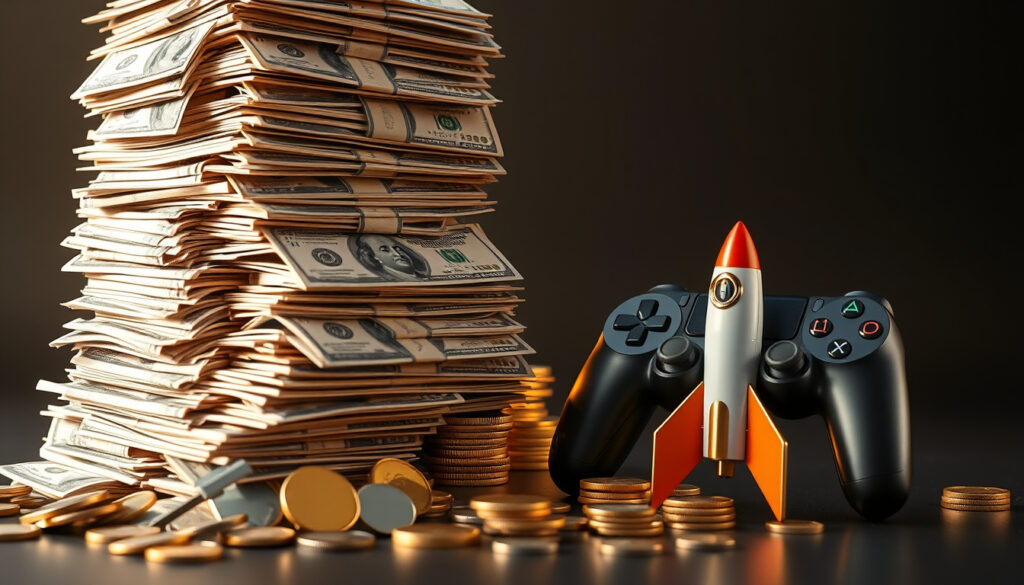
Spend Elon Musk Money: Game, Net Worth, and What His Wealth Could Do
There’s a strange thrill in spending someone else’s trillion dollars in one frantic minute — that’s the hook of the Spend Elon Musk Money game. The free browser simulator lets you turn his real-world fortune into a shopping spree of rockets, football clubs, and yachts, no login or download required; the fantasy is easy, but the reality is messier — People magazine reported Bloomberg estimates of his wealth anywhere from $486.4 billion to $342 billion over the past year.
Elon Musk net worth (2025): approximately $400 billion USD · Time limit in popular Spend Elon Musk Money game: 60 seconds · Elon Musk charitable donations (publicly disclosed): over $5.7 billion in shares · Estimated cost to end world hunger (UN): $40 billion per year · Spend Elon Musk Money games/apps on Google Play: several, 500k+ installs
Quick snapshot
- Largest disclosed gift: $5.7 billion in Tesla shares in 2021, per the BBC’s review of regulatory filings.
- $474 million disbursed by the Musk Foundation in 2024; more than $1.1 billion since 2010 (Forbes).
- The main game is free, browser-based, with no download or login (Spend Elon Money).
- The game’s displayed fortune is a dynamic estimate, not a fixed audited cash balance (Spend Elon Money).
- Lifetime charitable totals vary by counting method: Forbes’s $1.1 billion foundation figure and the roughly $406 million estimate measure different things.
- The long-term impact of Musk’s $6.6 billion World Food Programme pledge is not yet measured.
- 2001: Musk’s foundation is launched (per People’s report).
- 2021: Musk donates $5.7 billion in Tesla shares to charity (per the BBC’s review of regulatory filings).
- 2024: The foundation disburses $474 million, much of it to Musk-affiliated entities (per Forbes’s review).
- More clones are already appearing — versions like spendelonmoney.org keep the format spreading.
- The transparency debate over Musk-affiliated foundation recipients is likely to continue after Forbes’s 2024 grant review. (spendelonmoney.org)
- Watch net-worth headlines: each one is a snapshot, not a bank balance. (spendelonmoney.org)
Eight numbers, one pattern: the game’s virtual balance runs about two and a half times the real-world estimate of Musk’s wealth, and the real-world estimate keeps moving.
| Metric | Value |
|---|---|
| Net worth (2025) | Approximately $400 billion (est.) |
| Bloomberg estimate range, past year | $342 billion (Mar 2025) to $486.4 billion (Dec 2024) |
| Largest disclosed donation | $5.7 billion in Tesla shares (2021) |
| Ending world hunger, annual cost (UN) | $40 billion |
| Game time limit | 60 seconds |
| Displayed game fortune, by version | $970.4 billion to $1.028 trillion |
| Musk Foundation 2024 disbursements | $474 million |
| Musk Foundation total since 2010 | More than $1.1 billion |
The implication: no single number on this page is a bank balance. Each one is a snapshot with a different lens — stock price, tax filing, or game developer’s joke.
Read the game’s trillion-dollar balance as satire, not finance. The real fortune is an estimate that moves weekly, and this guide’s job is to keep the two apart.
How can I play the Spend Elon Musk Money game?
The game lives in the browser, costs nothing, and takes 60 seconds to play. The catch: the balance you are spending is a developer’s estimate, not Musk’s bank account.
Where to find the game online
- The main page — Spend Elon Money — hosts the best-known free browser version, with no download or login required.
- Spend Money Elon Musk, a game hub with multiple versions, includes one that starts with a displayed fortune near $991 billion.
- A clone at spendelonmoney.org showed $970.4 billion on an October 2026 playthrough, proof that the concept keeps spawning copies.
Mobile versions on Google Play have racked up more than 500,000 installs across several apps. All of them run the same joke with different budgets.
Basic rules and time limit
- The core rule is the same everywhere: you get 60 seconds to spend as much of the displayed fortune as possible (Spend Money Elon Musk).
- One version displayed a fortune of roughly $1.028 trillion with 79 purchasable items, including Teslas, private jets, rockets, yachts, houses, sports teams, classrooms, wells, and malaria nets (Spend Elon Money).
- A separate version showed about $997 billion (Spend Money Elon Musk).
You never win by preserving the balance; you win by sending it toward zero. The numbers differ between clones because the displayed fortune is a dynamic estimate rather than an audited balance.
How to play, step by step
Platform: Any web browser · Cost: Free · Time: 60 seconds
- Open the game in any browser; the Spend Elon Money page is a good starting point.
- Check the displayed fortune and remember it is an estimate, not Musk’s cash balance.
- Work through the catalog: luxury goods first, then tech companies, then the charity items like wells and malaria nets.
- Race the 60-second timer and watch the balance fall.
- Share the final receipt — the social layer is half the appeal.
There is no scoreboard and no prize. The point is the conversation it starts about how much a billion actually is.
What purchases can you make?
- Luxury: Teslas, private jets, yachts, and mansions.
- Culture and sports: football clubs and sports franchises.
- Impact: classrooms, clean-water wells, and malaria nets.
The mix is deliberate. The game lets you blow a trillion dollars on jets first, then quietly offers malaria nets — a small prod at how charity feels like an afterthought even in a fantasy budget.
The pattern: the game makes an abstract fortune feel tactile. The minute the timer stops, the real question begins — what would the actual money do?
What could Elon Musk do with his money to help the world?
On paper, Musk’s fortune is big enough to fund global programs. The real-world version of the game’s question — what could his money actually do? — is more interesting than any virtual shopping spree.
Could Musk’s wealth end world hunger?
At roughly $400 billion in estimated wealth, Musk could fund the World Food Programme’s widely cited $40 billion-a-year hunger program for about a decade — on paper.
- The World Food Programme‘s widely cited estimate puts the annual cost of ending world hunger near $40 billion.
- The catch: most of Musk’s wealth is Tesla and SpaceX equity, which means it moves with stock prices and cannot be wired like cash.
- In 2021, Musk publicly pledged $6.6 billion to the World Food Programme for food security, an offer that became a permanent footnote in the charity debate.
Even with the money available, the step from paper wealth to on-the-ground food programs runs through tax filings, grant recipients, and a very public argument about how the money is tracked. The game skips all of that.
Funding renewable energy projects
- Tesla’s stated mission is to accelerate the world’s transition to sustainable energy — a use of capital that behaves like an investment, not a grant.
- The Musk Foundation’s public grant records skew toward education and healthcare rather than climate, with a $370 million school-operations grant topping the 2024 list, according to Forbes.
- Renewable energy is where Musk’s business and his stated mission overlap: every Tesla sold and every battery pack shipped advances the same transition.
That makes climate impact harder to measure in a “charity total” — it is happening inside the balance sheet, not the donation ledger.
Space exploration and asteroid mining
- SpaceX’s stated goal of making humanity multiplanetary is the most expensive ambition on Musk’s balance sheet — the game’s rocket item is a joke with a real line item behind it.
- Asteroid mining is the speculative version of the story: a possible future payoff, not an existing business line.
- The game’s catalog captures the hierarchy: after the jets and yachts, rockets are the most expensive clicks.
What is telling is the ordering. Even in a fantasy budget, the charitable items come last.
The trade-off: Musk could fund world hunger for a decade on paper, or keep deploying capital into companies that might change energy and space access for generations. The public debate is really about which one counts as help.
The pattern: the game makes the moral math visible, but the real ledger is harder to total.
Does Elon Musk donate money to charity?
The short answer is yes — the records are real. The longer answer is about how much, to whom, and how quickly the money reaches working charities.
How much has Elon Musk donated?
- Forbes’s review of tax filings put the Musk Foundation’s 2024 disbursements at $474 million and its total giving at more than $1.1 billion since 2010.
- Forbes’s estimate cited by People put Musk’s disclosed lifetime donations at roughly $406 million as of March 2025, with the same report citing specific gifts of $55 million to St. Jude Children’s Research Hospital and $10 million to the University of Texas for population research.
- His largest public gift came in 2021: $5.7 billion in Tesla shares to charity, per the BBC’s review of regulatory filings.
The gap between $406 million and $1.1 billion is not a contradiction; it is a counting problem. One figure tracks money that left Musk’s hands, the other tracks money that left his foundation.
Where does the Musk Foundation’s money actually go?
- Forbes notes that much of the 2024 giving went to entities controlled by Musk — a transparency flag, not a violation — with the largest checks totaling $370 million to The Foundation for school operations, $35 million to a Fidelity Charitable donor-advised fund, and more than $7 million to Baylor Scott & White Healthcare.
A $474 million giving year sounds generous until you check the recipients: much of the money flowed to Musk-linked entities, which makes the transparency question as important as the total.
None of this is illegal, and donor-advised funds are standard practice. But it means “Musk donated X” headlines need a second question: donated to whom, and how quickly did it reach a working charity?
Criticism and transparency questions
- Known outside gifts exist — $55 million to St. Jude Children’s Research Hospital and $10 million to the University of Texas — but they are small next to the foundation’s $474 million year.
- The foundation has operated since 2001, which gives it more than two decades of history to judge.
- Even the largest foundation year amounts to roughly a tenth of one percent of Musk’s estimated net worth.
The criticism is not that Musk never gives; it is that the giving is hard to track, partially routed through his own entities, and dwarfed by the scale of his wealth.
Why this matters: charitable records are the only public map of Musk’s real-world generosity, and the map has holes — which is exactly why the rumors fill them in.
The pattern: the larger the announced gift, the more closely the audit trail matters.
What is Elon Musk’s net worth?
Musk’s net worth is the most volatile number in this article — and the game’s static balance hides that completely.
How net worth is calculated
- Bloomberg’s Billionaires Index logged Musk at a record $486.4 billion in December 2024; by March 15, 2025, the same index estimated $342 billion — and most of that wealth is Tesla and SpaceX equity (People).
- Game pages display similar-sounding fortunes — $991 billion, $997 billion, $1.028 trillion — but those are developer estimates, not audited balances.
Net worth is not a bank account. It is a formula — shares held, multiplied by the latest share price, minus debt. Change the price and the fortune changes with it.
Every “Musk worth $X” headline is a snapshot of a number that can move by tens of billions in a week. The game’s balance is static; the real one is not.
What assets make up the wealth
- Tesla equity is the biggest driver of Musk’s net-worth swings; SpaceX, as a private company, is valued through secondary-share sales rather than a daily stock ticker.
- His disclosed philanthropy runs through a separate foundation set up in 2001, more than two decades before the game made his fortune a toy.
- The game’s catalog mirrors the asset mix: Teslas and tech companies are the headline items, while jets and houses are side purchases.
Understanding the asset mix explains the game’s second joke: even Musk’s real fortune is mostly paper. A trillion-dollar spree would require selling stock so quickly that the price — and the fortune — would collapse.
Comparison to other billionaires
One game version hands you $1.028 trillion — roughly 2.5 times the record $486.4 billion Bloomberg estimated for Musk’s entire fortune in December 2024.
- That December figure was a record for Bloomberg’s tracker, which puts Musk’s peak above every other measured billionaire.
- For a more useful comparison, his roughly $400 billion working estimate is about 10 times the UN’s annual estimate to end world hunger.
Comparisons to other billionaires matter less than comparisons to global budgets, because at this scale one person’s net worth starts to resemble a country’s GDP.
The takeaway: Musk’s wealth is simultaneously enormous and fragile. The game freezes it at a trillion; reality keeps it in motion.
The pattern: the game freezes the number, while the real wealth keeps moving with every stock tick.
What does Elon Musk do with his money to help people?
A charitable receipt is not the only way a fortune helps people. Musk’s companies are the other channel, and for most of his wealth, the bigger one.
Tesla and sustainable transport
- Tesla’s stated mission is to accelerate the world’s transition to sustainable energy — an impact channel that runs through products, not grants.
- Musk’s wealth is concentrated in Tesla equity, which means the company’s success is also his personal balance sheet.
- In the game, a Tesla is the entry-level luxury item — a joke that works because the real company is already the foundation of Musk’s fortune.
The climate angle is the clearest example of help that does not look like charity: it is a business with a mission statement.
Starlink for internet access
- SpaceX’s Starlink is designed to bring internet access to regions that traditional infrastructure cannot reach.
- The service turns a space company into a connectivity provider, which makes it one of Musk’s most visible responses to the global digital divide.
- Unlike foundation grants, Starlink’s impact is a business model — sustainable, but paid for by subscribers.
That is the difference between building things and giving money: one scales, the other writes a check.
Giving money vs building things: which helps more?
Musk’s foundation gave away $474 million in 2024, while his companies deploy billions in capital every year. The public fights over his charity, but his companies are the bigger check by far.
- Musk has said he paid more than $11 billion in personal taxes, by his own accounting — money that goes to public budgets rather than to his foundation.
- The game’s quieter feature is the charity rack: classrooms, wells, and malaria nets sit at the bottom of the catalog, a reminder that impact items exist even in fantasy.
- None of these channels shows up in one “charity total,” which is why the public number always looks smaller than the actual footprint.
The honest answer to what Musk does with his money: some to charity, a lot to taxes, and most back into companies that aim to change entire industries.
The trade-off: helping through products scales, but it is not charity. Helping through charity is clear, but it is small next to his wealth. Musk does both; the argument is only about which one deserves the credit.
The pattern: product-led impact goes into the balance sheet, not the donation ledger, which is why the two scores never match.
What’s confirmed and what’s still unclear about Elon Musk’s money
The internet treats Musk’s money like a game-show prize. These two lists separate what the records support from what remains fuzzy.
Confirmed facts
- Bloomberg’s tracker logged Musk at $486.4 billion in December 2024 and about $342 billion by March 2025, as reported above via People.
- The Musk Foundation disbursed $474 million in 2024, including a $370 million grant to The Foundation for school operations, per Forbes’s review.
- Musk donated $5.7 billion in Tesla shares to charity in 2021, per the BBC’s review of regulatory filings.
- The main Spend Elon Money game is free, browser-based, and requires no login or download (per the game page).
What’s unclear
- The exact total of Musk’s lifetime charitable giving; Forbes’s $1.1 billion foundation total and the roughly $406 million estimate count different things.
- Whether the $6.6 billion World Food Programme pledge of 2021 has translated into measurable long-term impact.
- How many people actually play the Spend Elon Musk Money game; no public usage numbers exist.
- Which game version’s fortune is “right” — clones display from $970.4 billion to $1.028 trillion.
The pattern: the confirmed list is strong on discrete transactions, and the unclear list is strong on totals. That is not an accident — Musk’s finances are visible only where disclosure rules force them into the light.
What the reporting actually says
Three sources, three lenses: the money handed out, the money measured, and the money simulated.
“Elon Musk, world’s richest person, doles out $474 million in 2024 to charities, many belonging to him.”
— Forbes, reviewing Musk Foundation tax filings
“Musk reached a record estimated wealth of $486.4 billion in December 2024, according to Bloomberg.”
— People, citing Bloomberg’s Billionaires Index
“The game’s displayed fortune is a dynamic estimate rather than a fixed, audited cash balance.”
— Spend Elon Money, the main game page
The implication: if you want the truth about Musk’s money, read the tax filings and the index trackers — not the game’s balance, and not the hot takes.
The real takeaway
Spend Elon Musk Money is the rare viral game that accidentally teaches a useful lesson: wealth at the billion-dollar scale is too big to feel real and too volatile to pin down. The game freezes that chaos into 60 seconds of absurd shopping, and the records behind it — a $474 million foundation year, a $1.1 billion giving history, a net worth that swung from $486.4 billion to $342 billion — show why the fantasy is simpler than the truth. For the curious reader who came for the game, the choice is clear: walk away with the joke, or follow the filings and learn how much of a billionaire’s fortune is paper, timing, and very public guesswork. For the reader who came for the numbers, the same choice applies in reverse: enjoy the 60-second spree, but never mistake the game’s trillion-dollar balance for the real balance sheet — because even Bloomberg can’t hold that number still.
Frequently asked questions
Is the Spend Elon Musk Money game real?
Yes — as a free browser-based simulator. It is not an official Musk product, and no real money is involved.
Can you win the Spend Elon Musk Money game?
There is no formal win condition. The goal is to spend as much of the displayed fortune as possible before the timer runs out; the prize is an absurd final receipt to share.
How much money does Elon Musk have in cash?
His cash position is not public. His measured wealth is mostly Tesla and SpaceX equity, as explained above — so the vast majority of his fortune exists as stock, not as a checking account.
Why does Elon Musk not donate more to charity?
His foundation gave away $474 million in 2024 and more than $1.1 billion since 2010, according to Forbes. Critics argue the amount is small relative to a net worth near $400 billion, and that much of the recent giving went to Musk-affiliated entities.
What would happen if Elon Musk cashed out his stocks?
Because most of the fortune is Tesla and SpaceX equity, a sell-off of that size would likely push share prices down and shrink the fortune as it was being sold. That is why net-worth figures are estimates, not cash balances.
Does the Spend Elon Musk Money game cost money?
No. The main browser versions are free and require no download or login.
The pattern: the FAQ splits into game mechanics and financial record, and the two never quite meet.
More related posts
 How Many Kilometers in a Mile – Precise Conversions and Tables
 Why Star Wars: The Acolyte Was Canceled
 IRS Customer Service Phone Number 24/7: Official Lines & Hours
 Sherwin Williams Sea Salt: Green or Blue? Color Guide
 Wheel of Time Cast – Full List of Actors Seasons 1-3
 Old Navy Christmas Pajamas: Family Matching Sets & Sale Guide
 Voyager of the Seas: Current Location, Itinerary & Tips