Myrtle Beach South Carolina: Beaches, Safety & Nearby Towns
There’s a reason Myrtle Beach keeps showing up in family vacation photos: it’s big, it’s easy, and it doesn’t nickel-and-dime you the way pricier coastal towns do. The city anchors the Grand Strand, an approximately 60-mile stretch of South Carolina coastline that pulls in more than 20 million visitors a year (Visit Myrtle Beach, official destination organization), but the practical questions — when you can swim safely, when you should stay home, and which nearby beaches are less crowded — matter more than the brochure photos.
Miles of beach: 60 · Year-round population: ~35,000 · Average annual temperature: 68°F · County: Horry County
Quick snapshot
- The Grand Strand includes 14 coastal communities, from North Myrtle Beach down through Conway and Garden City (Visit Myrtle Beach, official destination organization)
- Swimming is allowed year-round; lifeguards cover designated Horry County beaches from May 15 through September 15 (Horry County Government, county beach authority)
- The city’s five-color flag system includes a double-red alert that closes the water (City of Myrtle Beach, municipal beach-safety office)
- Neighborhood-level crime statistics aren’t published in a way that lets a visitor compare areas before booking (no official neighborhood crime map available)
- Public perception of danger leans on isolated incidents and media coverage rather than routine visitor experience
- Package pricing shifts constantly with demand, season, and hotel inventory
- Peak season: June through August (Horry County Government, county beach authority)
- Hurricane window: August through October (Horry County Government, county beach authority)
- Lifeguard coverage: May 15 through September 15 (Horry County Government, county beach authority)
- Expect crowded weekends from Memorial Day through Labor Day (City of Myrtle Beach, municipal beach-safety office)
- Book Surfside Beach or Pawleys Island for quieter sand within a short drive (City of Myrtle Beach, municipal beach-safety office)
- Check the beach-flag status before every swim (City of Myrtle Beach, municipal beach-safety office)
Ten facts, one pattern: the numbers that matter here are about jurisdiction and timing, not tourist hype.
| Fact | Detail |
|---|---|
| Population | Approximately 35,000 (2020 U.S. Census) |
| County | Horry County |
| Incorporated | 1938 |
| Average annual temperature | 68°F (20°C) |
| Annual visitors | Over 20 million (Visit Myrtle Beach, official destination organization) |
| Grand Strand length | Approximately 60 miles |
| Communities in the Grand Strand | 14 |
| County-managed public beach | Approximately 9 miles (Horry County Government, county beach authority) |
| Lifeguard requirement | May 15 – September 15 (Horry County Government, county beach authority) |
| Water-testing locations | 120+ (SC DHEC, swim season) |
What does Myrtle Beach have to offer?
Myrtle Beach, South Carolina, is the loud, bright center of the Grand Strand — a 60-mile arc of Atlantic coastline that runs from North Myrtle Beach down to the Georgetown County line. That scale is the point: one trip can be a boardwalk carnival, a golf weekend, or a quiet beach-town retreat without ever changing hotels.
Vacation highlights and attractions
- Broadway at the Beach — a large shopping-and-entertainment complex with restaurants and attractions
- The oceanfront boardwalk, anchored by the Myrtle Beach SkyWheel
- Brookgreen Gardens, a sculpture garden near Murrells Inlet
- Golf courses across the Grand Strand, which markets itself as a golf destination
- Live entertainment and family amusements that the official tourism board markets as a family-friendly mix
Travel packages and deals
- Hotel-and-attraction bundles listed on the official tourism site, with prices that swing by week and season
- Golf packages pairing lodging with tee times
- Last-minute oceanfront deals in late August and September, when family demand tapers off
Dining and nightlife
- Seafood restaurants along the Murrells Inlet waterfront
- Family-style buffets that keep group dining simple and wallet-friendly
- Boardwalk food stands and live-music bars within walking distance of most oceanfront hotels
The pattern: Myrtle Beach is engineered for variety-without-planning. The harder choice isn’t finding something to do — it’s picking one thing when everything is 10 minutes away.
Can you swim in the ocean at Myrtle Beach?
Yes — swimming is allowed year-round. What changes is how much backup you have. The City of Myrtle Beach and Horry County maintain separate stretches of beach, and the rules are not identical.
Water safety and rip currents
- Rip currents are a known hazard on Grand Strand beaches; conditions can shift within hours
- The city publishes current beach conditions and flag status on its official site (City of Myrtle Beach, municipal beach-safety office)
- Swimming is allowed in every season, but the safety net varies with the calendar
A green flag in the morning can be red by mid-afternoon. If you’re traveling with kids, check the posted flag at your beach access before you unpack — not after.
Lifeguard coverage and beach flags
- Lifeguards are required on designated Horry County beaches from May 15 through September 15 (Horry County Government, county beach authority)
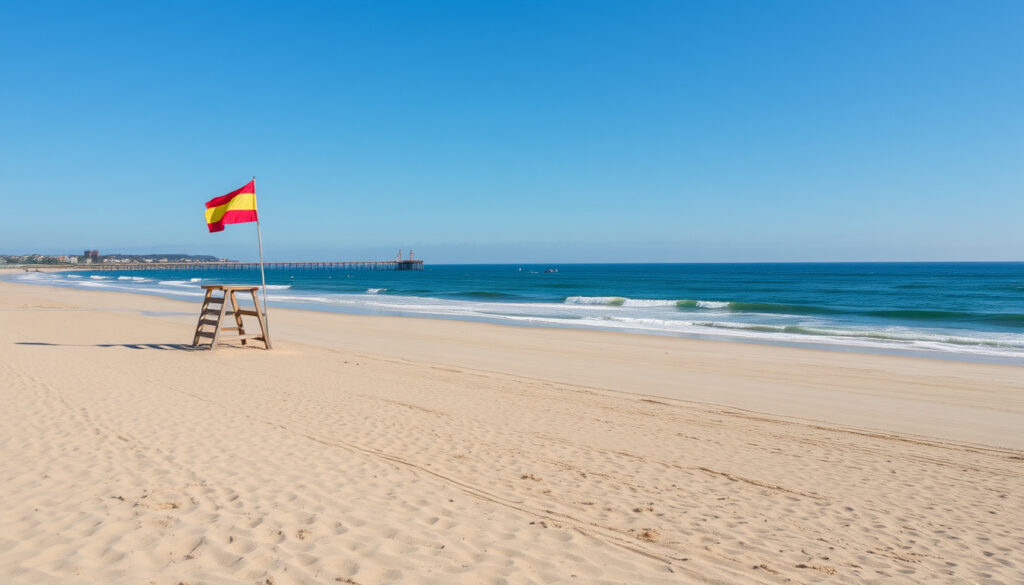
- The county and city use a five-color flag system — green, yellow, red, double-red, blue — covering both water conditions and marine-safety alerts
- A single red flag signals hazardous conditions such as strong waves or currents; a double-red flag means the water is closed and swimming is prohibited (City of Myrtle Beach, municipal beach-safety office)
Water quality is tested through the swim season: South Carolina DHEC samples more than 120 locations statewide, and the City of Myrtle Beach runs weekly ocean tests in summer (City of Myrtle Beach, municipal beach-safety office).
Best swimming seasons
- Peak swimming weather runs late May through early September, when ocean water approaches 80°F
- Winter water temperatures drop to roughly 50°F — wet-suit weather, not family swimming
- Spring and fall swimming is allowed, but lifeguards aren’t required outside the May 15–September 15 window
What this means: Myrtle Beach swimming is genuinely family-friendly in summer — the flags give you a real-time safety read, and the rules are simple. Outside the lifeguard window, you’re on your own judgment.
When’s the worst time to go to Myrtle Beach?
The honest answer is that Myrtle Beach has two bad seasons wearing different costumes: one is too crowded, the other is too stormy. Pick your poison and plan around it.
Peak hurricane season (August–October)
- Late summer and early fall are the most likely windows for tropical storms
- The highest-risk stretch runs August through October
- September typically pairs the warmest water with the biggest storm uncertainty
September is the smart-money month: warm water, thinner crowds, and hurricane risk you can monitor rather than ignore — as long as you book refundable and buy trip insurance.
Summer crowds and heat
- July and August are the busiest months — highest hotel rates, longest restaurant waits, fullest beaches
- Holiday weekends from Memorial Day through Labor Day push the boardwalk past comfortable capacity
- Weekday visits in June avoid the worst of it while keeping full summer weather and lifeguard coverage
Winter cold and limited activities
- December through February is quiet, cheap, and too cold for comfortable ocean swimming
- Water temperatures hover near 50°F, so the beach is for walking, not swimming
- Golf and the dining scene stay open, but many seasonal attractions and shows cut hours or close
The trade-off: late September and early October are the best of both worlds — warm water, thin crowds, and storm risk you can watch. If you book that window, buy trip insurance and stay flexible.
Is Myrtle Beach safe?
The honest answer is local: safety in Myrtle Beach varies by block, not by a single citywide number. The beachfront tourist zone operates on a different rhythm than residential neighborhoods inland, and most public conversations about danger don’t make that distinction.
Crime statistics in tourist areas
- Property crime runs above the national average in parts of the city, while violent crime is lower in the main tourist zone
- Most visitor problems are opportunistic: unlocked rental cars, phones left on beach towels, bags in open trunks
- Reports of scams and petty theft exist but stay localized to specific blocks and late-night spots
The catch: Myrtle Beach doesn’t publish a neighborhood-by-neighborhood crime breakdown that would let a visitor compare rental blocks before booking. That data gap is a big reason the “dangerous” reputation persists — isolated incidents get amplified, and the routine reality of a family beach town doesn’t make headlines.
That gap between reputation and visitor reality is the real safety story. The beach itself isn’t the hazard; the vulnerabilities are standard tourist ones — leaving valuables visible, walking dark parking lots late, and ignoring posted rules.
Why some perceive Myrtle Beach as dangerous
- High-profile incidents in specific residential areas get national coverage, then get applied to the entire city
- Large late-night crowds on the boardwalk create a rowdy, edgy reputation in peak season
- Crime maps that blend tourist corridors with inland neighborhoods make the whole area look riskier than the visitor zone actually is
Safety tips for visitors
- Lock rental cars and keep valuables out of sight; stay in well-lit areas at night
- Follow the posted city rules (City of Myrtle Beach, municipal beach-safety office): alcohol and glass are banned on the sand, beach fires are banned, and holes deeper than two feet must be filled before you leave
- Use boardwalks and marked paths so dunes, sand fencing, and sea oats stay protected
- Swimming is prohibited within 75 yards of any pier
- Dogs are allowed only before 10 a.m. and after 5 p.m. from May 1 through Labor Day, with leash and cleanup rules; the rest of the year they’re welcome any time
Why this matters: the rules that look picky — no glass, no fires, fill your holes, leash your dog — are the same rules that keep a 60-mile public shoreline usable for millions of visitors. The travelers who treat them as suggestions are the ones who end up in the complaint forums.
What other beaches are close to Myrtle Beach, SC?
If the Myrtle Beach boardwalk feels like too much, the cure is a short drive. Horry County manages roughly nine miles of public beach, from south of North Myrtle Beach through sections near Myrtle Beach, past Springmaid Pier, and down through Surfside Beach and Garden City Beach to the Georgetown County line (Horry County Government, county beach authority).
Surfside Beach and Garden City Beach
- Surfside Beach is about 10 minutes south — a compact, family-oriented beach town
- Garden City Beach is about 15 minutes south — quieter, with a more local feel
- Both sit inside Horry County’s managed beach system, so the same flag, lifeguard, and rule framework applies
Pawleys Island and Huntington Beach State Park
- Pawleys Island is about 25 minutes south, an old-school, low-key beach community
- Huntington Beach State Park is about 30 minutes south, with protected shoreline and noticeably fewer crowds
- Both trade nightlife for nature, which is exactly why locals send visitors there
The pattern: every 10 minutes of driving south trades a little energy for a lot of quiet. If protected coastline is the appeal, our Cuyahoga Valley National Park guide shows how the same trade-off plays out inland.
Cities within 30 minutes to 2 hours
- Georgetown sits about 30 minutes south at the quieter end of the Grand Strand
- Wilmington, North Carolina, is about 1.5 hours north
- Charleston is about 2 hours south — a completely different travel style
What this means: the Grand Strand gives you a sliding scale. Stay central for the rides and nightlife, or push south and let the beach do the work.
Myrtle Beach vs. nearby beach towns
Six destinations, one pattern: the farther you drive from the boardwalk, the quieter and cheaper the week gets.
| Destination | Drive from Myrtle Beach | Vibe | Best for |
|---|---|---|---|
| Myrtle Beach | — | Boardwalk energy, attractions, live entertainment | First-timers and families who want everything close |
| Surfside Beach | 10 min south | Compact, family-oriented | Families trading nightlife for quiet |
| Garden City Beach | 15 min south | Low-key, local feel | Unplugged weekdays |
| Pawleys Island | 25 min south | Old-school, slow-paced | A slower, simpler beach week |
| Huntington Beach State Park | 30 min south | Protected shoreline | Nature-focused days |
| Charleston | ~2 hours south | Historic city | A longer side trip or second leg |
The takeaway: these aren’t separate vacations — they’re day-trip moves from the same rental, and the best strategy is usually a mix.
Myrtle Beach pros and cons
Upsides
- 60 miles of beach across 14 communities
- Family-friendly attractions and affordable package deals
- Lifeguarded swimming with a clear flag system from May through September
- Golf, live entertainment, and dining without big-city prices
Downsides
- Peak-season crowds and prices in July and August
- Hurricane risk from August through October
- Property crime higher than national averages in parts of the city
- Strict beach rules: no alcohol, no glass, no fires, no holes left open
- Winter is too cold for ocean swimming
The trade-off: Myrtle Beach trades a little polish for a lot of value — and the rules are the reason a shared 60-mile shoreline stays usable.
What’s confirmed and what’s unclear
Confirmed facts
- Swimming is allowed year-round, and lifeguards cover designated Horry County beaches from May 15 through September 15 (Horry County Government, county beach authority)
- Peak tourist season is summer; hurricane risk is highest from August through October
- The City of Myrtle Beach posts a five-color flag system, with double-red meaning the water is closed (City of Myrtle Beach, municipal beach-safety office)
What’s unclear
- Neighborhood-level crime statistics aren’t published in a way that lets visitors compare areas before booking
- Public perception of danger is driven mostly by isolated incidents and media coverage, not by routine visitor experience
- Vacation package pricing changes frequently with demand, season, and hotel inventory
- Day-to-day beach conditions, including rip-current risk and flag status, can’t be predicted reliably in advance
The implication: plan around what’s known — the 60-mile shoreline, the summer crowds, the storm window — and treat what’s unknown, especially neighborhood-level safety data, as a reason to research your specific rental address rather than avoid the whole region.
In their own words
Two voices frame the Grand Strand experience: one sells it, one regulates it.
The Grand Strand is approximately 60 miles long, and it includes 14 coastal communities.
— Visit Myrtle Beach, official destination organization (about the Grand Strand)
Horry County is responsible for approximately nine miles of public beaches along portions of the Grand Strand.
— Horry County Government, county beach authority (about county beaches)
The tension in those two numbers — a 60-mile destination marketed as one place, managed as many — is the real story of a Myrtle Beach trip: the experience you get depends on which stretch you pick.
The takeaway
Myrtle Beach delivers what it promises: reliable sun, cheap beds, and enough to do for a week. The visitors who leave disappointed are usually the ones who skipped the fine print — they swam outside the flags, booked August without a plan B, or assumed every mile of the Grand Strand feels like the boardwalk. For a family that wants variety without a premium price tag, the choice is clear: come in May or September, stay in a quieter community like Surfside Beach or Pawleys Island, and treat the city’s beach rules as part of the deal — or spend the same money at a pricier beach with fewer guards, more crowds, and the same ocean.
hub.stellantis.com, visitmyrtlebeach.com, plainclimate.com, visitmyrtlebeach.com, destinationsmap.com
Frequently asked questions
What travel packages are available for Myrtle Beach?
Most packages bundle lodging with golf rounds or attraction tickets, and the official tourism site lists current deals. Prices change frequently with season and hotel inventory, which is why late May and early September usually offer better value than July.
What city is 30 minutes from Myrtle Beach?
Georgetown, South Carolina, sits about 30 minutes south at the quieter end of the Grand Strand. It’s the easiest day trip from the boardwalk for a change of pace.
What is halfway between Charleston and Myrtle Beach?
Georgetown is the natural halfway point, about 30 minutes below Myrtle Beach on the way to Charleston. It’s a common stop for travelers splitting the drive.
What are some affordable towns near Myrtle Beach?
Surfside Beach and Garden City Beach, both within about 15 minutes south, tend to price lower than oceanfront Myrtle Beach properties. Pawleys Island and the Huntington Beach State Park area offer quieter, lower-key rentals with more nature and fewer attractions.
Is Myrtle Beach ghetto?
That reputation is largely media-driven. The beachfront tourist zone is busy and commercial, with typical big-crowd risks like petty theft and unlocked cars. The bigger question is location: the boardwalk corridor and residential inland neighborhoods feel very different, so research your specific rental address.
What airports serve Myrtle Beach?
Myrtle Beach International Airport (MYR) is the main gateway to the Grand Strand, and most visitors fly in from spring through fall.
How far is Myrtle Beach from Charleston?
About 2 hours south by car. That puts Charleston at the edge of a manageable weekend trip from a Grand Strand rental, but too far for a casual day trip.
More related posts
 What Is the Stock Market Doing Today? S&P 500, Dow, NASDAQ
 Galaxy M21 to Buy – Prices Availability and Value in 2024
 King of the Hill Revival: Premiere, Cast, Episodes & Streaming
 Alabama vs South Carolina Final: 29-22 Crimson Tide Rally
 Federal Reserve News Today: Rate Decision & Next Meeting
 Best Water Filtration System for Home: Costs, Types & Benefits
 New York, New York: Song History, Film Flop & City Name Guide
 Food Near Me Open: Local Irish Pubs, Etiquette & Must-Try Dishes