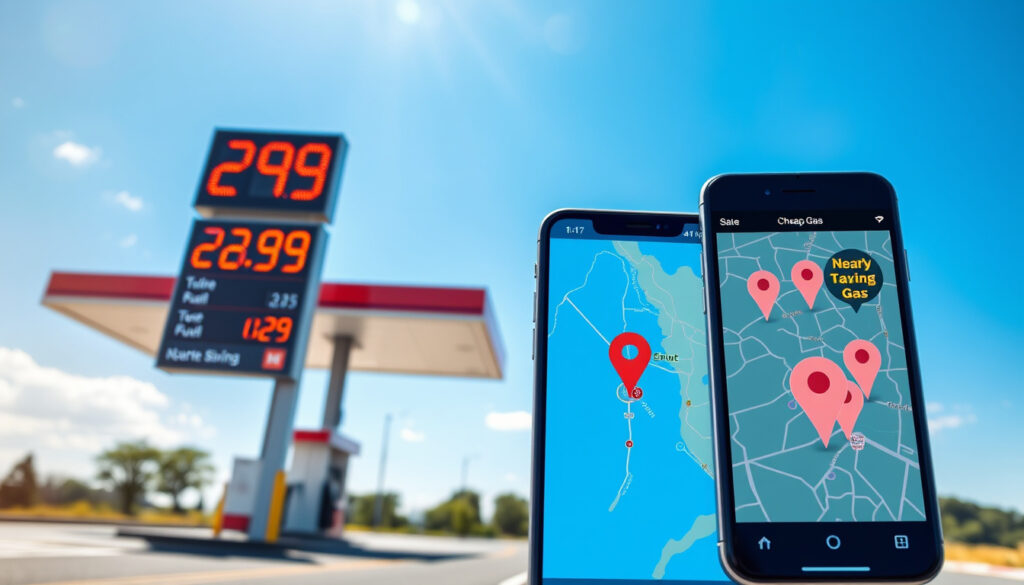
Cheapest Gas Near Me – Best Apps and Tips to Save
Finding the cheapest gas near you requires knowing which tools work best and understanding how prices fluctuate throughout your area. Several mobile applications and websites aggregate real-time fuel costs, allowing drivers to compare prices at nearby stations and identify the most affordable options. This guide covers the most effective apps, explains how price data is collected and verified, and provides practical strategies for maximizing your savings at the pump.
Gas prices vary significantly between stations located just miles apart, and even small differences per gallon add up over time. Whether you are commuting daily or planning a longer road trip, knowing how to locate the lowest prices can save you hundreds of dollars annually. The key is understanding which platforms provide accurate, up-to-date information and how to interpret that data effectively.
How Do I Find the Cheapest Gas Near Me?
Locating affordable fuel in your vicinity involves using price aggregation platforms, navigation apps with fuel tracking features, and understanding local market variations. The most effective approach combines multiple tools to cross-reference prices and identify consistent low-cost retailers.
GasBuddy, Google Maps, Waze
10–30¢ per gallon
Real-time user reports
Early morning or late night
Key insights for finding the lowest prices:
- Use at least two different price-tracking apps to cross-reference data and verify accuracy
- Warehouse club stations like Costco often charge 10–20 cents less per gallon than surrounding retailers
- Grocery-affiliated stations, including Walmart and H-E-B locations, offer loyalty discounts ranging from $2.70 to $2.72
- Independent retailers and smaller chains like Valero sometimes post prices as low as $2.35 per gallon
- Price differences between the cheapest and most expensive stations in the same neighborhood can exceed 75 cents per gallon
- Setting up price alerts through aggregation apps helps you act quickly when prices drop
| Platform | Data Source | Coverage | Free Version |
|---|---|---|---|
| GasBuddy | Crowdsourced + station feeds | National | Yes |
| Google Maps | User reports + partnerships | National | Yes |
| Waze | User-reported during navigation | National | Yes |
| GetUpside | Station partnerships | Select markets | Yes (with cash back) |
| AAA Fuel Price Finder | AAA-verified data | National | Members only |
| Way | Aggregated station data | National | Yes |
What Is the Best App for Cheap Gas Prices?
Each gas price tracking application offers distinct features tailored to different user needs. Selecting the right app depends on whether you prioritize real-time accuracy, cash-back rewards, or seamless navigation integration.
GasBuddy for Comprehensive Price Tracking
GasBuddy remains one of the most widely-used platforms for comparing fuel prices across thousands of stations nationwide. The app aggregates pricing data from multiple sources, including user submissions and direct station partnerships, displaying current costs for regular, mid-grade, premium, and diesel fuel grades. Users can filter results by fuel type, distance, and price, making it straightforward to identify the most economical options along their route or within a specific radius.
GetUpside for Cash-Back Rewards
GetUpside distinguishes itself by offering cash-back rewards on fuel purchases at participating stations. Unlike traditional price-comparison apps that only display posted prices, GetUpside shows both the station’s current price and the potential savings after claiming a cash-back offer through the platform. This model effectively lowers your per-gallon cost without requiring you to change your preferred station, and earnings accumulate with each qualifying purchase.
Combine GetUpside offers with credit cards that provide elevated rewards on gas station purchases. This stacking strategy can yield total savings of 40 cents per gallon or more, depending on your location and available offers.
Way for Price Trend Analysis
Way aggregates pricing information from multiple sources and presents average prices by fuel grade, helping users understand broader market trends rather than just spot prices. The platform displays week-over-week and month-over-month trend data, which proves particularly valuable for drivers who want to identify optimal purchasing windows. By recognizing when prices typically dip in their area, users can time their fill-ups more strategically.
Navigation Apps with Integrated Fuel Tracking
Both Google Maps and Waze integrate gas price information directly into their navigation experiences. Google Maps displays fuel costs for stations along your planned route, while Waze crowdsources price reports from active drivers navigating nearby roads. These apps prove especially useful during road trips or when you need to refuel along an unfamiliar route, as they automatically factor fuel costs into route planning without requiring you to switch between applications.
How Accurate Are Gas Price Apps?
Understanding how gas price data is collected and updated helps you interpret the information these apps provide more effectively and set realistic expectations about accuracy.
Data Collection Methods
Most gas price platforms rely on two primary data sources: crowdsourced user submissions and direct feeds from participating stations. Crowdsourced platforms like GasBuddy depend on community members reporting prices they observed at the pump, which means accuracy depends heavily on participation levels in your area. Stations in high-traffic locations with active user bases typically have more frequently updated information than rural or less-traveled areas.
Update Frequency and Currency
Real-time gas price data varies in how quickly it reflects actual market conditions. When a station changes its prices, that information may not appear on aggregation platforms until another user visits the location and submits an update. Some platforms have partnerships with station chains that provide automatic price feeds, offering more reliable real-time accuracy, but these arrangements are not universal across all retailers.
Research examining Houston-area stations found significant price variations even within the same metropolitan area, with some locations charging as little as $2.09 per gallon while others nearby posted prices exceeding $2.85. This variance underscores why comparing multiple stations rather than assuming uniform pricing pays off.
Best Practices for Verifying Prices
- Cross-reference prices across at least two different apps before committing to a station
- Check the timestamp on reported prices—if an update is several hours old, call the station to confirm current pricing
- Prioritize stations with direct data partnerships or high user reporting activity
- Account for potential price changes that may occur between your search and arrival
When Are Gas Prices Lowest Near Me?
Gas prices fluctuate throughout the day, week, and month based on multiple interconnected factors. Understanding these patterns helps you develop strategies for purchasing fuel at the most favorable moments.
Daily Price Cycles
Prices at individual stations may shift during operating hours in response to wholesale cost changes, competitor pricing, or inventory levels. Early morning and late evening hours sometimes offer advantages because station managers adjust prices based on next-day wholesale projections, though this pattern is not universal across all retailers.
Weekly and Monthly Trends
Using apps that track week-over-week and month-over-month trends helps identify broader patterns in your local market. Prices typically rise ahead of weekends when driving demand increases and may dip mid-week when demand subsides. Tracking these cycles over several weeks reveals predictable patterns specific to your area.
Seasonal and Event-Driven Fluctuations
Gas prices fluctuate based on crude oil costs, regional supply and demand dynamics, refinery capacity utilization, federal and state taxes, and seasonal demand variations. Summer driving season typically pushes prices higher due to increased consumption, while fall and early winter often bring gradual decreases. Unexpected events, including severe weather, refinery shutdowns, or supply disruptions, can cause sudden spikes regardless of seasonal norms.
Gas prices can differ substantially between neighboring cities or even adjacent neighborhoods. Always verify prices for your specific location rather than relying on regional or national averages, which may not reflect conditions on your local streets.
How Gas Prices Change Throughout the Day
- Morning adjustments (5:00 AM – 7:00 AM): Station managers review overnight inventory and adjust prices based on current wholesale costs
- Mid-morning updates (9:00 AM – 11:00 AM): Price changes from overnight wholesale movements take effect at pump
- Afternoon monitoring (1:00 PM – 3:00 PM): Stations may adjust based on competitor pricing observed during midday traffic
- Evening shifts (5:00 PM – 7:00 PM): Commuter rush hour may trigger competitive adjustments in high-traffic corridors
- Late-night quiet period (10:00 PM – midnight): Minimal activity; prices typically stable until next-day wholesale updates
What Is Known and What Remains Uncertain About Gas Pricing
| Established Information | Uncertain or Variable Factors |
|---|---|
| Crude oil prices significantly influence pump costs | Exact timing of wholesale-to-retail price transmission |
| Regional supply and demand affect local pricing | How quickly competitors respond to price changes |
| Federal and state taxes add fixed per-gallon costs | Impact of individual station pricing strategies |
| Warehouse and grocery-affiliated stations often undercut independents | Consistency of real-time app updates in low-traffic areas |
| Seasonal demand patterns create predictable annual cycles | Duration of price spikes following supply disruptions |
Understanding Gas Price Factors
The price you pay at the pump reflects a complex supply chain and market dynamics that extend far beyond your local station. Crude oil represents the largest component of gas prices, typically accounting for roughly half of what consumers pay at the pump. This commodity is traded globally, meaning events in distant markets can influence local prices within days.
Refining costs and margins vary by facility and season, with refineries sometimes reducing production for maintenance or facing unexpected shutdowns that tighten supply. Transportation and marketing add additional layers to the final price, as fuel must be distributed through pipelines, terminals, and delivery trucks before reaching retail stations.
State and federal excise taxes contribute a fixed amount per gallon, meaning their proportional impact on final price grows as wholesale costs fall and shrinks as wholesale costs rise. These tax structures explain why prices in adjacent states or counties can differ noticeably despite similar wholesale conditions.
Expert Sources and Industry Data
“Fuel price tracking apps have transformed how drivers approach refueling, but success requires understanding each platform’s data methodology and limitations.”
— Industry analysis of consumer fuel purchasing behavior
Organizations like AAA and the Energy Information Administration provide authoritative pricing data that complements app-based crowdsourced information. AAA’s fuel price tracking offers member-exclusive insights and verified price comparisons across major retailers, while the Energy Information Administration publishes detailed supply and pricing reports that contextualize short-term fluctuations within broader market trends.
“Comparing prices before you drive matters more than most drivers realize—even modest differences of 10 to 15 cents per gallon compound significantly over a year of regular driving.”
— Consumer fuel savings analysis
Summary: Your Action Plan for Finding Cheap Gas
Finding the cheapest gas near you requires combining technology tools with strategic timing. Download at least two price-tracking applications such as GasBuddy and Way to cross-reference pricing data, and enable notifications for price alerts on your preferred platforms. Consider joining warehouse clubs or grocery loyalty programs that offer fuel discounts, and monitor weekly price trends to identify optimal purchasing windows. For additional household budgeting insights, explore related resources on 24 Hour Plumbers Near Me and Translate English to Japanese for managing expenses across different categories.
Frequently Asked Questions
How often do gas prices update on tracking apps?
Update frequency varies by platform and station. Crowdsourced apps update when users submit new prices, while platforms with direct station partnerships may receive automatic updates. In active areas, prices may refresh multiple times daily; in less-trafficked locations, updates could be hours old.
Are gas prices lower at certain times of day?
Prices may fluctuate during operating hours, but patterns vary by station and market. Some drivers report success purchasing early morning or late evening, when managers adjust prices based on next-day wholesale projections. However, no universal best time guarantees lower prices across all locations.
What factors affect gas prices near me?
Prices near you reflect crude oil costs, regional supply and demand, refinery capacity, transportation logistics, state and federal taxes, and seasonal demand patterns. Local competition and individual station pricing strategies also create variations between neighboring retailers.
Do gas price apps work for diesel and premium fuel?
Most platforms display prices for multiple fuel grades including regular, mid-grade, premium, and diesel. Apps like Way specifically highlight grade-by-grade pricing to help drivers of diesel vehicles or those requiring higher-octane fuel find the best rates for their specific needs.
Can I combine cash-back apps with other discounts?
Yes. Cash-back platforms like GetUpside can typically be combined with loyalty program discounts, warehouse club pricing, or credit card rewards. However, participating stations and eligible offers vary, so reviewing terms before purchasing ensures you receive all advertised benefits.
How much can I realistically save using gas price apps?
Savings depend on your location, driving habits, and willingness to comparison shop. Users typically report saving 10 to 30 cents per gallon, which compounds to $100–$500 annually for average drivers. Combining apps, joining loyalty programs, and timing purchases strategically maximizes potential savings.
Are prices on gas apps always accurate?
No platform guarantees 100% accuracy at all times. Crowdsourced data depends on user submissions, which may lag actual prices by hours. Apps with direct station partnerships tend to offer more reliable real-time information. Cross-referencing multiple sources and checking timestamps helps verify current pricing before driving to a station.
More related posts
 How to Make Slime Without Activator: 5 Easy Recipes
 Don’t Tread on Me Flag Meaning, History & Controversy
 The Time Traveler’s Wife TV Series Canceled – Why
 Bradley Cooper and Gigi Hadid: Age Gap, Status, Facts
 Card Shop Near Me: Best Dublin Shops for Cards & Value Tips
 Social Security Seniors April Payment – Dates by Birthdate and Schedule
 Tank Tops for Women: Best Styles & Top Picks 2024
 Andrew Scott Movies and TV Shows – Full Filmography and Key Roles