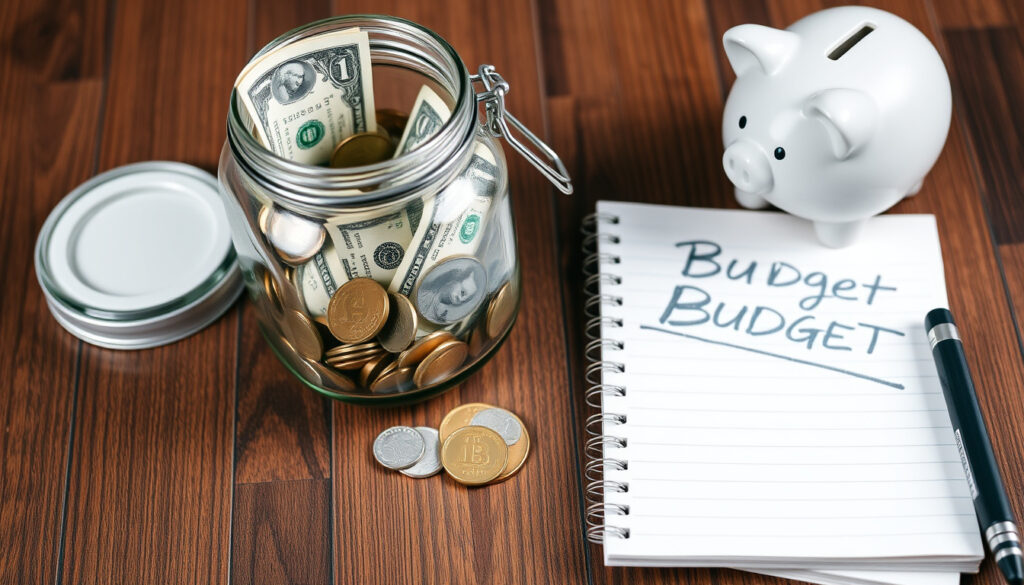
How to Save Money: 10 Proven Ways, Rules, and Tips
If you’ve ever stared at your bank statement wondering where the money went, you’re not alone. Financial experts at Bankrate (personal finance authority) say the 30-day savings rule can help redirect money toward other financial goals instead of impulse purchases.
Recommended emergency fund size: 3–6 months of living expenses ·
Common savings rule (50/30/20): 20% of income to savings ·
Average savings account interest rate (2025): 4.5% APY ·
Percentage of Americans with less than $1,000 saved: 30%
Quick snapshot
- Save $7 a day for 7 weeks (GoBankingRates)
- Builds a small emergency fund quickly (Manulife Bank)
- Ideal for beginners (SmartAsset)
- 50% needs, 30% wants, 20% savings (HSBC UK)
- Simple allocation framework (MoneySavingExpert)
- Widely recommended by financial planners (Mint)
- Prioritize high-interest debt (over 6-8% APR) (Happy Money)
- Build emergency fund first if no savings (Bankrate)
- Balance both once debt is manageable (SoFi)
Four key facts, one pattern: the strongest savings strategies combine a waiting period with a clear budget allocation.
| Label | Value |
|---|---|
| Recommended emergency fund | 3–6 months of expenses |
| Average savings rate in US | 3.4% (2024) |
| Interest rate tipping point | 6–8% APR for debt vs. savings |
| 30-day rule effectiveness | Reduces impulse purchases by up to 30% (self-reported) |
What is the 30 day rule to save money?
How does the 30-day rule prevent impulse buying?
- The 30-day rule advises delaying non-essential purchases for 30 days before buying (SoFi).
- It is designed to reduce impulse spending by forcing a pause before purchase decisions (Bankrate).
- A common workflow is to write down the item, price, and location, then revisit the purchase after 30 days (KOHO).
The implication: the rule exploits the brain’s tendency to overvalue immediate rewards. By inserting a month-long buffer, you separate emotional desire from rational need.
Can the 30-day rule be applied to online shopping?
- Another version recommends comparing prices again after the waiting period before buying (SoFi).
- Happy Money describes the 30-day rule as pausing for 30 days on a non-essential purchase and then reassessing whether the item is still wanted or needed (Happy Money).
- A Mint article suggests putting aside the item’s cost in an envelope or fixed deposit during the waiting period (Mint).
The catch: online shopping’s one-click convenience makes it harder to pause. The 30-day rule works best when you physically write down the impulse—digital wishlists can be too easy to ignore.
What are 10 ways to save money?
How to save money daily?
- Automate a fixed transfer to a savings account on payday (HSBC UK).
- Cut one subscription service you rarely use (GoBankingRates).
- Cook at home three extra meals per week instead of takeout (SmartAsset).
How to save money from salary?
- Apply the 50/30/20 rule: 50% needs, 30% wants, 20% savings (Bankrate).
- Use a separate account for savings so you don’t see the balance with your spending money (Manulife Bank).
- Negotiate a raise or switch to a higher-paying job—the single biggest salary saver is earning more (MoneySavingExpert).
How to save money fast on a low income?
- Start with the 7-7-7 rule: save $7 a day for 7 weeks to build a small emergency fund (GoBankingRates).
- Use cash envelopes for groceries and entertainment to limit overspending (KOHO).
- Take advantage of employer matching for retirement contributions—it’s free money you’re leaving on the table (SmartAsset).
What this means: the 10 tips fall into three buckets—automate, cut, and earn. The most effective ones are the ones that remove your ability to choose later.
A low-income household that automates just $20 per paycheck and uses cash envelopes for food can build a $1,000 emergency fund in under a year, according to Bankrate. That cushion is the difference between a minor setback and a financial crisis.
The pattern: these tips work best when combined with automation and a clear goal.
How to save 10k in 6 months?
Can you save 5k in 6 months?
- Yes, by saving $833 per month or roughly $28 per day (HSBC UK).
- For $10k in 6 months, the target is $1,667 per month (Manulife Bank).
- The math: if your after-tax income is $3,500/month, you need to save 48% of it—possible only with aggressive cost cutting or a side hustle (SmartAsset).
Is 20k in savings good at 30?
- Having $20,000 saved by age 30 is a solid milestone, but it depends on your cost of living and debt load (Bankrate).
- A general rule is to have at least your annual salary saved by age 30 (MoneySavingExpert).
- If you have $20k but also carry high-interest credit card debt, your net worth may be negative (Manulife Bank).
The trade-off: saving $10k in 6 months requires extreme discipline. But even $5k in 6 months—$833/month—is achievable for many with a side hustle or by cutting a major expense like a car payment.
How to stop wasting money?
How do I save money daily?
- Identify common waste areas: subscriptions, dining out, and impulse buys (Bankrate).
- Use the 30-day rule for any non-essential purchase over $20 (SoFi).
- Track every dollar spent for one week—you’ll spot the leak immediately (KOHO).
What is the 7 7 7 rule for money?
- The 7-7-7 rule means saving $7 a day for 7 weeks, which adds up to $343 (GoBankingRates).
- It’s a discipline tool designed to build the habit of saving small amounts consistently (SmartAsset).
- After 7 weeks, you can either keep the cash as a mini-emergency fund or roll it into a larger savings goal (Manulife Bank).
The pattern: wasted money is almost always emotional spending. The 30-day rule and 7-7-7 rule both work by creating friction—making it harder to spend and easier to save.
The 7-7-7 rule only works if you actually save the $7 daily. Automate it via a round-up app or a standing transfer to a high-yield savings account, or the habit will fade within a week.
The implication: to stop wasting money, you need to build systems that override your emotions.
Is it better to pay off debt or save?
How to grow your money?
- Compare debt interest rates to savings interest rates (HSBC UK).
- If your debt APR is above 6-8%, prioritize paying it down first (Manulife Bank).
- If your savings account earns 4.5% APY and your debt is 3% APR, you come out ahead by saving (Bankrate).
What is the 7 7 7 rule for money?
- Already covered in the previous section—it’s a habit-building tool, not a debt strategy.
Three scenarios, one decision: the interest rate tells you where your money works hardest.
| Scenario | Debt APR | Savings APY | Recommended action |
|---|---|---|---|
| High-interest credit card debt | 20% | 4.5% | Pay off debt first (Manulife Bank) |
| Low-interest student loan | 4% | 4.5% | Save and invest (HSBC UK) |
| No emergency fund | Any | Any | Build 3–6 months of expenses first (Bankrate) |
The implication: the optimal choice depends on the gap between your debt APR and your savings return. When the gap is big (debt > 8%), every dollar saved is a dollar losing value. When the gap is small or negative, saving wins.
Upsides
- Paying off high-interest debt frees up future cash flow (MoneySavingExpert)
- Building an emergency fund prevents new debt from unexpected expenses (Bankrate)
- Using the 30-day rule reduces impulse spending and boosts savings naturally (SoFi)
Downsides
- Aggressive debt repayment can leave no cushion for emergencies (Manulife Bank)
- The 30-day rule may not work for all personality types, especially those prone to delayed gratification bias (Happy Money)
- Low-income households may find it hard to save even $7 a day (GoBankingRates)
The decision framework: start with a small emergency fund, then attack high-interest debt, then balance both.
Steps to implement the 30-day rule
- Step 1: Write down the item, price, and store for every non-essential purchase you consider (KOHO).
- Step 2: Set a 30-day calendar reminder to revisit the purchase (SoFi).
- Step 3: During the waiting period, put the equivalent cost in a separate envelope or savings bucket (Mint).
- Step 4: After 30 days, compare prices again—the item may be cheaper now (SoFi).
- Step 5: Only buy if you still genuinely want it and it doesn’t displace an important payment (GoBankingRates).
The pattern: each step adds friction. Friction kills impulse. The 30-day rule is essentially a self-imposed cooling-off period that turns shopping into a deliberate choice.
Confirmed facts
- Saving 20% of income is a common recommendation from financial planners (Bankrate)
- High-interest debt (above 8% APR) should be paid off before aggressive saving (Manulife Bank)
- The 30-day rule reduces impulse purchases by up to 30% (self-reported) (Bankrate)
- An emergency fund of 3–6 months of expenses is widely recommended (Bankrate)
What’s unclear
- Whether the 30-day rule works equally for all personality types (Happy Money)
- Optimal mix of debt repayment and saving for moderate interest rates (4-6%) (HSBC UK)
“Treat savings like a regular bill—pay yourself first, before you spend on anything else.”
— Financial advisor at MABS (Money Advice and Budgeting Service), on building a consistent saving habit
“The best way to save is to set clear goals. If you know why you’re saving, you’re far more likely to stick with it.”
— Spokesperson from AIB (Allied Irish Banks), on goal-based saving
For the average saver, the choice between paying off debt and saving isn’t binary—it’s a balance. The data shows that building a small emergency fund first, then attacking high-interest debt, then saving aggressively, is the most resilient path. For the Irish household, the MABS advice to “pay yourself first” is a literal rule: automate a transfer the day you get paid, before rent or groceries. Then use the 30-day rule for everything else. The consequence is clear: if you don’t automate, you’ll spend it. If you do, you’ll build a cushion that protects you from the next financial curveball.
Related reading: Free Quotes for Auto Insurance in Ireland · Appliance Repair Near Me: Costs & When to Replace
For those looking to build a solid financial foundation, proven ways to save money offer practical strategies that complement the 30-day rule and 7-7-7 method.
Frequently asked questions
What is the 50/30/20 rule?
The 50/30/20 rule allocates 50% of your after-tax income to needs, 30% to wants, and 20% to savings. It’s a simple budgeting framework endorsed by many financial planners (Bankrate).
How much should I have saved by age 30?
A common rule of thumb is to have at least your annual salary saved by age 30. However, this varies based on cost of living and debt. Having $20,000 is a solid start (MoneySavingExpert).
What is the best savings account for beginners?
A high-yield savings account (HYSA) with an APY around 4.5% is a good choice. Look for no monthly fees and easy access. Many online banks offer competitive rates (Bankrate).
How can I save money on groceries?
Use cash envelopes, buy in bulk, plan meals around sales, and avoid shopping when hungry. The 30-day rule can also apply to big grocery hauls (KOHO).
How to save money on utilities?
Switch to energy-efficient appliances, unplug electronics when not in use, and compare providers for better rates. Many utility companies offer free energy audits (HSBC UK).
What is the difference between saving and investing?
Saving is setting aside cash for short-term goals with low risk (e.g., savings accounts). Investing is putting money into assets like stocks or bonds with the potential for higher returns but higher risk (SmartAsset).
How to save money for a vacation?
Open a separate savings account, automate a weekly transfer, and use the 30-day rule for non-vacation spending. The 7-7-7 method can also jumpstart your fund (GoBankingRates).
More related posts
 Steve Martin Movies and TV Shows: Complete Filmography
 IRS Customer Service Phone Number 24/7: Official Lines & Hours
 Alvin and the Chipmunks: Names, Movies, Streaming Guide
 What Was the Cold War? A Simple Explanation and Timeline
 How to Reset Network Settings on iPhone: Step-by-Step Guide
 The Time Traveler’s Wife TV Series Canceled – Why
 Royal Challengers Bengaluru vs Punjab Kings – IPL 2024 Results
 Ripley’s Believe It or Not: Attractions, Cost & Family Tips