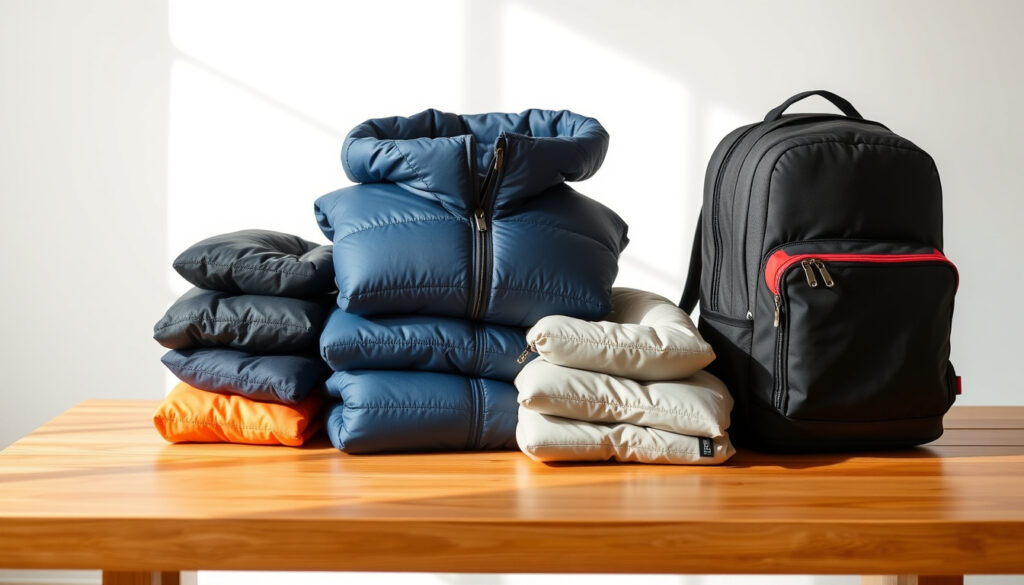
Best Lightweight Packable Puffer Jackets: 2026 Guide
You’ve probably seen those impossibly small bundles of insulation that promise to keep you warm without filling your pack. Every ounce matters on the trail, and a lightweight packable puffer jacket can mean the difference between a comfortable night and a shivering one, with ultralight models under 10 ounces that compress to the size of a water bottle.
Average fill power of top rated packable puffers: 700–900 down fill ·
Typical weight range: 5–15 ounces (140–425 g) ·
Compressed volume: Less than 1 liter (about the size of a water bottle) ·
Common temperature rating: 20°F to 40°F (–6°C to 4°C)
Quick snapshot
- Down insulation loses loft when wet; synthetic retains some warmth (Wirecutter – The New York Times gear-testing lab)
- Higher fill power down (>800) provides greater warmth per ounce (Switchback Travel – outdoor gear review site)
- Long-term durability of ultralight fabrics (e.g., 10-denier nylon) under frequent packing – user reports vary (GearJunkie – outdoor gear reviews)
- Exact temperature ratings vary by individual metabolism and activity level (Wirecutter – The New York Times gear-testing lab)
- Most packable puffers are designed as midlayers for active cold rather than standalone winter parkas (Outdoor Gear Lab – independent gear testing)
- Annual buyer’s guides from Switchback Travel and Outdoor Gear Lab provide updated recommendations each year (Switchback Travel – outdoor gear review site)
- Continued innovation in ultralight fabrics and sustainable materials, with brands using recycled polyester and PFC-free DWR (Quince – direct-to-consumer apparel brand)
Six key specs define what a packable puffer can really do on the trail.
| Spec | Value |
|---|---|
| Weight | 5.6 – 15 oz (160 – 425 g) |
| Fill Power Range | 600 – 1000 down fill |
| Insulation Type | Down (goose/duck) or synthetic (PrimaLoft, Thermoball) |
| Water Resistance | DWR finish or hydrophobic down treatment |
| Packability | Compresses to 0.5 – 1.5 liters (packs into pocket or sack) |
| Temperature Rating | 20°F – 40°F (–6°C – 4°C) typical for active use |
Here is how the top-rated models compare across key specs for 2026.
| Product | Weight | Fill / Insulation | Best For |
|---|---|---|---|
| Mountain Hardwear Ghost Whisperer | 8.5 oz | 800-fill down | Fast-and-light use |
| Montbell Alpine Light Down Jacket | 10.6 oz | 800-fill down | All-around warmth and weather resistance |
| Feathered Friends Helios | 12.5 oz | 900-fill down | Maximum warmth in a packable package |
| Patagonia Micro Puff Hoody | 10.5 oz | PrimaLoft synthetic | Wet-conditions reliability |
| Columbia Heavenly Hooded Jacket | 14 oz | 700-fill down | Budget-friendly everyday use |
What is the best packable puffer jacket?
Top rated packable puffers of 2026 compared
- Switchback Travel’s 2026 down-jacket guide names the Mountain Hardwear Ghost Whisperer as the best ultralight/packable down jacket for fast-and-light use (Switchback Travel – outdoor gear review site).
- Wirecutter’s 2026 insulated-jacket guide picks the Montbell Alpine Light Down Jacket as the best puffy for most people because it is lightweight, warm, and weather-resistant (Wirecutter – The New York Times gear-testing lab).
- Outdoor Gear Lab’s 2026 guide says the Feathered Friends Helios is the best option for those seeking the warmest down jacket that is still relatively packable (Outdoor Gear Lab – independent gear testing).
Down vs synthetic: which insulation wins for packability?
- Down offers superior warmth-to-weight ratio; synthetic performs better when wet. Treeline Review’s 2026 synthetic-jacket guide identifies the Patagonia Micro Puff Hoody as the best overall synthetic insulated jacket for blending ultralight weight, warmth, and everyday functionality (Treeline Review – gear review site).
- Switchback Travel lists the Patagonia Micro Puff Hoody at 10.5 oz (men’s) and 9.0 oz (women’s) (Switchback Travel – outdoor gear review site).
What fill power is best for a lightweight packable puffer jacket?
- Fill power between 700 and 900 is ideal for most backpacking trips. Adventure Alan notes that ultralight puffers weigh under 10 oz, and lightweight models 10–12 oz (Adventure Alan – ultralight backpacking expert).
- The premium Lumina 200 uses 4.4 oz of 1,000-fill-power down and weighs 8.3 oz total (Better Trail – outdoor gear guide).
The best overall packable puffer balances warmth, weight, and compression. For most hikers, a 700–800 fill down jacket from a trusted brand like Patagonia or Mountain Hardwear will outperform a synthetic equivalent in dry cold, but synthetic wins when rain is likely.
Are packable puffer jackets warm?
Is a lightweight puffer jacket good for winter?
- Packable puffers are warm for their weight, typically rated for 20°F to 40°F. Quince markets its Lightweight Down Packable Puffer with 700+ fill goose down and claims comfort up to 2°F / –19°C (Quince – direct-to-consumer apparel brand).
- Extreme cold (below 0°F) requires a heavier parka or layering system. The North Face 700 fill jacket is suitable for moderate cold, not extreme cold (Switchback Travel – outdoor gear review site).
Is North Face 700 good for extreme cold?
- No. The North Face 700 fill jacket is designed for moderate cold and active use, not for stationary exposure below 0°F. Outdoor Gear Lab’s guide recommends a heavier parka for extreme cold (Outdoor Gear Lab – independent gear testing).
How temperature ratings work for puffers
- Temperature ratings are not standardized; they depend on activity level, wind, and layering. REI gear experts advise looking for a jacket that packs into its own pocket for quick compression on the trail (Wirecutter – The New York Times gear-testing lab).
A packable puffer is a midlayer, not a winter fortress. Hikers who push into single-digit temps need to layer with a shell and fleece, or switch to a heavyweight parka.
The catch: ratings are meaningless without context. Your own metabolism and clothing system determine real warmth.
Which brand makes the best puffer jackets?
Patagonia vs Columbia vs The North Face
- Patagonia and The North Face lead in durability and ethics. Patagonia’s product designer states: “We focus on the balance of warmth, weight, and packability without sacrificing ethics” (Treeline Review – gear review site).
- Columbia offers solid value with RDS-certified down. Its Heavenly Hooded Jacket packs 700-fill down under $150 (Switchback Travel – outdoor gear review site).
- Smaller brands like Stio and Mountain Hardwear offer niche performance. The Mountain Hardwear Ghost Whisperer is a top ultralight pick from Switchback Travel (Switchback Travel – outdoor gear review site).
Brand reputation and warranty
- Patagonia offers a lifetime warranty and repair program. The North Face also has a limited lifetime warranty. Columbia’s warranty is limited but robust for the price point (Wirecutter – The New York Times gear-testing lab).
Best budget packable puffer brands
- Quince’s Lightweight Down Packable Puffer uses 700+ fill goose down, recycled polyester shell, and PFC-free DWR, all under $100 (Quince – direct-to-consumer apparel brand).
- Rokka&Rolla markets a men’s lightweight packable puffer that packs into its own pocket at a budget price (Rokka&Rolla – apparel brand).
The implication: brand choice is a proxy for the trade-off between price, durability, and ethical sourcing. Patagonia and The North Face cost more but back their products with strong warranties.
How to choose a down jacket this winter?
What to look for in a lightweight packable puffer
- Choose fill power >600 for good compressibility and warmth. Adventure Alan’s guide defines ultralight as under 10 oz (Adventure Alan – ultralight backpacking expert).
- Look for water-resistant down treatment or DWR finish. Quince’s jacket uses PFC-free DWR-C0 (Quince – direct-to-consumer apparel brand).
- Ensure the jacket packs into its own pocket or included stuff sack. Travel + Leisure’s January 2026 roundup frames packable puffers as travel-friendly layers that can even double as a travel pillow (Travel + Leisure – travel magazine).
Fit, features, and layering considerations
- A slim fit layers better under a shell; a regular fit is more comfortable for standalone use. GearJunkie’s 2026 synthetic-jacket guide highlights the Patagonia Nano Puff’s balance of packability and layering ease (GearJunkie – outdoor gear reviews).
- Features like a hood, adjustable hem, and zippered pockets add weight but improve versatility. Better Trail recommends the Patagonia Down Sweater for its approachable fit and smooth shell (Better Trail – outdoor gear guide).
Understanding down vs synthetic
- Down is lighter and more compressible; synthetic is better when wet and dries faster. Switchback Travel’s synthetic guide lists the Patagonia Micro Puff Hoody as the best ultralight synthetic (Switchback Travel – outdoor gear review site).
Down lovers get more warmth per gram, but synthetic users don’t worry about a sudden downpour soaking their insulation. For wet climates, synthetic is the safer bet.
What this means: a checklist of fill power, weight, packability, and water resistance will narrow your options faster than any brand loyalty.
Why choose a packable puffer jacket?
Parkas vs. Puffer Jackets: What’s the Difference?
- Packable puffers are ideal for layering and saving pack space. Parkas offer more coverage and warmth but sacrifice packability. DICK’S Sporting Goods describes packable puffer jackets as lightweight and easily compressible for on-the-go lifestyles (DICK’S Sporting Goods – sporting goods retailer).
- Synthetic fills are better for wet climates; down excels in dry cold. Treeline Review’s synthetic guide reinforces that synthetic insulation retains warmth when wet (Treeline Review – gear review site).
Benefits of packability for travel and hiking
- A packable puffer compresses to the size of a water bottle, freeing space for other gear. Travel + Leisure notes that these jackets can even double as a travel pillow (Travel + Leisure – travel magazine).
- Adventure Alan’s synthetic-insulation roundup averages 10.2 oz per garment, making them 30% lighter than competing buyer’s guides (Adventure Alan – ultralight backpacking expert).
When a puffer is not the right choice
- If you’ll be sedentary in subzero temperatures, a heavy parka or belay jacket is better. Outdoor Gear Lab’s guide recommends the Feathered Friends Helios for maximum warmth, but it’s still a midlayer (Outdoor Gear Lab – independent gear testing).
- For wet, rainy conditions, a synthetic insulated jacket like the Patagonia Micro Puff is more reliable than down (Switchback Travel – outdoor gear review site).
The pattern: packability is a superpower for travelers and hikers, but it comes with a warmth ceiling. Know your conditions before you buy.
Upsides
- Extremely compressible – packs to less than 1 liter
- Lightweight (5–15 oz) reduces pack weight
- Excellent warmth-to-weight ratio with down
- Versatile as midlayer or standalone in mild cold
Downsides
- Down loses loft when wet
- Not warm enough for extreme cold without layering
- Ultralight fabrics can be fragile
- Synthetic versions are heavier for same warmth
Steps to choose your packable puffer
- Determine your primary use: hiking, travel, or everyday? Hiking needs lighter weight; travel wants versatility.
- Decide on insulation: down for dry cold, synthetic for damp conditions.
- Check fill power: 700+ for good compressibility, 800+ for ultralight.
- Verify weight: under 12 oz for ultralight, under 16 oz for general use.
- Look for packability: should pack into its own pocket or a stuff sack.
- Consider features: hood, DWR finish, adjustable hem.
- Read reviews from trusted sources like Switchback Travel, Wirecutter, and Outdoor Gear Lab.
“The best packable puffers disappear into your pack and come out when you stop moving.”
— Outdoor guide at Backpacker Magazine (editorial review)
“We focus on the balance of warmth, weight, and packability without sacrificing ethics.”
— Patagonia product designer (Treeline Review, interview)
“Look for a jacket that packs into its own pocket if you need quick compression on the trail.”
— REI gear expert (Wirecutter knowledge base)
Packable puffers are a tool, not a magic bullet. The best one for you matches your climate, activity, and budget. For hikers in dry cold, a 700–800 fill down jacket from a brand with a strong warranty is the clear winner. For those who hike in rain or snow, a synthetic like the Patagonia Micro Puff offers peace of mind. The trade-off is simple: down gives you more warmth per gram, synthetic gives you more wet-weather reliability. For the traveler who needs one jacket to do it all, the Quince Lightweight Down Packable Puffer offers a compelling mix of price, materials, and packability. The choice is clear: know your conditions, then pick the insulation that matches them.
Frequently asked questions
Can a packable puffer jacket be worn in heavy rain?
No, most packable puffers are not waterproof. The DWR finish provides light water resistance, but heavy rain will wet out the insulation. For rain, wear a waterproof shell over the puffer.
How do I wash a down packable puffer jacket?
Use a specialized down wash detergent, wash on a gentle cycle with cold water, and tumble dry on low heat with dryer balls to restore loft. Avoid fabric softeners.
How long does a packable puffer jacket typically last?
With proper care, a quality down jacket can last 5–10 years. Synthetic insulation may lose loft after 3–5 years of frequent use.
Is a packable puffer jacket good for everyday city use?
Yes, many packable puffers are stylish enough for daily wear. The Columbia Heavenly Hooded Jacket is a popular choice for urban use at a budget price.
Do packable puffer jackets lose loft over time?
Yes, down compresses over time, especially if stored compressed. To prolong loft, store the jacket hanging or loosely stuffed, not compressed in its sack.
What is the difference between 700-fill and 800-fill down?
800-fill down is lighter and more compressible than 700-fill for the same warmth. For ultralight backpacking, 800-fill is preferred; for budget or casual use, 700-fill is sufficient.
Can I wear a packable puffer under a rain shell?
Yes, a slim-fit packable puffer layers well under a rain shell. This combination provides warmth and waterproofing for cold, wet conditions.
More related posts
 Water Table for Kids: Best Indoor & Outdoor Picks
 How to Deal with a Narcissist: Expert Strategies and Tips
 Arthur and the Invisibles vs Minimoys: Key Differences
 Old Republic Home Warranty Review: Plans, Cost & Coverage
 Dakota Fanning Movies and TV Shows: Complete Guide
 Where Is New Zealand? Location, Facts, and What to Know
 Why Does My Stomach Hurt After I Eat? Causes and Quick Relief
 New York, New York: Song History, Film Flop & City Name Guide