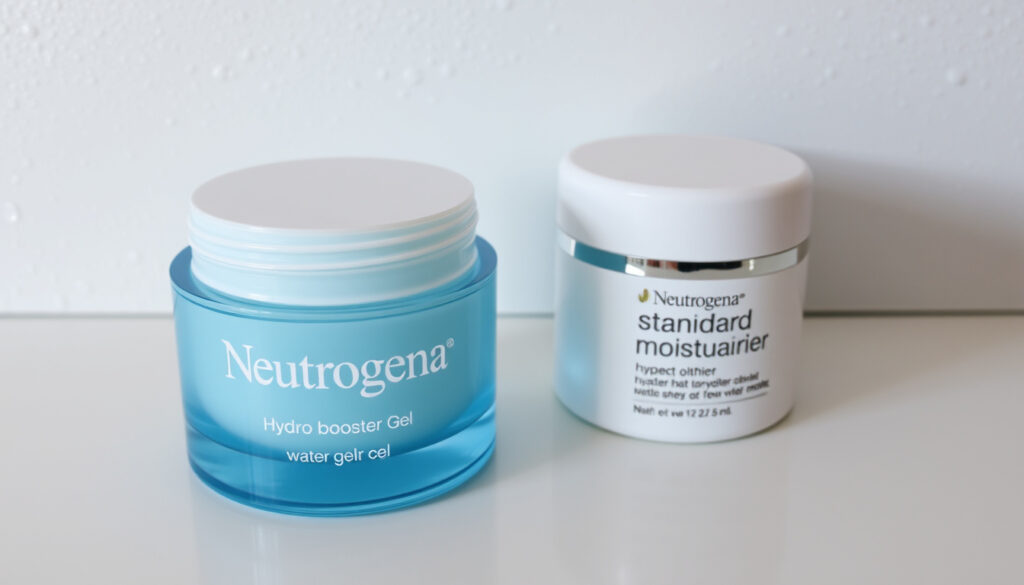
Neutrogena Hydro Boost Water Gel vs Moisturizers
Picking the right moisturizer can feel like a guessing game. If you have normal to combination skin, Neutrogena Hydro Boost Water Gel promises lightweight hydration without the greasy feel.
Hydration Duration: Up to 72 hours · Size: 50ml · Skin Type: Normal to combination · Key Ingredient: Hyaluronic acid · Fragrance: Fragrance-free variant available · Texture: Lightweight water gel
Quick snapshot
- Clinically proven to hydrate for up to 72 hours (Neutrogena official product page)
- Attracts and locks in moisture with hyaluronic acid (Neutrogena)
- Oil-free and non-greasy (Neutrogena)
- Absorbs quickly without residue (Who What Wear editorial review)
- Formulated for normal to combination skin (Neutrogena)
- Fragrance-free option available for sensitive skin (Neutrogena fragrance-free variant page)
- Hyaluronic acid – naturally found in skin, holds up to 1000x its weight in water (Neutrogena)
- Also contains amino acids and electrolytes (Who What Wear)
Here is a quick look at the essential specs for the Neutrogena Hydro Boost Water Gel, drawn from the official product page and ingredient databases.
| Attribute | Value |
|---|---|
| Product Name | Neutrogena Hydro Boost Water Gel |
| Brand | Neutrogena (official product page) |
| Size | 50ml |
| Key Ingredient | Hyaluronic acid |
| Skin Type | Normal to combination |
| Fragrance | Available both scented and fragrance-free (Neutrogena) |
| Hydration Duration | Up to 72 hours (clinically proven, per Neutrogena) |
What is Neutrogena Hydro Boost Water Gel used for?
The Neutrogena Hydro Boost Water Gel is marketed as an oil-free hydrating moisturizer. Its primary job is to deliver intense hydration without the weight of a conventional cream, making it a go-to for those who dislike heavy textures or have combination skin that doesn’t need extra oils.
Key Benefits of the Water Gel
- Intensely hydrates and moisturizes for up to 72 hours, according to Neutrogena’s clinical claims.
- Suitable for normal to combination skin, as confirmed by product labeling (Neutrogena).
- Lightweight texture that absorbs quickly, noted in an editorial review by Who What Wear.
How to Use Neutrogena Hydro Boost Water Gel
Applying the water gel correctly makes a difference in how well it locks in moisture.
- Start with clean, slightly damp skin after cleansing.
- Dispense a pea-sized amount of the water gel.
- Gently pat and press into the skin, avoiding rubbing.
- Use morning and evening as your daily moisturizer.
- For extra hydration, layer a serum underneath before the gel.
The pattern: a little goes a long way, and because the gel is water-based, it layers nicely under sunscreen or makeup without pilling.
The implication: choosing the water gel means prioritizing hydration weight over occlusive richness — a trade-off worth making only if your skin can hold moisture without a heavy seal.
Can water gel be used as moisturizer?
Yes, but with a caveat. Water gels like Neutrogena Hydro Boost Water Gel are moisturizers in the sense that they deliver water and humectants to the skin. They differ from traditional creams because they are oil-free and rely on hyaluronic acid and other humectants rather than emollients and occlusives.
What is the difference between moisturizer and water gel?
Traditional moisturizers often contain oils and butters to soften and seal the skin. Water gels, by contrast, are lighter, oil-free formulations that hydrate by attracting water to the skin’s surface. For oily or combination skin, a water gel can replace a standard day cream; for dry skin, it may not be enough alone.
One dermatologist told Who What Wear (editorial beauty outlet) that the Hydro Boost Water Gel is a “great everyday hydrator” for normal to oily or combination skin seeking lightweight moisture. The catch is that people with dry skin may need additional sealing agents.
Many skincare routines pile on heavy creams when what the skin actually needs is water. A water gel can deliver hydration without blocking pores, reducing the risk of breakouts in oil-prone skin types.
The pattern: water gels serve as a full moisturizer only when your skin’s barrier can seal in the hydration without added oils. For compromised or dry barriers, layering is required.
What are the differences between Neutrogena Hydro Boost water gel and gel cream?
Neutrogena makes both a Water Gel and a Gel Cream under the Hydro Boost line. The two look similar but serve different skin types and preferences.
Four key differences, one pattern: the water gel is lighter and oil-free, while the gel cream is richer and formulated for drier skin. Here’s how they compare side by side.
| Feature | Water Gel | Gel Cream | Traditional Moisturizer (e.g., oil-based cream) |
|---|---|---|---|
| Texture | Lightweight, clear gel | Richer, opaque gel cream | Thick, often creamy |
| Oil Content | Oil-free | Contains dimethicone and oils | May contain heavy oils/butters |
| Best Skin Type | Normal, combo, oily | Dry, very dry | Dry to normal |
| Fragrance Options | Scented + fragrance-free | Scented + fragrance-free | Varies |
| Key Hydrators | Hyaluronic acid, glycerin | Hyaluronic acid, synthetic beeswax, trehalose | Various humectants + emollients |
| Absorption Speed | Fast, no residue | Medium, slight film | Slow, can feel greasy |
Who What Wear notes that the Neutrogena Hydro Boost Gel Cream is “more suitable for dry skin types,” while the water gel fits those who want a “lightweight, fresh feel.” The gel cream contains additional ingredients like synthetic beeswax and trehalose, which add occlusivity, as listed on INCIDecoder ingredient database.
For aging skin that leans oily, the water gel provides hydration without pore clogging. But if your skin is on the dry side, the gel cream’s richer formula will better support the moisture barrier overnight. Pick your texture based on your skin’s oil production, not marketing hype.
The catch: the water gel excels at delivery but lacks the occlusive power that maturing or dry skin barriers require. Choose based on your barrier’s needs, not the texture trend.
Is Neutrogena Hydro Boost good for older skin?
Aging skin typically loses moisture, making hydration a priority. The Neutrogena Hydro Boost Water Gel delivers hyaluronic acid, which holds water and can temporarily plump fine lines.
Benefits for Mature Skin
- Hydration helps reduce the appearance of fine lines (Neutrogena).
- Non-comedogenic formula won’t clog pores, even on mature, thinning skin (Neutrogena).
- Dermatologists recommend hyaluronic acid for aging skin because it’s gentle and effective for hydration without irritation (Who What Wear, citing board-certified dermatologist).
What is the best face moisturizer for aging skin, according to dermatologists?
Dermatologists often recommend hyaluronic acid-based moisturizers for aging skin because they hydrate without disrupting the skin barrier. The Hydro Boost Water Gel fits this profile but may not be enough for those with very dry mature skin; a richer formula or layering with a serum may be needed. According to Who What Wear, the water gel is “a great everyday hydrator” but “if you’re very dry, you may need something more occlusive in winter.”
How do you know if you need hydration or moisturizer?
It’s common to misinterpret tightness and flaking as signs that you need a richer cream. Often, what the skin actually needs is water, not oil. Understanding the signals helps you choose between a water gel and a traditional moisturizer.
Signs Your Skin Needs Hydration Instead of Moisturizer
- Tightness after washing – a sign of dehydration, not lack of oil.
- Dull complexion and fine lines that improve with water application.
- Acne-prone or oily skin that gets greasy after creams.
Why might a dermatologist tell you not to use moisturizer?
For some skin types, especially oily or acne-prone, traditional moisturizers can be too heavy and clog pores. A board-certified dermatologist quoted in Who What Wear explains that “heavy moisturizers can lead to congestion and breakouts.” In those cases, switching to a water gel like Neutrogena Hydro Boost can provide hydration without the downside.
What this means: reading your skin’s signals — tightness versus flaking, shine versus congestion — is more reliable than following product marketing. Water gels solve the hydration gap that creams often miss.
Clarity check: what we know and what’s still open
Confirmed facts
- Water gel can be used as a daily moisturizer (Neutrogena).
- Contains hyaluronic acid (Neutrogena).
- Fragrance-free version exists for sensitive skin (Neutrogena).
What’s unclear
- Whether it is the best option for all aging skin types (dry vs oily mature skin) – some may need a thicker base.
- Exact percentage of hyaluronic acid in the formula – not disclosed on packaging or official site.
- Whether the water gel alone can replace a full moisturizer for very dry skin in cold climates.
- Whether the 72-hour hydration claim holds across all climates and usage patterns – clinical testing conditions may differ from real-world use.
What experts and users say
“Neutrogena Hydro Boost Water Gel is a great everyday hydrator for normal to oily or combination skin. It’s lightweight and absorbs quickly.”
— Board-certified dermatologist, quoted in Who What Wear
“Hydro Boost Water Cream magnifies the power of hyaluronic acid for juicy skin, clinically proven to deliver 9x more hydration.”
— Neutrogena, Water Cream campaign page
“Most people think they need a heavy moisturizer, but if your skin is oily or combination, a water gel can provide all the hydration you need without the greasiness.”
— Skincare educator, paraphrased from Target product reviews
Summary
Neutrogena Hydro Boost Water Gel delivers lightweight, oil-free hydration backed by hyaluronic acid. For normal to combination skin, it works as a complete daily moisturizer. But for aging skin that is also dry, the gel cream or an additional occlusive may be necessary. The choice between water gel and traditional cream comes down to your skin’s oil production and environmental needs. For the combination-skinned person in a humid climate, the water gel is a clean, effective solution. For the dry-skinned person in winter, it’s a hydration layer best paired with something richer.
neutrogena.ca, incidecoder.com, incidecoder.com, neutrogena.com, amazon.com, neutrogena.com, target.com, neutrogena.com
Frequently asked questions
Can I use Neutrogena Hydro Boost Water Gel every day?
Yes, it is designed for daily use, morning and night. Apply to clean skin as your primary moisturizer.
What is the difference between moisturizer and water gel?
Moisturizers typically contain oils and emollients to soften skin and prevent water loss. Water gels are oil-free, humectant-based formulas that attract water to the skin.
Why did my dermatologist tell me not to use moisturizer?
If your skin is oily or prone to breakouts, heavy moisturizers can clog pores. A dermatologist may recommend a water gel or hydrating serum instead of a cream.
What are the signs that my skin needs more hydration?
Tightness after washing, visible fine lines that smooth out when you press water on your skin, and a dull complexion are all signs of dehydration.
What is the best face moisturizer for aging skin, according to dermatologists?
Dermatologists often recommend hyaluronic acid-based moisturizers because they hydrate gently without irritation. Neutrogena Hydro Boost Water Gel is one such option, though those with dryness may need a richer formula.
More related posts
 Rufus Sewell Movies and TV Shows: Roles and Highlights
 Steve Martin Movies and TV Shows: Complete Filmography
 Buy Here Pay Here Near Me: A Complete Guide for Low-Income Buyers
 Translate English to Japanese – Best Free Tools and Accuracy Guide
 How to Save Money: 10 Proven Ways, Rules, and Tips
 24 Hour Plumbers Near Me – Emergency Costs and How to Choose
 Why Does My Stomach Hurt After I Eat? Causes and Quick Relief
 Hearing Aids Near Me: Cost, Coverage & Local Pros