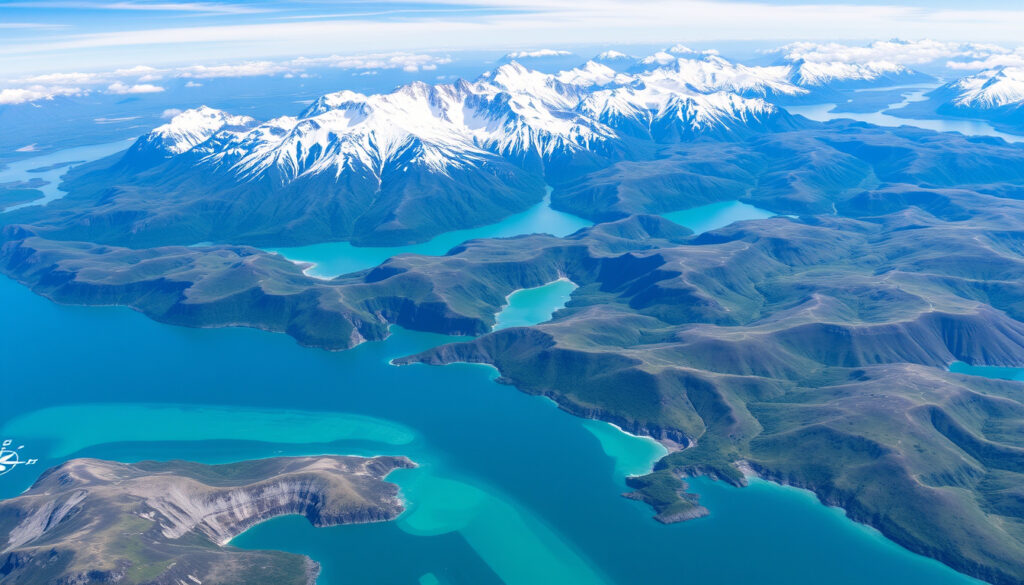
Where Is New Zealand? Location, Facts, and What to Know
Anyone who has tried to point out New Zealand on a blank map knows the feeling: it is always farther away than it looks. We will pin down exactly where New Zealand sits, clear up the common mix-ups, and get into practical facts about language, safety, and what a visit actually costs — like the NZD 100 visitor levy that took effect in 2024 (CNN). By the end, you will know what is fact, what is myth, and whether New Zealand makes sense for your next move or trip.
Capital: Wellington ·
Population: 5.1 million (2023 est.) ·
Area: 268,021 sq km ·
Official Languages: English, Māori, New Zealand Sign Language ·
Currency: New Zealand dollar (NZD) ·
Time Zone: NZST (UTC+12) / NZDT (UTC+13)
Quick snapshot
- New Zealand is an island country in the South Pacific, east of Australia (100% Pure New Zealand)
- English is the predominant language, with Māori and NZ Sign Language also official
- It is a high-income developed country with a GDP per capita around $48,000
- Relative wealth vs Ireland depends on whether you use GDP per capita or purchasing power parity
- Exact trip budgets vary widely by travel style and season
- Visa fee details can change, so official sources matter
- More travelers will face the NZD 100 levy, making budgeting more important
- Regional tourism investment may open up new destinations beyond the main tourist hubs
- Job demand in healthcare, IT, and construction remains high for those considering a move
Here are the key facts about New Zealand.
| Label | Value |
|---|---|
| Full Name | New Zealand (Aotearoa) |
| Capital | Wellington |
| Largest City | Auckland |
| Population | 5,124,100 (2023) |
| Area | 268,021 km² (103,483 sq mi) |
| Government | Unitary parliamentary constitutional monarchy |
| Monarch | King Charles III |
| Prime Minister | Chris Hipkins (as of 2023) |
Where is New Zealand located in the world?
New Zealand sits in the southwestern Pacific Ocean, roughly 1,600 kilometers east of Australia across the Tasman Sea. It is an island nation made up of two main landmasses — the North Island and the South Island — plus around 600 smaller islands. Its nearest large neighbors are Australia to the west, New Caledonia to the north, and Antarctica to the south.
The country is part of Polynesia, a vast region of the Pacific defined by shared cultural and linguistic roots. Its Māori name, Aotearoa, is often translated as “the land of the long white cloud.”
Is New Zealand in Australia or not?
- No — New Zealand is not part of Australia. They are separate countries with separate governments, currencies, and legal systems.
- The two nations are close partners, but the Tasman Sea between them is roughly 1,600 km wide.
- Both are constitutional monarchies with King Charles III as head of state, which sometimes adds to the confusion.
The pattern is understandable: similar flags, shared history under British colonization, and both in the Pacific. But politically and geographically, they are distinct. New Zealand is not a state of Australia, just as Canada is not a state of the United States.
Is New Zealand in Europe or Asia?
- New Zealand is in neither Europe nor Asia.
- It is located in Oceania, the region that includes Australia, Melanesia, Micronesia, and Polynesia.
- European settlement began in the early 19th century, but the country’s geography is firmly Pacific.
The implication: if you are looking at a world map, the fastest way to find New Zealand is to look for the two large islands southeast of Australia, not near any continental landmass.
New Zealand’s location is the source of most confusion — it is remote, isolated, and easily mistaken for a part of Australia. But that isolation is exactly what gives the country its character: a distinct Pacific identity, unique wildlife, and a culture that developed separately from its larger neighbor.
This makes New Zealand one of the most geographically misunderstood countries in the world.
Do they speak English in New Zealand?
Yes — English is the main language spoken in New Zealand. It is used in government, education, business, and daily life. Around 95% of the population speaks English, making it one of the most English-proficient countries in the Asia-Pacific region. Visitors from the UK, US, Canada, Ireland, and Australia will have no trouble communicating.
What makes New Zealand distinct is its trilingual official status: English, Māori, and New Zealand Sign Language are all recognized as official languages. Māori, the language of the indigenous Polynesian people, is experiencing a revival, and you will see it used in place names, official documents, and public broadcasts.
What are the official languages of New Zealand?
- English — the dominant language of daily life and government.
- Māori — an official language since 1987, spoken by around 4% of the population.
- New Zealand Sign Language — official since 2006, used by the Deaf community.
The takeaway: language is not a barrier for English speakers, but a little respect for te reo Māori goes a long way. You will hear “Kia ora” (hello) and see bilingual signage throughout the country.
Is NZ a rich or poor country?
New Zealand is a developed, high-income country. Its GDP per capita is roughly NZD 48,000 (around USD 29,000), placing it in the top tier of the World Bank’s income classification. It consistently ranks high on the United Nations Human Development Index, which measures life expectancy, education, and standard of living.
That said, New Zealand’s economy is relatively small on the global stage. Its total GDP is about NZD 380 billion, which is smaller than the economy of a single large US state. The country relies heavily on trade in agricultural products — dairy, meat, and wine are major exports — and tourism plays a significant role.
Which is richer, Ireland or New Zealand?
It depends on the metric. Ireland’s GDP per capita is significantly higher than New Zealand’s — around USD 103,000 versus USD 29,000. But that gap is misleading because Ireland’s GDP is inflated by multinational corporate accounting. When you adjust for purchasing power parity (PPP), the difference narrows considerably.
- GDP per capita (nominal): Ireland is roughly 3.5 times higher.
- GDP per capita (PPP): Ireland is still higher, but the gap narrows to about 1.5 times.
- Quality of life measures: Both rank near the top of the HDI, with New Zealand scoring well on work-life balance and environmental quality.
The pattern: if you measure raw output, Ireland appears much richer. If you measure what a salary can actually buy — housing, food, services — the two countries are far closer. New Zealand’s wealth is real, but it is spread across a small population in a remote corner of the world.
For anyone considering a move, “rich country” status does not automatically mean high disposable income. New Zealand’s wages are lower than Australia’s and housing costs in Auckland and Wellington eat into take-home pay. The wealth is real, but it shows up in infrastructure, public services, and natural amenities — not necessarily in a fat paycheck.
What is the downside of living in New Zealand?
New Zealand is consistently ranked as one of the best places in the world for quality of life, but it is not without trade-offs. The most common complaints from expats and locals alike are the high cost of living in the main cities, geographic isolation, and exposure to natural hazards.
What are some negative facts about New Zealand?
- Cost of living: Auckland and Wellington are among the most expensive cities in the Pacific, with housing costs close to Australian city levels.
- Isolation: The nearest major city, Sydney, is a 3-hour flight away. Europe and North America are a full day of travel.
- Earthquake risk: The country sits on the Pacific Ring of Fire, and earthquakes are a regular fact of life.
- High UV index: The ozone layer is thinner over New Zealand, so the sun burns faster than at equivalent latitudes elsewhere.
What is the biggest cause of death in New Zealand?
According to health statistics, ischaemic heart disease is the leading cause of death in New Zealand. It accounts for roughly 14% of all deaths annually, followed by lung cancer and cerebrovascular diseases. This mirrors patterns in most Western countries, where heart disease and cancer top mortality tables.
What to beware of in New Zealand?
For visitors, the main risks are environmental rather than criminal. The sun is intense, and skin cancer rates are among the highest in the world — sunscreen and hats are essentials. The outdoors can also be dangerous: the Department of Conservation regularly warns about fast-changing weather, cold water, and underestimating hike difficulty. Driving on narrow, winding roads — often on the left side for visitors — is another adjustment that causes accidents.
Which is safer, Australia or New Zealand?
Both countries are safe by global standards, but the numbers favor New Zealand. Its homicide rate is about half of Australia’s, and violent crime is rarer. The most common safety concern in New Zealand is petty theft from cars, particularly at trailheads and tourist parking areas.
The trade-off: New Zealand is safer in terms of violent crime, but it has higher rates of natural hazards like earthquakes. Australia has more dangerous wildlife — snakes, spiders, crocodiles — while New Zealand has essentially none that threaten humans. For most people, the safety difference is not the deciding factor between the two countries; the weather and job market are.
New Zealand’s safety record is excellent, but its environment demands respect. The biggest risks are not other people — they are the sun, the sea, and the mountains. Tourists who die in New Zealand are overwhelmingly killed in drownings, falls, or car crashes, not crime.
How much money will I need for 2 weeks in New Zealand?
For a two-week trip, the honest answer is: plan for more than you think. New Zealand is not a budget destination. The country is long, distances are large, and activities like guided hikes, boat trips, and adventure sports add up quickly. A realistic mid-range budget for two weeks, excluding international flights, is between USD 2,500 and USD 4,000 per person.
Travel budgets for New Zealand, based on recent guides:
| Traveler type | Daily budget per person | 2-week total (excl. flights) |
|---|---|---|
| Backpacker | NZD 110–150 (~USD 65–90) | NZD 1,540–2,100 (~USD 910–1,240) |
| Mid-range | NZD 200–250 (~USD 120–150) | NZD 2,800–3,500 (~USD 1,650–2,070) |
| Comfort / luxury | NZD 350+ (~USD 200+) | NZD 4,900+ (~USD 2,900+) |
These figures come from travel cost guides including Newswire New Zealand (local cost breakdown) and Two Wandering Soles (travel budget guide).
On top of daily costs, every visitor must factor in entry fees. As of October 1, 2024, the International Visitor Conservation and Tourism Levy is NZD 100 for most tourists, up from NZD 35 (Immigration New Zealand). The NZeTA (New Zealand Electronic Travel Authority), required for visa-exempt travelers, costs NZD 17 through the mobile app or NZD 23 through the website, according to a 2026 industry guide (Wego Blog). That brings the total entry fee to NZD 117 on the app or NZD 123 on the website for many visitors.
Which job is high demand in New Zealand?
New Zealand has a persistent skills shortage in several sectors. Healthcare professionals — doctors, nurses, and allied health workers — are in constant demand. The construction industry needs qualified tradespeople. IT and software development have chronic shortages, and the tourism industry regularly seeks workers for hospitality and guiding roles.
The government publishes a skills shortage list, and roles on it are eligible for faster visa processing. For skilled workers, the pathway to residency is more straightforward than in many other countries.
A two-week trip to New Zealand is a serious financial commitment. With the NZD 100 levy and visa fees, entry alone costs over USD 70 per person before you book a single night of accommodation. Budget travelers face a lean trip; mid-range travelers should expect to spend around USD 200 per day per person, and the costs climb fast if you want the experiences New Zealand is known for.
Upsides
- English-speaking country with a high standard of living
- Stunning natural landscapes and outdoor lifestyle
- Low violent crime rates compared to many countries
- Friendly, welcoming culture with strong Māori heritage
- High demand for skilled workers in healthcare, IT, and construction
Downsides
- Geographically isolated — far from Europe, North America, and even Australia
- High cost of living, especially housing in Auckland and Wellington
- Earthquake and volcanic activity risks
- Intense UV rays require constant sun protection
- Lower wages than Australia for many professions
What do we know for sure?
Some facts about New Zealand are beyond dispute. Here is the confirmed ground truth:
Confirmed facts
- New Zealand is not part of Australia — it is a separate country in the South Pacific
- English is the main language, spoken by over 95% of the population
- New Zealand is a high-income developed country
- Ischaemic heart disease is the leading cause of death
- The International Visitor Levy is NZD 100 as of October 2024
What’s unclear
- Relative wealth vs Ireland depends on the metric used
- Exact 2-week budgets vary by season, travel style, and activities
- Visa and entry fee policies are subject to change
- The true cost of living compared to Australia is debated
- The impact of the levy on tourism is not yet fully known
The confirmed facts are clear, but uncertainties remain.
What the sources say
“New Zealand is an island country in the southwestern Pacific Ocean.”
“Many tourists, working holiday travelers, and some students and workers must pay an International Visitor Conservation and Tourism Levy of NZD 100.”
“New Zealand raised its International Visitor and Tourism Levy from NZD 35 to NZD 100 effective October 1, 2024.”
“A $5.9 million investment supported regional tourism projects for Rotorua, Wellington and Great South.”
The bottom line for visitors and movers
New Zealand is a real, developed, English-speaking country — not a region of Australia, not a stopover on the way to Asia, and not a remote outpost of Europe. It offers a high quality of life, extraordinary landscapes, and genuine safety. But the geography that makes it beautiful also makes it expensive: getting there is costly, getting around is costly, and since October 2024, simply entering the country carries a NZD 100 levy on top of visa fees.
For the would-be visitor, the decision is clear: budget at least NZD 200 per day beyond flights and entry fees, or plan a shorter trip. For the would-be resident, the trade-off is equally direct: accept lower wages and higher prices than Australia in exchange for a safer, more balanced, and more beautiful place to call home.
greatwideopen.blog, trip.com, greatnewzealand.co.nz, rtonz.org.nz, tibetcn.com
Frequently asked questions
What is the capital of New Zealand?
The capital is Wellington, located at the southern tip of the North Island. It is the country’s political center and home to Parliament.
What is the time zone in New Zealand?
New Zealand operates on New Zealand Standard Time (NZST, UTC+12) and New Zealand Daylight Time (NZDT, UTC+13) during daylight saving, which runs from late September to early April.
Is New Zealand a good place to live?
For many people, yes. It offers high safety, a strong outdoors culture, and good public services. The main downsides are the cost of housing, geographic isolation, and lower wages than Australia for some professions.
What is the climate in New Zealand?
New Zealand has a temperate maritime climate. Summers (December–February) are warm and often sunny; winters (June–August) are mild in the north and cold with snow in the Southern Alps. Weather can change quickly, especially in the mountains.
Do I need a visa to visit New Zealand?
Most visa-exempt visitors need an NZeTA (New Zealand Electronic Travel Authority) before traveling. It costs NZD 17 via the mobile app or NZD 23 via the website, and most tourists must also pay the NZD 100 International Visitor Levy.
What is the main airport in New Zealand?
Auckland Airport (AKL) is the country’s main international gateway, handling most long-haul arrivals. Christchurch (CHC) and Wellington (WLG) also have international flights, primarily from Australia and the Pacific.
What is the best time to visit New Zealand?
The best time depends on what you want to do. Summer (December–February) is best for beaches and hiking, while winter (June–August) is best for skiing and snowboarding. Autumn (March–May) and spring (September–November) offer mild weather and fewer crowds.
More related posts
 Map of United States of America: Size, States, Cities Guide
 Dick Van Dyke Show: Cast, Episodes & Streaming Guide
 How Much Is a Galaxy on TikTok? Cost & Creator Payout
 Advion Cockroach Gel Bait: How It Works and How to Use
 Apple Federal Credit Union – Membership Guide and Rates
 Nobody Wants This Season 3: Release Date & Cast Confirmed
 3 Ingredient Peanut Butter Cookies: Easy Recipe & Troubleshooting
 How to Make Slime Without Activator: 5 Easy Recipes