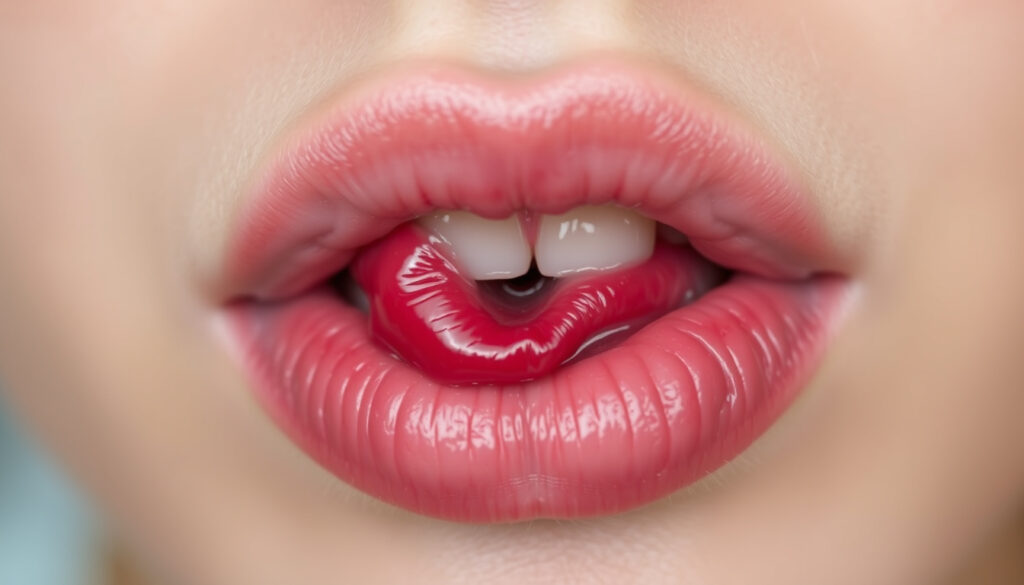
Canker Sore on Lip: Causes, Treatment, and When to Worry
Anyone who has ever woken up with a sharp sting on the inside of their lip knows how distracting a canker sore can be — yet these small, shallow ulcers are surprisingly common and often misunderstood. This article walks you through what a canker sore on the lip really is, how to treat it fast, and when you should see a doctor.
Canker sore prevalence: 25% of the general population experience recurrent canker sores ·
Duration: Most canker sores heal within 7 to 14 days without scarring ·
Contagiousness: Canker sores are not contagious ·
Gender difference: Women are more likely to develop canker sores than men
Quick snapshot
- Canker sores are noncontagious mouth ulcers (Cleveland Clinic (oral‑medicine experts))
- They appear inside the mouth, not on the outer lip (Northwestern Medicine (health system))
- Most heal within 1 to 2 weeks without scarring (National Institute of Dental and Craniofacial Research (federal dental agency))
- Exact cause remains idiopathic in many cases (MedlinePlus (NIH medical encyclopedia))
- Role of specific dietary supplements in prevention is not fully proven (Cleveland Clinic (digestive‑health experts))
- Whether white covering always indicates healing can vary (MedlinePlus (NIH medical encyclopedia))
- Day 0–3: Tingling, red spot appears (Northwestern Medicine (health system))
- Day 3–7: Ulcer forms with white center, peak pain (Northwestern Medicine (health system))
- Day 7–14: Pain decreases, sore shrinks (Northwestern Medicine (health system))
- After 14 days: See a doctor if not healed (Northwestern Medicine (health system))
- Use OTC numbing gels or saltwater rinses for pain relief (MedlinePlus (NIH medical encyclopedia))
- Switch to soft, bland foods until healed (ColumbiaDoctors (academic medical center))
- Not sure if it’s a canker sore? Check location: inside the lip vs. on the lip border (Northwestern Medicine (health system))
Five key characteristics define a canker sore on the lip, one pattern: a noncontagious ulcer that stays inside the mouth and follows a predictable timeline.
| Attribute | Detail |
|---|---|
| Definition | Small, shallow ulcer inside the mouth, particularly on the inner lip. |
| Cause | Not viral; triggered by local trauma, stress, or certain foods. |
| Contagious | No. |
| Typical healing time | 7 to 14 days. |
| Common misdiagnosis | Cold sore (herpes simplex) or oral cancer. |
What does a canker sore on my lip mean?
Canker sore vs. cold sore
- Location: Canker sores appear inside the lip; cold sores appear on the lip border or outside the mouth (Northwestern Medicine (health system)).
- Appearance: Canker sores are flat ulcers with a white or yellow center and a red border – not raised blisters (Cleveland Clinic (oral‑medicine experts)).
- Contagiousness: Canker sores are not contagious; cold sores are highly contagious (Cleveland Clinic (digestive‑health experts)).
The implication: If the sore is on the lip skin and crusts over, it’s almost certainly a cold sore, not a canker sore.
Canker sore vs. oral cancer
- Oral cancer sores are usually painless in early stages, do not heal within 2 weeks, and often bleed (ColumbiaDoctors (academic medical center)).
- Canker sores are painful and heal on their own.
The catch: Any sore that persists past two weeks should be evaluated by a dentist or physician.
Mistaking a canker sore for a cold sore leads to useless treatment: antivirals won’t help a canker sore, and numbing gels won’t stop a herpes outbreak. Your first step is location.
The implication: Canker sores are inside, cold sores outside; that’s the key distinction.
How to get rid of a canker sore on the lip fast?
Over-the-counter treatments
- Apply a topical numbing gel containing benzocaine directly to the ulcer for instant pain relief (MedlinePlus – NIH medical encyclopedia).
- Rinse with an antiseptic mouthwash like chlorhexidine to prevent infection and speed healing (National Institute of Dental and Craniofacial Research – federal dental agency).
- For stubborn sores, a clinician can prescribe fluocinonide gel or a dexamethasone mouthwash to reduce inflammation (MedlinePlus – NIH medical encyclopedia).
Home remedies
- Rinse with a saltwater solution (½ teaspoon salt in 1 cup warm water) several times a day (Cedars‑Sinai (academic medical center)).
- Dab a 1:1 mixture of hydrogen peroxide and water onto the sore, then apply a thin layer of milk of magnesia (Cleveland Clinic (oral‑medicine experts)).
- Suck on ice chips to numb the area (Northwestern Medicine – health system).
- Avoid citrus, spicy foods, and crunchy snacks that can irritate the ulcer (Cleveland Clinic – digestive‑health experts).
When to see a doctor
- The sore lasts longer than two weeks (National Institute of Dental and Craniofacial Research – federal dental agency).
- It is unusually large (more than 1 cm) or extremely painful.
- You have frequent recurrences that disrupt eating or speaking.
- It is accompanied by fever or swollen lymph nodes.
The pattern: Self-care works for minor sores; persistent or large ulcers warrant professional evaluation to rule out other conditions.
Most canker sores don’t need a doctor – but if you’re on day 10 and still in significant pain, topical corticosteroids can turn the corner in 48 hours.
Quick take: For most people, a canker sore on the lip resolves in 7-14 days with simple home care. If it doesn’t, a prescription steroid can speed recovery.
What triggers a canker sore and are they due to poor hygiene?
Common triggers
- Minor injury: accidentally biting the inside of your lip, dental procedures, or sharp foods (MedlinePlus – NIH medical encyclopedia).
- Stress and hormonal changes (Cleveland Clinic (oral‑medicine experts)).
- Acidic or spicy foods (tomatoes, citrus, chocolate).
- Nutritional deficiencies – particularly vitamin B12, folate, or iron (Cleveland Clinic – digestive‑health experts).
Hygiene myth
- Canker sores are not caused by poor oral hygiene (MedlinePlus – NIH medical encyclopedia).
- Brushing too aggressively can actually trigger a sore by causing micro‑trauma.
What this means: Blaming yourself for a canker sore is pointless. Focus on triggers you can control – stress, diet, and gentle oral care.
How to tell if it’s a canker sore or an STD?
Three conditions, one critical difference: location and contagiousness.
| Feature | Canker sore (aphthous ulcer) | Cold sore (herpes simplex) | STD lesion (herpes/chancre) |
|---|---|---|---|
| Location | Inside the mouth (inner lip, cheek, gum) | On lip border, outside mouth | Genitals, rectum, and occasionally mouth |
| Appearance | Flat ulcer, white/yellow center, red border | Fluid‑filled blisters that crust over | Blister or open sore; often multiple |
| Contagious | No | Yes – highly contagious | Yes – contagious during outbreak |
| Treatment | Topical anesthetics, steroids, salt water | Antiviral creams (docosanol, acyclovir, valacyclovir) | Prescription antivirals |
The trade-off: A canker sore inside your lip is neither an STD nor a sign of systemic illness. But if the lesion is on the lip border and you feel tingling beforehand, treat it as a cold sore.
Can I kiss my boyfriend if I have a canker sore?
Contagiousness explained
- Canker sores are not contagious – they cannot be transmitted by kissing, sharing utensils, or any contact (Cleveland Clinic – oral‑medicine experts).
- Cold sores are highly contagious and caused by the herpes simplex virus (Cleveland Clinic – digestive‑health experts).
Myths about transmission
- You cannot give someone a canker sore – only a cold sore is transmitted.
- Poor hygiene does not cause canker sores or make them contagious.
The catch: If you aren’t sure which you have, wait until the sore is gone before kissing. When in doubt, the location test (inside vs. outside) is your best clue.
What is the white thing in a canker sore and what are the stages?
White covering composition
- The white or yellow layer is fibrin – a protein that forms a protective scab over the healing ulcer (Healthline (consumer‑health resource)).
- It is not pus. It is part of the healing process, though it can also be necrotic tissue sloughing.
Healing stages timeline
- Days 1–2: Prodrome – tingling or burning sensation, red spot.
- Days 3–7: Ulcer stage – white/yellow center, red border, peak pain (Northwestern Medicine – health system).
- Days 7–14: Healing stage – pain decreases, sore shrinks, white covering may remain.
- After 14 days: If not healed, seek medical evaluation.
Why this matters: Seeing white on a canker sore is usually a good sign – the fibrin is protecting the tissue underneath. But it’s not a guarantee of healing; monitor for persistent pain.
The white fibrin layer looks alarming, but it’s the body’s bandage. Don’t pick it off – that will delay healing and expose raw nerve endings.
Why this matters: The white covering signals healing, but don’t pick it off.
Confirmed facts
- Canker sores are noncontagious. (Cleveland Clinic)
- They are not caused by poor hygiene. (MedlinePlus)
- Most heal in 1–2 weeks. (NIDCR)
- They appear inside the mouth, not on the outer lip. (Northwestern Medicine)
What’s unclear
- Exact cause remains idiopathic in many cases. (MedlinePlus)
- Role of specific dietary supplements in prevention is not fully proven. (Cleveland Clinic)
- Whether white covering always indicates healing can vary.
Expert insights
“A canker sore is a painful, noncontagious sore inside of your mouth.”
Cleveland Clinic (oral‑medicine experts)
“Canker sores always appear inside your mouth.”
Northwestern Medicine (health system)
For anyone dealing with a painful spot inside the lip, the choice is clear: identify its location first. If it’s inside the mouth, treat it with saltwater rinses and OTC numbing gels, avoid irritants, and give it two weeks. If it’s on the lip border, start a cold‑sore antiviral protocol. Mistaking the two wastes time and money – but a correct diagnosis puts you days ahead.
Related reading: What Is a Cold Sore? Causes, Symptoms, and Treatment
medicalnewstoday.com, cvs.com, mannfamilydental.com, ubiehealth.com
Frequently asked questions
What is the fastest way to heal a canker sore on the lip?
Applying a topical corticosteroid (like fluocinonide) or a protective paste (amlexanox) can reduce healing time by 1–2 days. Saltwater rinses and ice provide immediate pain relief but don’t speed healing.
Does salt help a canker sore on the lip?
Yes – a saltwater rinse (½ teaspoon in warm water) helps clean the area and reduce pain, but it can sting initially.
What vitamin deficiency causes canker sores on the lip?
Deficiencies in vitamin B12, folate, and iron are linked to recurrent canker sores. Supplementation may help in some cases, but evidence is mixed.
Can a canker sore on the lip be a sign of cancer?
Rarely. Most canker sores are benign. But a sore that does not heal in 2 weeks, grows, or bleeds should be evaluated to rule out oral cancer.
Should I pop a canker sore on my lip?
No – a canker sore is a shallow ulcer, not a blister. Popping it will expose nerves and prolong healing.
Is it normal to have multiple canker sores on the lip?
Yes, especially during flare‑ups caused by stress or trauma. Multiple sores can appear at the same time.
How long does a canker sore on the lip last?
Most heal within 7 to 14 days. Large or complex sores may take up to 3 weeks.
Can you get a canker sore on the outside of your lip?
No – that is a cold sore. Canker sores only form on the moist, non‑keratinized skin inside the mouth.
Related reading
More related posts
 Asian Cucumber Salad Recipe: 4 Regional Variations
 Duke Blue Devils Men’s Basketball: History, Tickets & NIL
 Alvin and the Chipmunks: Names, Movies, Streaming Guide
 What Is a Cold Sore? Causes, Symptoms, and Treatment
 No Country for Old Men Cast: Actors, Characters & Where They Are
 Unknown Number Netflix Cast: Who’s in the Documentary
 Galaxy M21 to Buy – Prices Availability and Value in 2024
 How Much Protein Should I Eat a Day? Daily Protein Intake Guide