Omega-3 Fatty Acids: Benefits, Sources, and Deficiency Signs
Omega-3 fatty acids are essential building blocks of cell membranes, supporting heart and brain health, yet up to 80% of Western diets are deficient. By the end of this article, you’ll know which foods to eat and how much you need.
Omega-3 types: ALA, EPA, DHA ·
Daily recommended intake (EPA+DHA): 250–500 mg ·
Top food source (EPA/DHA): Salmon (2,260 mg per 100g)
Quick snapshot
- Omega-3 deficiency can cause rough, scaly skin and dermatitis (NIH Office of Dietary Supplements)
- Fatty fish like salmon and sardines are primary dietary sources of EPA and DHA (NCBI Bookshelf (StatPearls))
- The FDA advises a maximum of 3 g/day of EPA and DHA combined, with no more than 2 g/day from supplements (NCBI Bookshelf (StatPearls)) (NIH Office of Dietary Supplements)
- There is no standardized test for omega-3 deficiency in consumer health guidance (Well+Good)
- Whether omega-3 supplements can prevent Alzheimer’s in healthy adults remains unproven (ManipalCigna (health insurer))
- Ongoing research is still exploring omega-3’s role in cognitive function, mood, and inflammation (Healthline)
- Prescription omega-3 medications (icosapent ethyl, omega-3-acid ethyl esters) have been used for decades to lower very high triglycerides (NCBI Bookshelf (StatPearls))
- Ongoing research is exploring omega-3’s role in cognitive function, mood, and inflammation (Healthline)
Five key facts, one pattern: the distinction between plant-based ALA and marine-based EPA/DHA matters for every health claim.
| Fact | Value |
|---|---|
| Omega-3 types | ALA, EPA, DHA |
| Primary function | Build and repair cell membranes |
| Dietary sources | Fatty fish, flaxseeds, walnuts, algae |
| Deficiency prevalence | Common in Western diets |
| Tolerable upper intake | 3,000 mg/day EPA+DHA (supplements) |
| Best food source (EPA/DHA) | Salmon (2,260 mg per 100g) |
| Best food source (ALA) | Flaxseed oil (53,304 mg per 100g) |
What is omega-3 fatty acid good for?
Heart health and triglyceride reduction
- Omega-3 fatty acids, particularly EPA and DHA, help lower triglyceride levels by 15–30% according to the NIH Office of Dietary Supplements. Prescription formulations like icosapent ethyl (EPA-only) are specifically approved for adults with very high triglycerides (NCBI StatPearls).
- Modest reductions in blood pressure are also reported, with effects more pronounced in people with hypertension (Linus Pauling Institute, Oregon State University).
The implication: for anyone with elevated triglycerides, getting enough EPA/DHA is not just a “nice to have” – it’s a clinically actionable step backed by federal guidelines.
Brain function and mental health
- DHA is a major structural component of the brain and retina. Low DHA levels are linked to cognitive decline and mood disorders (Healthline).
- Epidemiological studies suggest that populations with higher fish intake have lower rates of depression, though randomized trials are less conclusive (NIH Office of Dietary Supplements).
The brain benefits of omega-3 are most robust for preventing deficiency, not for treating established cognitive decline. For the average adult, maintaining adequate DHA intake is like maintaining a retirement fund – small, regular contributions matter more than late catch-up doses.
Reducing inflammation
- Omega-3s lower markers of inflammation such as C-reactive protein (CRP) and interleukin-6 (Linus Pauling Institute).
- This anti-inflammatory effect is one reason why omega-3s are recommended for conditions like rheumatoid arthritis and autoimmune diseases (NIH Office of Dietary Supplements).
Why this matters: chronic inflammation is a common driver of heart disease, diabetes, and joint pain. Getting enough omega-3 is a dietary lever that helps dial down that systemic fire.
Eye health
- DHA is concentrated in the retina, and adequate intake may reduce the risk of age-related macular degeneration (Linus Pauling Institute).
The pattern: every tissue that relies on rapid cell turnover – skin, eyes, brain – depends on omega-3s for membrane integrity. Deficiency shows up first in those high-turnover areas.
Which foods are omega-3 fatty acids?
Animal sources (fish, seafood, eggs)
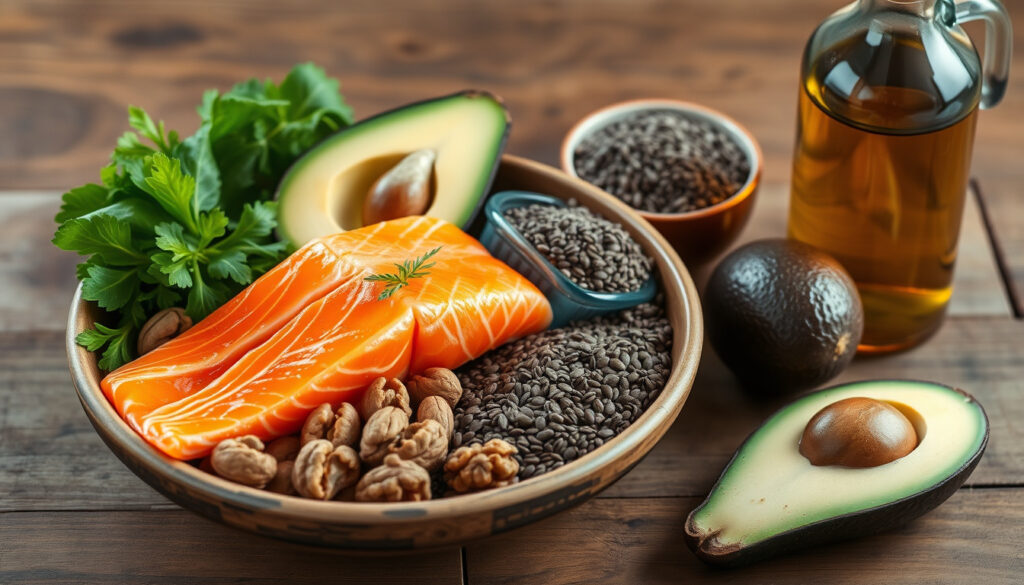
- Fatty fish like salmon, mackerel, and sardines are the richest sources of EPA and DHA. A 100g serving of salmon provides about 2,260 mg of EPA+DHA (NCBI StatPearls).
- Pastured eggs contain 5–10 times more DHA than conventional eggs. Two pastured eggs can provide roughly 300–600 mg of DHA (Zooki (consumer guide)).
The trade-off: conventional eggs are not a meaningful source of omega-3s. Two conventional eggs contain only about 60 mg of DHA – far below the 250–500 mg daily target.
Plant sources (flaxseeds, chia, walnuts)
- Flaxseed oil tops the ALA list with 53,304 mg per 100g. Chia seeds and walnuts also provide high ALA content (NCBI StatPearls).
- The body converts ALA to EPA and DHA at a rate of only 5–15%, so plant sources alone may not meet EPA/DHA targets (Linus Pauling Institute).
If you rely solely on plant sources, you may need to consume large amounts of ALA to get enough EPA/DHA. For example, to match the EPA/DHA in one serving of salmon, you’d need about 3 tablespoons of flaxseed oil – which also comes with 360 calories.
Fortified foods
- Some brands fortify milk, yogurt, eggs, and bread with omega-3s, often from algae or fish oil. Check labels for EPA and DHA content (Zooki).
The catch: fortified foods rarely provide enough to reach daily targets without also consuming excess calories or additives. They are a supplement, not a primary source.
For more on nutrient-dense foods, see our guide on Are Mushrooms Good for You? Health Benefits & Risks.
What food is the highest in omega-3?
Highest per serving (EPA/DHA): mackerel, salmon, cod liver oil
- Mackerel contains about 5,134 mg of EPA+DHA per 100g, making it the single richest whole food source (NCBI StatPearls).
- Cod liver oil provides about 2,664 mg of EPA+DHA per tablespoon – a concentrated supplement form (NIH Office of Dietary Supplements).
Highest per serving (ALA): flaxseed oil, chia seeds
- Flaxseed oil leads with 53,304 mg of ALA per 100g. Chia seeds offer 17,552 mg per 100g, and walnuts provide 9,080 mg (Linus Pauling Institute).
The implication: if you’re looking for the most omega-3 per bite, mackerel (EPA/DHA) and flaxseed oil (ALA) are the champions. But the type matters – EPA/DHA are more bioavailable than ALA.
What are the signs you need omega-3?
Skin and hair dryness
- Dry, scaly skin and brittle hair are classic signs of essential fatty acid deficiency. The NIH Office of Dietary Supplements notes that rough, scaly skin and dermatitis are directly linked to omega-3 deficiency.
Fatigue and poor concentration
- Low EPA/DHA levels are associated with fatigue and brain fog. Secondary sources report that trouble concentrating and low mood are common among people with low omega-3 status (Healthline).
Joint pain and inflammation
- Omega-3s help regulate inflammation. Deficiency may worsen joint stiffness and discomfort, especially in people with inflammatory conditions (Rite Aid (health guide)).
Mood changes
- Studies associate low omega-3 intake with a higher risk of depression. However, these symptoms are non-specific and can overlap with other conditions (NIH Office of Dietary Supplements).
The pattern: these signs are not diagnostic on their own. But if you have dry skin, fatigue, and achy joints, and you rarely eat fish, it’s worth considering whether your omega-3 intake is adequate.
Are 2 eggs enough omega-3?
Omega-3 content in pastured vs conventional eggs
- A large conventional egg contains about 30 mg of ALA and 30 mg of DHA. Two eggs provide only about 60 mg of DHA – far below the 250–500 mg daily target (NCBI StatPearls).
- Pastured eggs can contain 5–10 times more DHA, so two pastured eggs may provide 300–600 mg of DHA, approaching the recommended intake (Zooki).
How eggs compare to recommended daily intake
- The NIH Office of Dietary Supplements recommends 250–500 mg of EPA+DHA per day for adults. Two conventional eggs fall short, while two pastured eggs can meet the target.
The trade-off: unless you buy pastured eggs, eggs are not a reliable source of omega-3s. For most people, a serving of fatty fish or a high-quality supplement is more effective.
“Omega-3 fatty acids are essential for cell membrane function and play a role in reducing inflammation. The best evidence supports their use for heart health, particularly in people with high triglycerides.”
— NIH Office of Dietary Supplements (federal research agency)
“For patients with high triglycerides, we often recommend at least 2 grams of EPA plus DHA per day, either from fatty fish or supplements. The data on cardiovascular risk reduction is compelling.”
carehospitals.com, timesofindia.indiatimes.com, careinsurance.com, riteaid.com, natu.care
Frequently asked questions
What are the side effects of taking omega-3 supplements?
Common side effects include fishy aftertaste, burping, nausea, and loose stools. High doses (over 3 g/day) may increase bleeding risk, especially if you take blood thinners (NIH Office of Dietary Supplements).
Can omega-3 help with depression?
Some studies suggest omega-3 supplementation, particularly EPA, may help reduce depressive symptoms. However, results are mixed, and it should not replace standard treatment (Healthline).
Is it safe to take omega-3 during pregnancy?
Yes – DHA is critical for fetal brain and eye development. The FDA recommends pregnant women consume at least 200 mg of DHA daily, preferably from low-mercury fish or supplements (NIH Office of Dietary Supplements).
What is the difference between fish oil and krill oil?
Krill oil contains EPA and DHA bound to phospholipids, which may be better absorbed than the triglycerides in fish oil. Krill oil also contains astaxanthin, an antioxidant. Both are effective, but krill oil is more expensive (Linus Pauling Institute).
How does omega-3 interact with blood thinners?
Omega-3 supplements can have a mild blood-thinning effect. If you take anticoagulants like warfarin, consult your doctor before taking high-dose omega-3 (NCBI StatPearls).
Can you have too much omega-3?
Yes. The FDA advises a maximum of 3 g/day of EPA and DHA combined, with no more than 2 g/day from supplements. Excess can cause bleeding, immune suppression, and gastrointestinal issues (NCBI StatPearls).
Are omega-3 supplements effective for joint pain?
Some evidence suggests omega-3s can reduce joint pain and stiffness in rheumatoid arthritis by reducing inflammation. However, results vary, and it may take several months to see improvement (Rite Aid).
The modern Western diet is heavily skewed toward omega-6 fatty acids from vegetable oils, processed foods, and grain-fed meat – a ratio that can fuel chronic inflammation. For the average American, the implication is clear: prioritize fatty fish, pastured eggs, or a quality algae-based supplement to tip the balance back. Without that shift, the deficiency symptoms – dry skin, fatigue, brain fog, and joint pain – are not just annoyances; they are warning signs of a deeper metabolic imbalance that affects long-term health.
For more evidence-based strategies, see our guide on Fastest Way to Lose Weight: Evidence-Based Strategies.
More related posts
 What Is Body Dysmorphia? Symptoms, Causes & Treatments
 Seahawks vs Patriots Score: History, 2026 & 28-3 Myth
 The Cask of Amontillado: Summary, Quotes, Irony, and Analysis
 Bungee Fitness Near Me: Classes, Costs & Workout Benefits
 How Much Is a Dime? Value, Weight, Size, History & More
 Sherwin Williams Sea Salt: Green or Blue? Color Guide
 Tank Tops for Women: Best Styles & Top Picks 2024
 Alabama Football Schedule 2025: Dates, Odds, Playoff Path