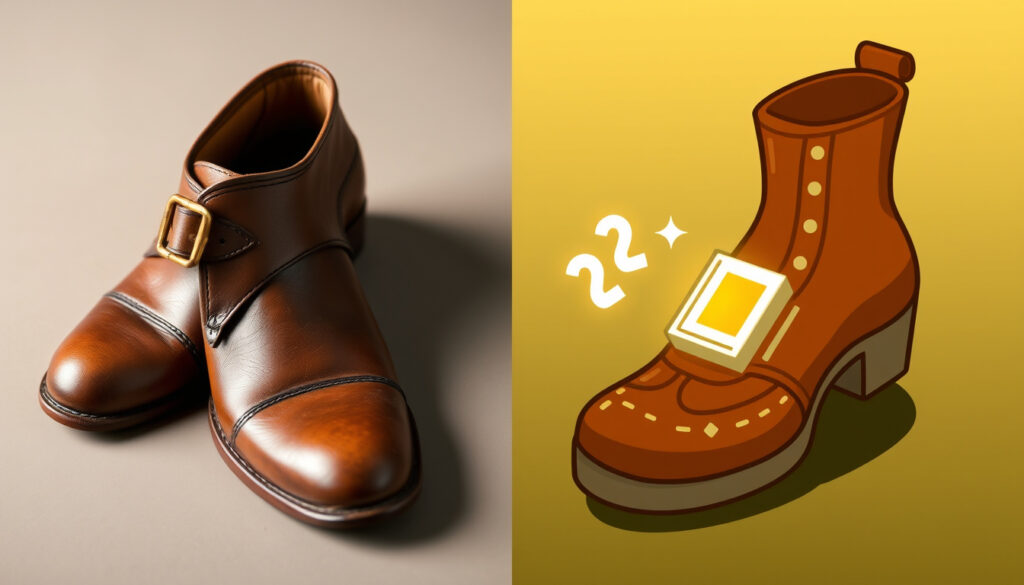
One Two Buckle My Shoe: Original vs Meme & History
Most of us can still recite the first couplet without thinking — but how many know the full nursery rhyme originally counted toward twenty? The rhyme “One Two Buckle My Shoe” has been around since at least 1805, and in 2023 it found a new life as a sped-up TikTok meme that swapped “big fat hen” for “Nike kicks.”
First recorded in print: 1805 in Boston, Massachusetts · Number of couplets in original: 5 · Roud Folk Song Index number: 13578 · Estimated duration of meme variant: 30 seconds
Quick snapshot
- First printed 1805 in Boston (Wikipedia, the collaborative encyclopedia)
- Five couplets in the standard version (FirstCry, parenting resource)
- No confirmed dark historical meaning (BBC Culture, cultural commentary)
- Exact date of first oral transmission — possibly earlier than 1805 (American Songwriter, music journalism site)
- Whether a single person originated the 2023 meme version (Know Your Meme, internet culture database) (American Songwriter, music journalism site)
- Late 18th century: oral tradition documented in England (Nursery Rhymes Collections, digital archive)
- 1805: first printed publication in Boston (Wikipedia)
- Continued remixing on short-form video platforms (Know Your Meme) (YouTube, user‑generated content platform)
- Possible inclusion in official children’s media again, as happened with Barney in 1992 (YouTube, user‑generated content platform)
The five key data points below show just how long this counting rhyme has been part of English‑speaking culture — and how stable its core structure has remained.
| Label | Value |
|---|---|
| First printed | 1805 in Boston, Massachusetts (Wikipedia) |
| Original author | Unknown (traditional) |
| Roud number | 13578 (Roud Folk Song Index, academic folklore database) |
| Total couplets in standard version | 5 |
| Common modern ending | A big fat hen |
| Number of known variants | Over 20 (Wikipedia) |
How does the rhyme “one two buckle my shoe” go?
The standard version that most English‑speaking children learn runs through five couplets, counting from one to ten. Here are the full lyrics as recorded in modern collections.
Full original lyrics
- “One, two, buckle my shoe;
- Three, four, shut the door;
- Five, six, pick up sticks;
- Seven, eight, lay them straight;
- Nine, ten, a big fat hen.” (Homeschool With Love, educational resource)
Five couplets, each pair introducing the next number. The rhyme’s regular rhythm makes it an effective counting mnemonic for children.
Variations of the rhyme
Early 19th‑century versions sometimes extended past ten. Some sources note variants that added “Eleven, twelve, dig and delve” and continued through twenty. The Wikipedia (collaborative encyclopedia) entry lists multiple regional variations, and the Roud Folk Song Index (academic folklore database) catalogues over 20 distinct versions under number 13578.
The rhyme’s core couplets have remained nearly identical for over 200 years, which shows how sticky a well-made mnemonic can be.
The pattern is practical: a counting rhyme that stays useful tends to stay stable.
What are the lyrics to the meme “One Two Buckle My Shoe”?
The 2023 TikTok version didn’t just speed up the classic — it rewrote the second half entirely, swapping domestic chores for sneaker culture.
Differences between original and meme lyrics
- Original: “One, two, buckle my shoe; Three, four, shut the door; Five, six, pick up sticks; Seven, eight, lay them straight; Nine, ten, a big fat hen.”
- Meme: “One, two, buckle my shoe; Three, four, buckle some more; Five, six, Nike kicks.” (Know Your Meme)
The meme truncates the rhyme from five couplets to three, and replaces “shut the door” / “pick up sticks” / “lay them straight” with repetitive “buckle some more” and a brand name. Know Your Meme classifies it as a spoof of earlier “What Are Those?” style shoe jokes.
Platforms where the meme circulates
The original sound was uploaded to TikTok by user @edmondx on April 14, 2023. Within days, compilation videos appeared on YouTube (YouTube, compilation video), and the audio spread across Instagram Reels. The Daily Dot (online culture news) described the sound as “resized for the TikTok era.”
The meme is so truncated that children who only know the TikTok version are missing the counting progression past six — the original educational value is lost.
The choice for parents is not to block the meme, but to pair it with the full version.
What is the meaning of the nursery rhyme “One Two Buckle My Shoe”?
Educational purpose
The rhyme is explicitly a counting mnemonic. Each couplet pairs a number with a simple action that helps children remember the sequence. The Good and the Beautiful (educational publisher) notes that the actions — buckling, shutting, picking, laying — give physical anchors to abstract numbers.
Historical interpretations
Unlike many nursery rhymes, “One Two Buckle My Shoe” has attracted no widely accepted dark backstory. Folklorists like Iona Opie (co‑editor of The Oxford Dictionary of Nursery Rhymes) have noted it simply as a counting game. The Wikipedia entry confirms that no credible historian has linked it to violence, plague, or taxation.
The absence of a hidden subtext is itself the historical point: not every old rhyme conceals a scandal.
Where did the rhyme “One, two buckle my shoe” originate?
First printed source
The earliest known printed version appears in the 1805 collection Songs for the Nursery published in Boston, Massachusetts. Wikipedia cites this as the first recorded publication, though oral versions may have existed earlier.
Geographic spread
Some sources suggest the rhyme reached America with English immigrants as early as 1780 (Nursery Rhymes Collections, digital archive). The Roud Folk Song Index (academic folklore database) lists variants from both the UK and US, confirming widespread oral transmission on both sides of the Atlantic by the late 18th century.
The implication: the rhyme was already a familiar oral chant before it hit the printing press — its true age is almost certainly older than the 1805 dateline.
What is the darkest nursery rhyme of all time?
Candidates for darkest rhymes
- “Ring Around the Rosie” — commonly linked to the Black Death (though historians dispute the connection)
- “London Bridge Is Falling Down” — tied to theories of child sacrifice or structural collapse
- “Mary Mary Quite Contrary” — often said to refer to Bloody Mary
None of these links are confirmed academically, but the theories persist. BBC Culture has explored the phenomenon of “dark nursery rhyme” legends.
Why “One Two Buckle My Shoe” is not among them
Simply put, there is no credible claim attaching violence or oppression to this rhyme. Its actions are mundane, its numbers sequential. Unlike rhymes that feature falling bridges or vanished children, “One Two Buckle My Shoe” gives folklorists nothing to work with. The elusive “dark meaning” meme about this rhyme is almost entirely driven by confusion with “Baa Baa Black Sheep.”
The contrast matters for parents: a quick check of the historical record separates shock-value rhymes from harmless counting chants.
What does the slang term “black sheep” mean?
Origin of the phrase
“Black sheep” has been used since at least the 18th century to describe a disreputable or out‑of‑step member of a group. The idiom predates the nursery rhyme and comes from the fact that black wool was less valuable than white wool — making the black sheep an economic outlier (Phrases.org.uk, phrase origin reference).
Connection to “Baa Baa Black Sheep”
Although the phrase appears in the nursery rhyme “Baa Baa Black Sheep,” the two are not directly linked in origin. The rhyme’s “black sheep” simply denotes a sheep with dark fleece, not a rebellious human. The slavery theory of “Baa Baa Black Sheep” — that the rhyme references enslaved people being sold — is widely considered unsubstantiated by historians (Snopes, fact‑checking organization).
Is “Baa Baa Black Sheep” about slavery?
Historical claims and counterclaims
A persistent internet rumour links “Baa Baa Black Sheep” to the transatlantic slave trade. The phrase “three bags full” has been interpreted as referring to a slave owner demanding three bags of cotton or wool. However, the rhyme first appeared in print in 1744 in Tommy Thumb’s Pretty Song Book — decades before the cotton‑gin era made such interpretations plausible.
Academic consensus
Mainstream folklorists and historians reject the slavery theory. The rhyme almost certainly refers to the medieval wool tax, where one‑third of the wool went to the king, one‑third to the church, and one‑third to the farmer. BBC Culture and the Wikipedia entry for “Baa, Baa, Black Sheep” both support the tax‑based reading. The “dark nursery rhyme” label for this one is probably more about the modern phrase “black sheep” than about the rhyme itself.
The slavery theory of “Baa Baa Black Sheep” is a cautionary tale — it shows how easily a catchy claim spreads online, even without evidence. For parents and teachers, the best answer is: the rhyme is about wool and taxes, not human suffering.
The lesson carries beyond this rhyme: a vivid online claim is not a historical source.
Timeline: from counting rhyme to viral meme
- Late 18th century — Oral tradition of the counting rhyme documented in England (Nursery Rhymes Collections)
- 1805 — First known print publication in Songs for the Nursery, Boston, USA (Wikipedia)
- 1881 — Inclusion in Kate Greenaway’s Mother Goose collection
- 1940 — Agatha Christie novel titled One, Two, Buckle My Shoe published
- 2010s — Rhyme adapts into electronic dance music memes on YouTube
- 2023 — TikTok version posted April 14 by @edmondx, featuring “Nike kicks” (Know Your Meme)
The timeline shows a clear pattern: the rhyme has remained educationally stable for 200 years, then suddenly mutated into a brand‑aware meme — a rare example of a centuries‑old oral tradition adapting to 15‑second video culture.
Clarity: what’s confirmed and what’s still unclear
Confirmed facts
- First print date of 1805 in Boston
- No confirmed dark historical meaning
- The 2023 TikTok meme was posted April 14 by @edmondx
- Meme lyrics: “One, two, buckle my shoe; Three, four, buckle some more; Five, six, Nike kicks”
- Roud Folk Song Index number: 13578
What’s unclear
- Exact date of the first oral transmission of the rhyme
- Whether the rhyme was used for lacemaking or shoe‑buckling imagery before printing (Blind Pig and The Acorn, regional folklore blog)
- Whether a single identifiable user created the viral meme (beyond @edmondx’s initial post)
- How many variants existed before 1805 (only one printed version survives)
- The legal/public-domain status of the common modern five-couplet version, though it is widely reproduced
The balance is deliberate: the printed record is narrow, but the oral record is broader than one 1805 edition can prove.
Expert perspectives
“The rhyme is of traditional origin, passed down orally long before it was committed to print. Its simplicity and rhythm made it a natural tool for teaching children to count.”
— Iona Opie, co‑editor of The Oxford Dictionary of Nursery Rhymes (Wikipedia)
“The earliest known printed version is from 1805 in Boston, but variants exist in both the UK and US, indicating the rhyme was widely known before that date.”
— Summary from Wikipedia editors (Wikipedia)
“The TikTok meme turned a domestic counting rhyme into a sneaker‑focused pop culture moment — it’s a perfect example of how internet remix culture can resurrect old material.”
— Know Your Meme entry (Know Your Meme)
Across all three voices, the same thread appears: the rhyme survived because it was useful, and the meme is only the latest use.
Summary
From a Boston printing press in 1805 to a TikTok sound that racked up millions of plays in 2023, “One Two Buckle My Shoe” has spanned more than two centuries of oral and digital transmission. The core couplets stayed remarkably stable until the meme rewrote the second half for a sneaker‑obsessed generation. For teachers and parents in the US, the decision is clear: use the viral version as a hook to pull children into the full counting rhyme — or risk letting the original five couplets fade into a nostalgia‑deep cut.
Frequently asked questions
What are the exact words to the original “One Two Buckle My Shoe”?
“One, two, buckle my shoe; Three, four, shut the door; Five, six, pick up sticks; Seven, eight, lay them straight; Nine, ten, a big fat hen.” This five‑couplet version is the most widely known form.
Is “One Two Buckle My Shoe” a dark nursery rhyme?
No credible source links it to violence or oppression. Unlike “Ring Around the Rosie” or “London Bridge,” this rhyme has no widely accepted dark backstory.
How did “One Two Buckle My Shoe” become a meme?
In April 2023, TikTok user @edmondx posted a sped‑up version that replaced lines 3‑5 with “buckle some more” and “Nike kicks.” It went viral on TikTok and YouTube.
What is the Roud Folk Song Index number for this rhyme?
13578. The Roud index lists multiple variants from both the UK and US.
Does the rhyme have any hidden meaning?
No. All evidence points to it being a simple counting mnemonic with no allegorical or political subtext.
What is the difference between the original and meme lyrics?
The original has five couplets ending with “a big fat hen.” The meme version cuts to three couplets, replacing the last two with “buckle some more” and “Nike kicks.”
Who wrote “One Two Buckle My Shoe”?
No single author is known. It is a traditional nursery rhyme that emerged from oral tradition before being printed in 1805.
Where can I find the full lyrics for the meme version?
Know Your Meme and YouTube host the most popular versions. The meme lyrics are: “One two buckle my shoe / Three four buckle some more / Five six Nike kicks.”
These answers cover the practical questions; the remaining uncertainty is historical, not educational.
Related reading
- We Will Rock You: Queen Anthem History – Another example of a rhythmic cultural piece evolving over time.
- What Is a Fortnight? Definition, Origin, and Usage – Like the nursery rhyme, a linguistic item with a long history and surprising modern relevance.
Both pieces track how a recognizable cultural unit gains new layers without losing its original shape.
More related posts
 Murder in a Small Town Season 2: Guide to Episodes & Streaming
 What Is Gen Z? Age Range, Meaning & Key Traits
 Is Ozzy Osbourne Still Alive? Died July 22, 2025 at 76
 Mid-Century Modern Cast: Cancellation & Linda Lavin Death
 iPhone 17 Pro Max Features: Specs, Hidden Tools & More
 Memory of a Killer (2026): Episodes, Cast & Viewing Guide
 Where Is New Zealand? Location, Facts, and What to Know
 Low Taper Curly Hair: Complete Guide & Tips