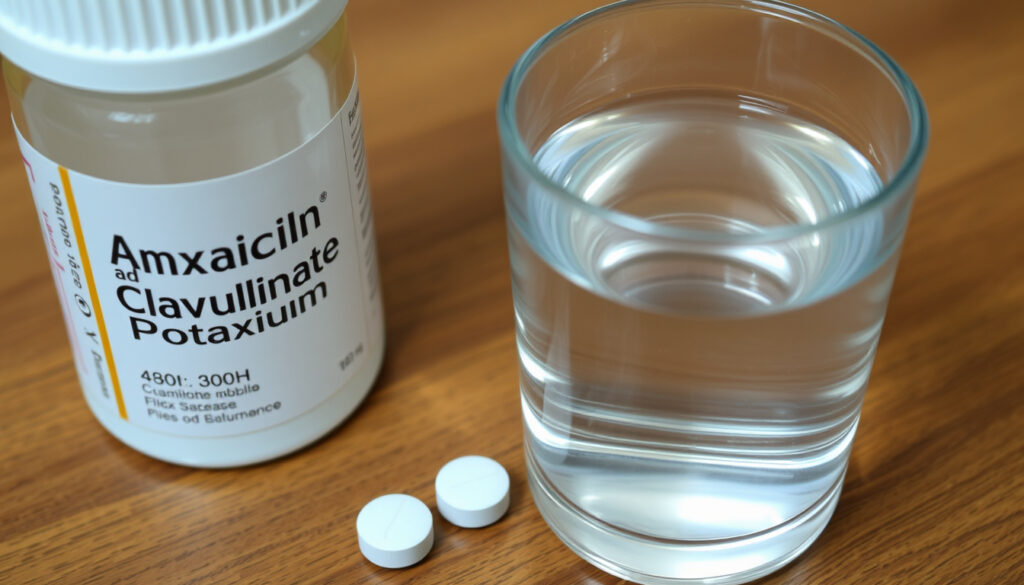
Amoxicillin and Clavulanate Potassium: Uses, Side Effects, Dosage
If you’ve ever been prescribed an antibiotic for a stubborn sinus infection or a painful ear infection, you might have been given a combination drug called amoxicillin and clavulanate potassium. This guide covers what it is, how it works, and what you need to know before taking it — based on FDA-label data and Mayo Clinic recommendations.
Drug class: Penicillin antibiotic with beta-lactamase inhibitor · Prescription required: Yes · Common uses: Ear, sinus, lung, skin, urinary tract infections · Most common side effect: Diarrhea · Typical onset of symptom relief: 48–72 hours · Available forms: Tablets, chewable tablets, oral suspension
Quick snapshot
- Effective against susceptible bacterial infections (Mayo Clinic (authoritative medical institution))
- Diarrhea is the most frequent adverse effect (DailyMed/FDA label (U.S. drug regulator))
- Should be taken with food to reduce gastrointestinal upset (DailyMed/FDA label)
- Exact speed of symptom relief varies by infection site and individual (Mayo Clinic)
- Long-term safety beyond 14 days is not well studied (Mayo Clinic)
- Symptom improvement often begins within 48–72 hours of the first dose (Mayo Clinic)
- Full course should be completed even if you feel better (MedlinePlus (NIH patient education))
- If symptoms do not improve within 3 days, contact your doctor (Mayo Clinic)
- Watch for signs of allergic reaction (rash, swelling, difficulty breathing) (DailyMed/FDA label)
The table below provides 7 key facts about amoxicillin and clavulanate potassium, drawn from the FDA-approved prescribing information:
| Label | Value |
|---|---|
| Drug class | Penicillin antimicrobial with beta-lactamase inhibitor |
| Brand names | Augmentin, Co-amoxiclav |
| Prescription required | Yes |
| Typical adult dose | 875 mg/125 mg every 12 hours or 500 mg/125 mg every 8 hours |
| Duration of treatment | 5–14 days, based on infection type and severity |
| Common side effects | Diarrhea, nausea, skin rash, vomiting |
| Serious side effects | Allergic reactions, liver injury, severe diarrhea (C. difficile) |
What are amoxicillin and clavulanate potassium used for?
Common bacterial infections treated
- Ear infections (Mayo Clinic)
- Sinus infections (Mayo Clinic)
- Lung infections (including pneumonia) (NIH ClinicalInfo (federal HIV/AIDS clinical guidance))
- Skin infections (Mayo Clinic)
- Urinary tract infections (Mayo Clinic)
How the combination works
Amoxicillin kills bacteria by disrupting their cell wall synthesis. Clavulanate potassium (a beta-lactamase inhibitor) prevents bacteria from destroying amoxicillin, extending its effectiveness against resistant strains (MedlinePlus).
This combination is specifically designed for infections that would otherwise shrug off amoxicillin alone. For patients with recurrent sinusitis or UTIs, the clavulanate component often makes the difference between a failed course and a cured infection.
The implication: choosing amoxicillin-clavulanate over plain amoxicillin is a tactical decision — it’s not stronger in the sense of higher potency, but it covers a wider bacterial footprint.
Is amoxicillin clavulanate a strong antibiotic?
How amoxicillin clavulanate compares to other antibiotics
It is a broad-spectrum antibiotic effective against many gram-positive and gram-negative bacteria (Mayo Clinic). It is often used when an infection has not responded to amoxicillin alone, because the clavulanate overcomes beta-lactamase resistance (MedlinePlus).
When is it considered first-line treatment
Treatment guidelines from the NIH ClinicalInfo list it as first-line for certain community-acquired pneumonia and sinusitis when resistance is suspected. It is also a common choice for animal bites and diabetic foot infections.
“Strong” is relative. While it covers more bacteria than amoxicillin alone, it is not a broad-spectrum shotgun like some fluoroquinolones. Its strength lies in its targeted resistance shield.
The pattern: the drug’s value is less about raw power and more about precision — it hits the bacteria that other penicillins miss.
What to avoid while taking amoxicillin clavulanate potassium?
Foods and drinks to avoid
- Avoid alcohol — it can increase the risk of side effects like nausea and dizziness (WebMD (health information provider))
- Take with food (a meal or snack) to reduce stomach upset (DailyMed/FDA label)
Medications that interact
Anticoagulants (warfarin), methotrexate, and oral typhoid vaccine can interact. Always inform your doctor of all medications you take (Mayo Clinic).
Lying down after a dose
Do not lie down for at least 10 minutes after taking the tablet. This prevents esophageal irritation and ulceration (DailyMed/FDA label).
The most overlooked precaution is the lying-down rule. Many patients swallow a pill and go straight to bed, risking pill-induced esophagitis — a painful but preventable complication.
The trade-off: convenience vs. safety. Taking the pill with a full glass of water and staying upright for 10 minutes is a small price for avoiding a trip to the ER.
How quickly does amoxicillin clavulanate start working?
Onset of action for different infections
Most patients notice symptom improvement within 48 to 72 hours (Mayo Clinic). For ear infections, relief may come sooner; for deeper lung infections, it may take longer.
Factors affecting speed of recovery
- Severity of infection
- Bacterial resistance profile
- Patient’s immune system
- Adherence to dosing schedule
If symptoms do not improve after 3 days, contact your doctor — the infection may require a different antibiotic (Mayo Clinic).
Patients often stop the drug when they feel better, but the full course (5–14 days) is necessary to wipe out the bacteria completely. Stopping early breeds resistance.
The implication: “48–72 hours” is a guideline, not a guarantee. If you’re not significantly better by day 3, the drug may not be right for you.
What is the main side effect of amoxicillin-clavulanate?
Common side effects: diarrhea, nausea
Diarrhea is the most common side effect, occurring in up to 15% of patients (DailyMed/FDA label). Nausea, vomiting, and skin rash are also reported.
Serious side effects: allergic reactions, liver damage
Seek medical help immediately if you experience signs of an allergic reaction: hives, difficulty breathing, swelling of the face or throat. Severe diarrhea (watery or bloody) may indicate C. difficile infection (DailyMed/FDA label).
The drug’s effectiveness against resistant bacteria comes with a higher rate of diarrhea compared to plain amoxicillin. For most patients, taking it with food and staying hydrated keeps this manageable.
What this means: diarrhea is common but usually mild; if it becomes severe or bloody, stop the drug and call your doctor.
Specifications: amoxicillin and clavulanate potassium
5 key specifications from the FDA label illustrate one pattern: the combination is designed for oral administration with weight-based dosing for children.
| Specification | Detail |
|---|---|
| Adult dose (standard) | 500 mg/125 mg every 12 hours or 250 mg/125 mg every 8 hours |
| Adult dose (severe infections) | 875 mg/125 mg every 12 hours or 500 mg/125 mg every 8 hours |
| Pediatric dosing | Based on weight; typical 45 mg/kg/day amoxicillin component divided every 12 hours |
| Available strengths | 250/125, 500/125, 875/125 mg tablets; 125/31.25, 250/62.5 mg chewable; 125/31.25, 250/62.5 mg/5mL suspension |
| Storage | Tablets at room temperature; suspension refrigerated, discard after 10 days |
The catch: suspension must be refrigerated and discarded after 10 days — many parents miss this and give expired medicine.
Pros and cons of amoxicillin clavulanate
Upsides
- Broad spectrum with beta-lactamase coverage
- Well-established safety profile
- Multiple convenient formulations (tablets, chewable, suspension)
- Effective against resistant infections
Downsides
- Higher rate of diarrhea vs. amoxicillin alone
- Must be taken with food
- Cannot be taken by penicillin-allergic patients
- Short shelf life after reconstitution (10 days refrigerated)
Confirmed facts vs. what remains unclear
Confirmed facts
- Effective against susceptible bacterial infections
- Diarrhea is the most common adverse effect
- Should be taken with food to reduce GI upset
- Do not lie down for 10 minutes after taking
What remains unclear
- Exact speed of symptom relief varies by infection site and individual
- Long-term safety beyond 14 days is not well studied
What experts say
Amoxicillin and clavulanate combination is used to treat bacterial infections in many different parts of the body (eg, ear, lungs, sinus, skin, urinary tract).
— Mayo Clinic (authoritative medical institution)
Amoxicillin/clavulanate potassium is an oral antibacterial combination consisting of the semisynthetic antibiotic amoxicillin and the β-lactamase inhibitor, clavulanate potassium.
— DailyMed/FDA label (U.S. drug regulator)
Summary
Amoxicillin and clavulanate potassium is a proven antibiotic combination that extends the reach of amoxicillin by blocking bacterial resistance. For patients with sinusitis, ear infections, or UTIs that haven’t responded to first-line drugs, it’s a reliable next step. For patients in the U.S. facing a resistant infection, the choice is clear: take it exactly as prescribed, with food, and stay upright for 10 minutes — or risk a longer course of illness.
drugs.com, dailymed.nlm.nih.gov, drugs.com, goodrx.com, en.wikipedia.org, ncbi.nlm.nih.gov
Frequently asked questions
Can I take amoxicillin clavulanate with food?
Yes, take it with a meal or snack to reduce stomach upset, as recommended by the FDA label.
What if I vomit after taking a dose?
If you vomit within 30 minutes of taking the dose, take another dose. If you vomit after 30 minutes, do not take an extra dose; wait for the next scheduled dose.
Can I crush the tablets?
Tablets have a bitter taste and are not designed to be crushed. Use the chewable tablets or suspension if you have difficulty swallowing.
Is it safe to drive after taking this medication?
Amoxicillin clavulanate rarely causes drowsiness, but it can cause dizziness in some people. Avoid driving if you feel dizzy or unwell.
What should I do if I miss a dose?
Take it as soon as you remember. If it’s almost time for the next dose, skip the missed dose and continue your regular schedule. Do not take a double dose.
Can I take amoxicillin clavulanate if I am allergic to penicillin?
No. It is contraindicated if you have a history of serious hypersensitivity to penicillins or cephalosporins (FDA label).
How should I store amoxicillin clavulanate suspension?
Refrigerate the suspension and discard any unused portion after 10 days.
More related posts
 Best Pollo Guisado Near Me: Dublin OH Delivery Guide
 Wheel of Time Cast – Full List of Actors Seasons 1-3
 Boasberg Reverses Restitution Order for Jan. 6 Defendants
 How to Save Money: 10 Proven Ways, Rules, and Tips
 Epic Games Free Games List: How to Claim, History & GTA V Status
 Pain on Top of Foot: Causes, Symptoms, and Relief Options
 Appliance Repair Near Me: Costs & When to Replace